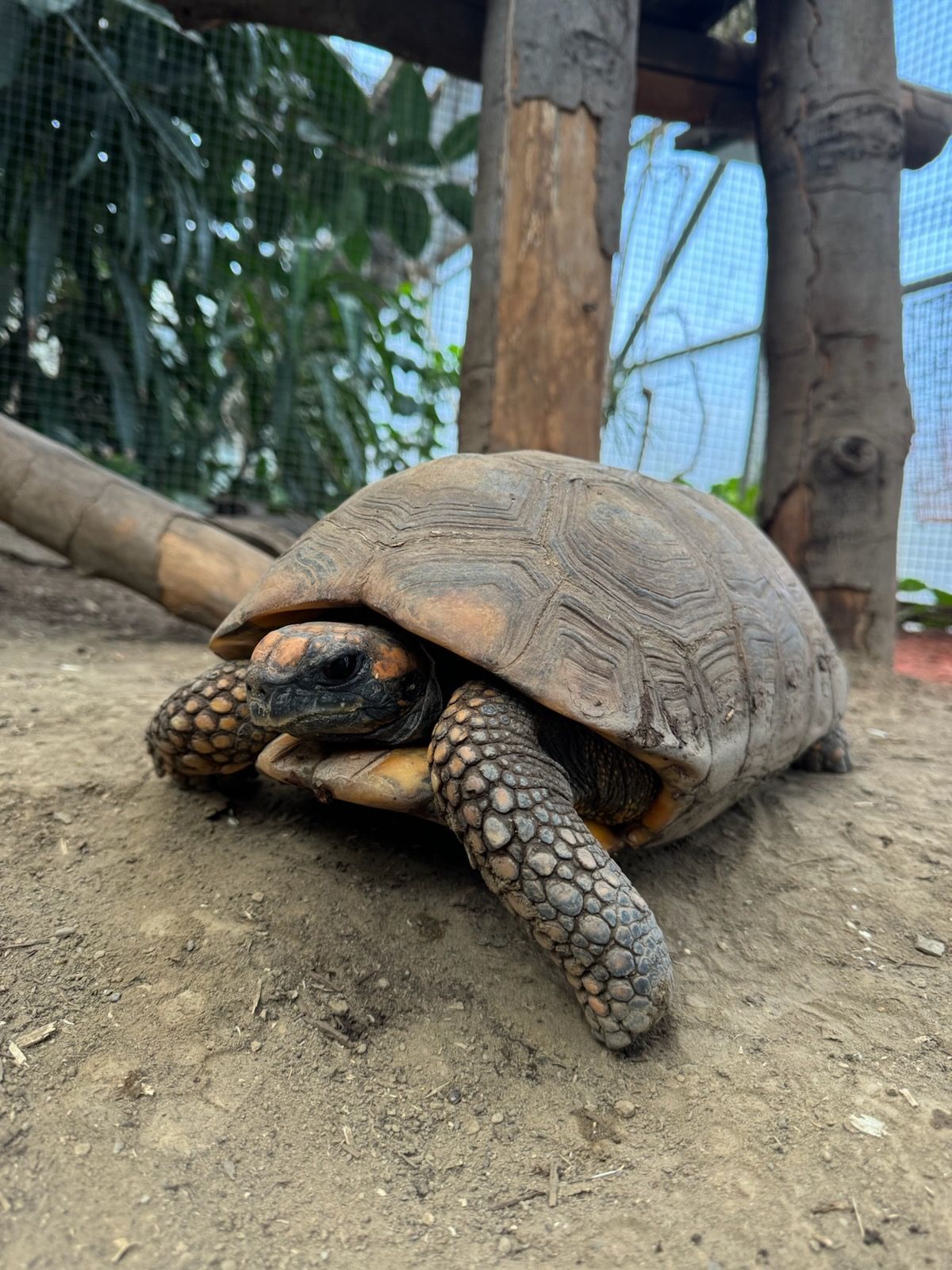
Yellow-footed Tortoise

Chelonoidis denticulata

Species Specific Information

Range

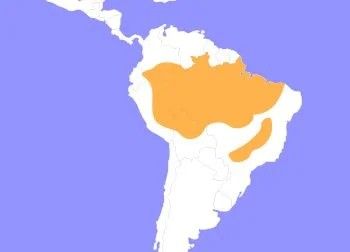
Amazon Basin of South America

Habitat

Terrestrial, grassland, dry forest, savanna, rainforest

Predators

Humans

Diet

Omnivore 


Wild- Grasses, plants, flowers, fruit, carrion, bones, mushrooms, dung, insects

Professional Care- Fruit, greens, vegetables

Life Expectancy

Wild- Unknown

Professional Care- 50 years

Physical Characteristics:

Weight: 25 - 35 lbs (11 - 15 kg)

Size: 15 - 35 in (40 - 95 cm)


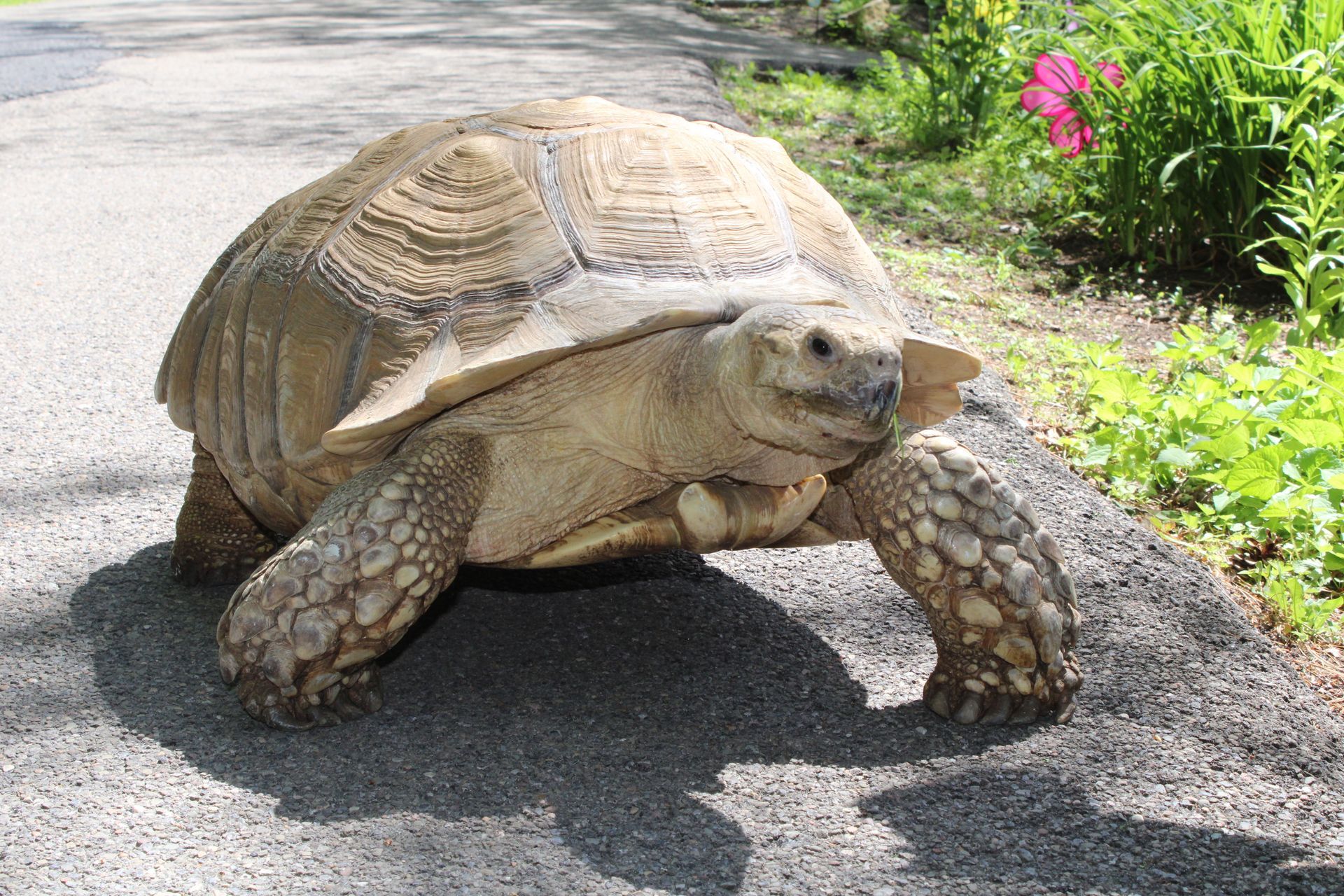
Distinguishing Characteristics:  Yellow-footed tortoises are a large species - the fifth-largest tortoise overall and the third-largest mainland species. The carapace (top shell) is yellowish brown to dark brown or even black at the edges. The middle of each scute is pale yellow, orange, or light brown, and blends into the darker carapace. The plastron (bottom shell) is yellow-brown turning nearly black near the seams.

Adaptations & Fun Facts:

Though quite similar in appearance to the Red-footed tortoise, the Yellow-footed tortoise is not quite as colorful. The primary distinction between these two tortoises is the color of the scales on their front legs, and thus their common names. 


The Red-footed tortoise and Yellow-footed tortoise are often sympatric tropical to semi-tropical species; sympatric means they live together in the same habitat - or geographic area - but are not adapted to the same parts of the habitat. That means the Red-footed tortoise prefers open and wet savannas, while the Yellow-footed tortoise lives in wet forest cover.


Tortoises have two components to their shells: the upper (carapace) and lower (plastron).


The male tortoises are larger and sometimes battle. Rival males will battle, attempting to overturn each other, but neither the males nor females will defend a territory. They are considered nomadic.


Previous studies indicate that fungi can compose a significant portion of the Yellow-footed tortoise’s diet (up to 22%). They have been shown to primarily be herbivorous, however they supplement their diet with protein-rich food items such as insects and carrion as well.

Conservation Story

The population size of the Yellow-footed tortoise is currently unknown. This species is severely understudied, and little is known about their conservation needs. However, as with many species of turtles and tortoises, many Yellow-footed tortoises end up as food items in local markets. In Peru, Yellow-footed tortoise eggs are a delicacy; while illegal, their trade is common in the Peruvian amazon. In addition, they are often killed and used for meat; they are classified as 'fish' by the Catholic Church and so consumed in huge quantities during Holy Week in their native countries. This species of tortoise is also trafficked for the exotic wildlife pet trade.


Legal conservation efforts include particular conservation actions taken by organizations which make government policy to protect all species on earth. The International Union for Conservation of Nature (IUCN) Red List Status is a critical indicator of the health of the world’s biodiversity. Yellow-footed tortoises are listed as “Vulnerable,” which means they are considered to be at high risk of unnatural (human-caused) extinction without further human intervention. The Convention on International Trade in Endangered Species of Wild Fauna and Flora (CITES) lists the Yellow-footed tortoise as Appendix II; this means that they are not necessarily threatened with extinction, but may become so unless trade is closely controlled. 

What Can We Do To Help?

Support conservation organizations - like the Turtle Survival Alliance and Ross Park Zoo - through volunteering, donation, and/or sponsorship! We can also help by learning about the dangers of wildlife trafficking and the exploitation of species in the exotic pet trade through the American Zoo Association’s (AZA) Not-a-Pet campaign. The desire to have these wild animals as a pet only contributes to the potential decline of the species.

Check out other animals at the zoo!