Black Howler Monkey 

Alouatta caraya

Species Specific Information

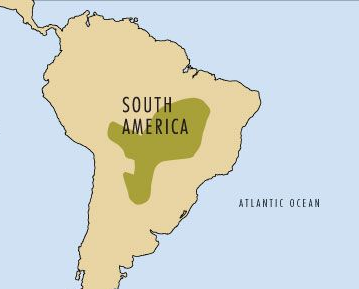
Range

Central South America

Habitat

Terrestrial, savanna, grassland, forest, rainforest

Predators

Snakes, jaguars, birds of prey, humans

Diet

Herbivore (folivore, fruigivore)


Wild- Leaves, fruits, buds, flowers

Professional Care- Browse, fruits, vegetables

Life Expectancy

Wild- 12 years

Professional Care- 20 years

Physical Characteristics:

Weight: 10 - 20 lbs (5 - 10 kg)

Size: 20 - 25 in (50 - 65 cm)


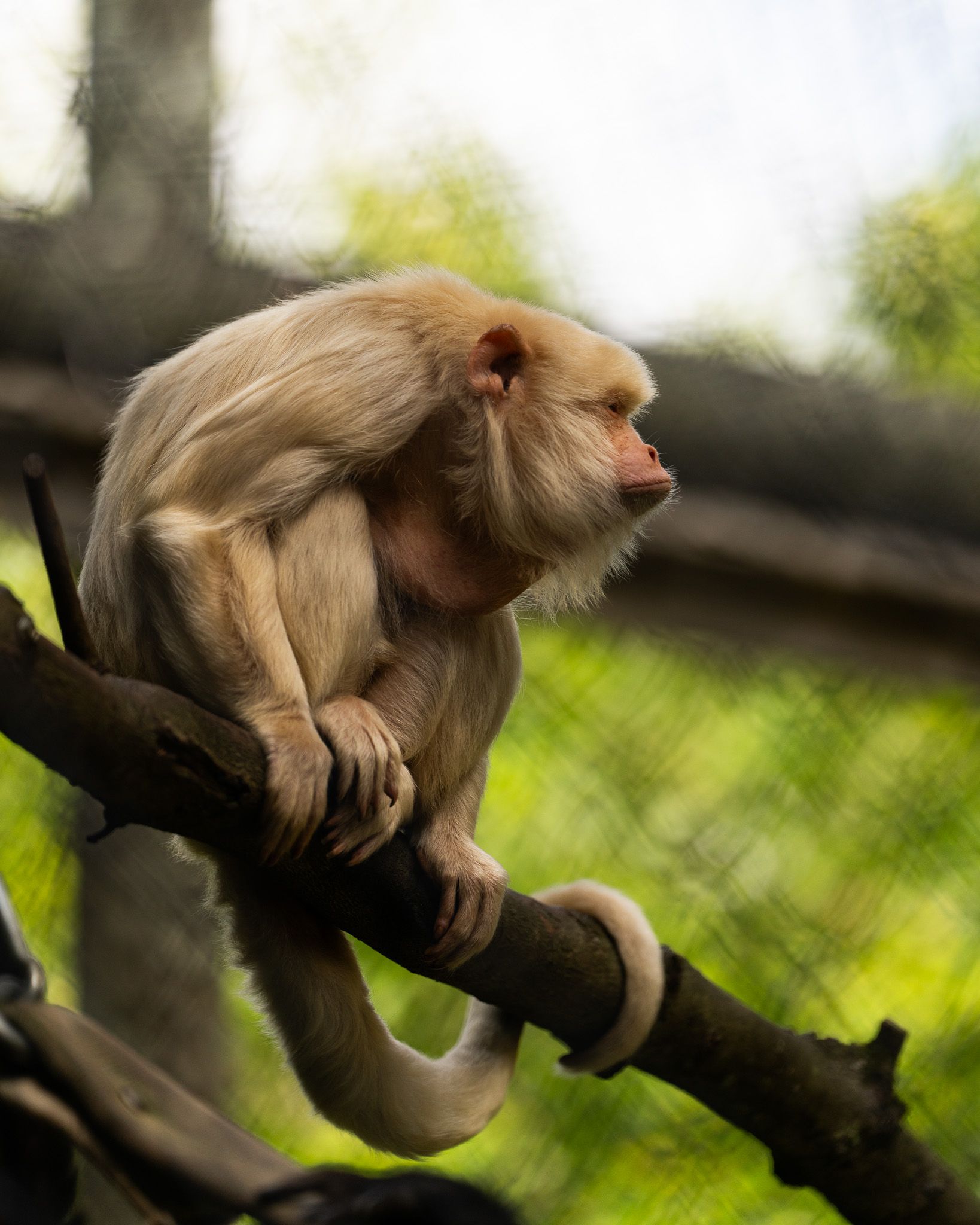
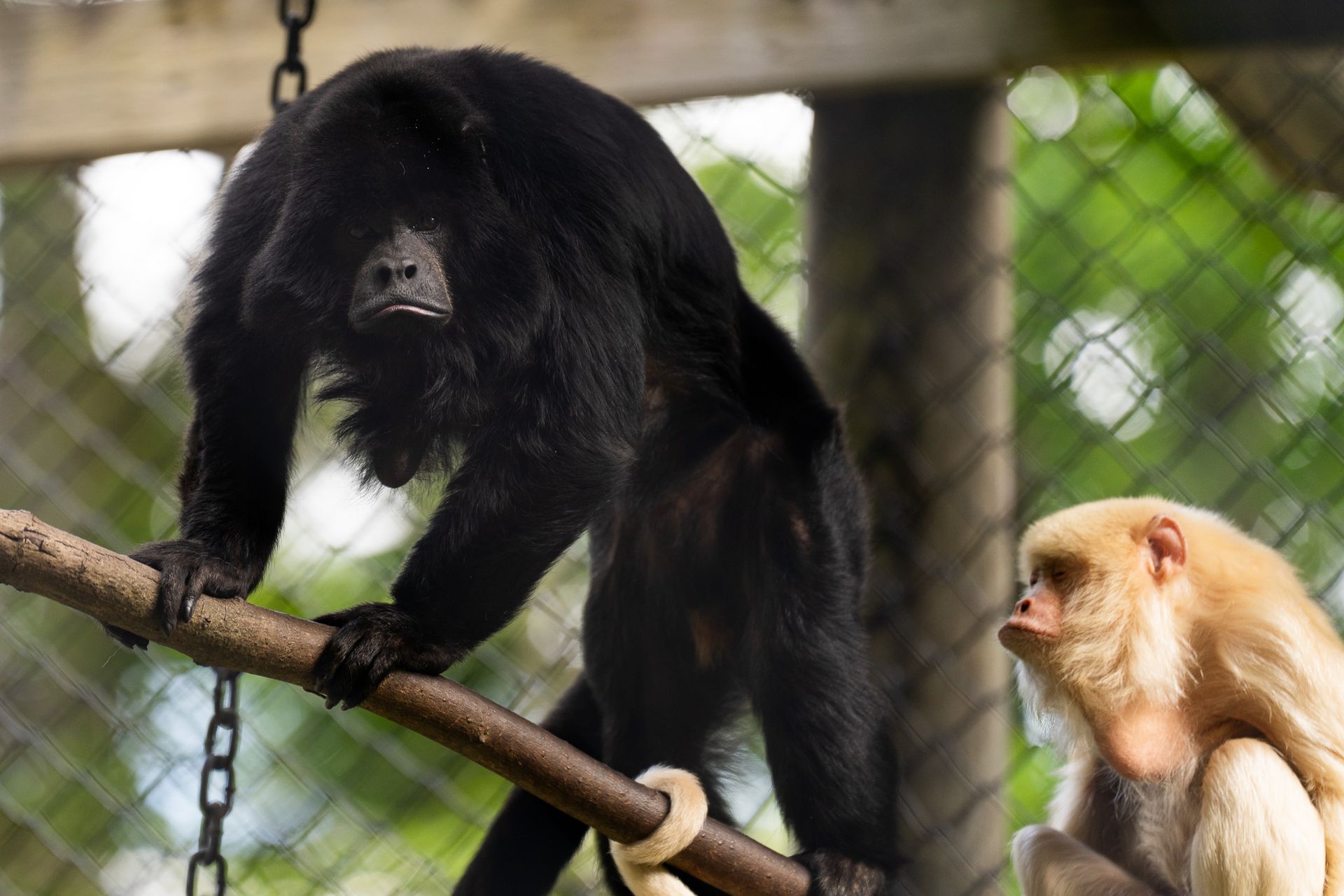
Distinguishing Characteristics:  Males usually have black hair; females, however, have more yellow-brown or olive colored hair. Infants are born with a golden coat, which changes as the animal matures. They have long, strong prehensile tails; these tails are hairless on the underside, which allows them to be sensitive to touch and act in identifying objects in their environment. The black face is mostly hairless as well, with slightly bushy eyebrows. They have brown, medium sized eyes, their muzzle is prominent, and the nostrils are close together. Like other howlers, they have enlarged hyoids and larynxes, which house the vocal apparatus where the distinctive howling comes from.

Adaptations & Fun Facts:

Howler monkeys are among the largest monkeys found in the Americas. They are the loudest primates in the world. Their loud, ghostly howls are usually heard at the beginning and end of each day. Howler monkey calls can be heard up to 3 miles away! These calls are done to mark out a group's territory and call out predators. The reason that they can be so loud is that they have massive vocal cords and an enlarged hyoid and larynx to house them.  


They spend 75% of their time resting, and rarely leave the trees.


They are also called Black and Gold Howler Monkeys because males and females are sexually dichromatic, meaning each sex is a distinct color. All babies are born with the golden brown color, and males' coats will darken to black as they mature. 


Female Black howler monkeys practice alloparenting, which means that they carry, groom, and protect infants other than their own. Females usually stay within the same group they were born into (or their maternal natal group), and males usually leave to find another group to join once they reach maturity.

Conservation Story

While we do not know how many individuals there are, it is suspected that the population will suffer a reduction of 25 - 30% over the next 35 years due to loss of suitable habitat, subsistence hunting, and population extirpations caused by disease. Black howler monkeys are threatened by habitat loss due to agricultural development and cattle ranching. While these monkeys do live in numerous protected areas, human disturbances remain the most common reason for the decrease of the Black howler population. Humans jeopardize and degrade these primates’ ecosystems for residential and commercial development, as well as agriculture. Hunting and the illegal pet trade are also contributing factors to the Black howler's population reduction.


Legal conservation efforts include particular conservation actions taken by organizations which make government policy to protect all species on earth. The International Union for Conservation of Nature (IUCN) Red List Status is a critical indicator of the health of the world’s biodiversity. Black howler monkeys are listed as “Near Threatened,” which means they are close to being endangered in the near future. The Convention on International Trade in Endangered Species of Wild Fauna and Flora (CITES) lists the Black Howler Monkey as Appendix II; this means they are not necessarily threatened with extinction, but may become so unless wildlife trafficking and other trades are not controlled.

What Can We Do To Help?

Support conservation organizations - like the New England Primate Conservancy and Ross Park Zoo - through volunteering, donation, and/or sponsorship. 

Check out other animals at the zoo!