American Red Wolf
Canis rufus

Species Specific Information
Habitat
Historically: Mountains, lowland forests, wetlands.
Currently: Terrestrial, temperate, forest, scrub forest
Predators
Humans
Diet
Carnivore
Wild- Birds, mammals, carrion
Professional Care- Raw meat
Life Expectancy
Wild: 4 years
Professional Care: 14 years
Physical Characteristics:
Weight: 45 - 85 lbs (20 - 40 kg)
Size: 40 - 50 in (100 - 130 cm)
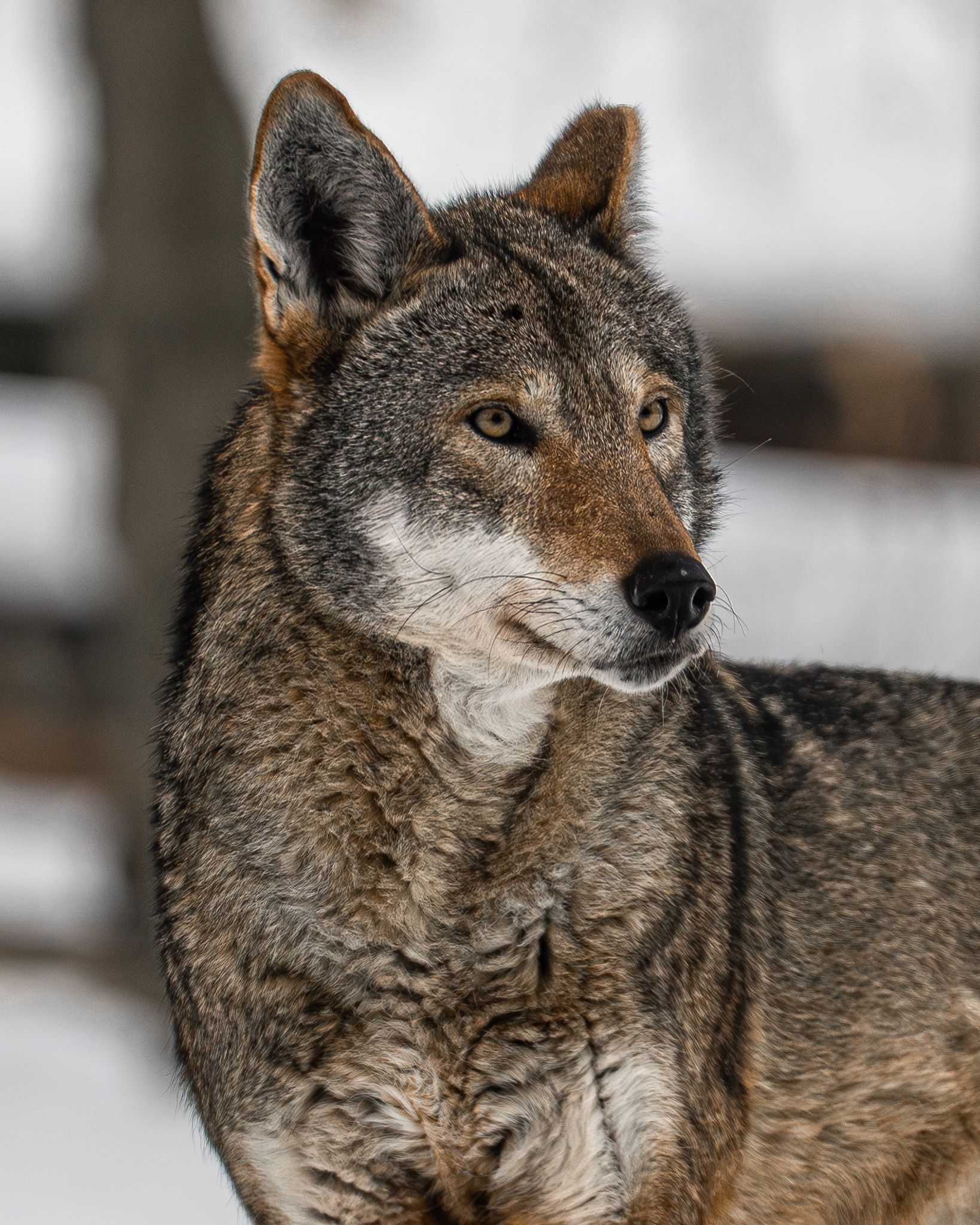
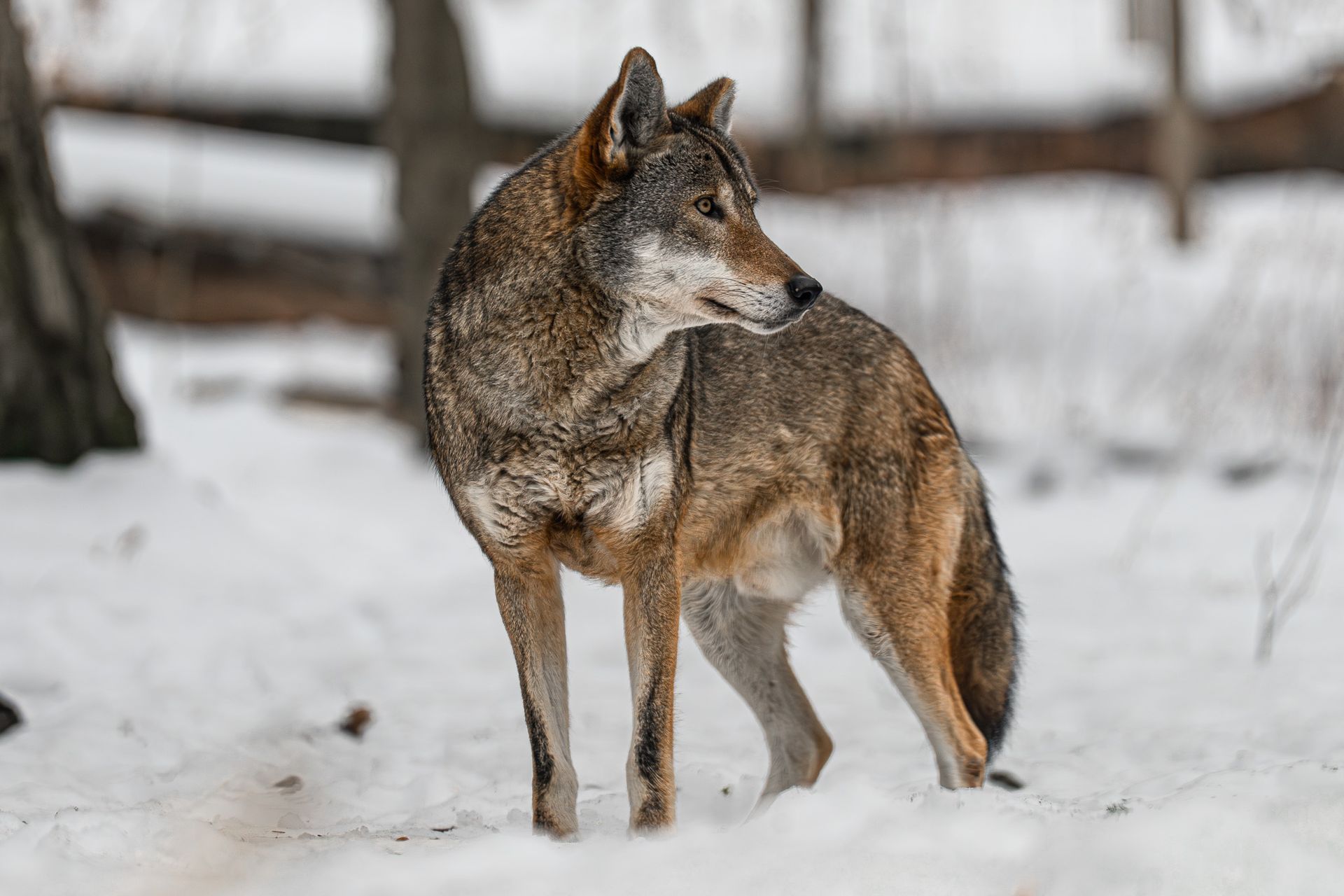
Distinguishing Characteristics: Red Wolves are generally smaller than the Gray wolf. They tend to have more narrow proportions, with longer legs and ears, and shorter fur. Their coat has a mixture of colors, ranging from cinnamon, tawny, gray, or black, while the back is normally blackish. The muzzle and limbs are tawny and the tail is tipped with black. In winter, the reddish color is dominant. An annual molt takes place in the summer.
Adaptations & Fun Facts:
For the Cherokee Nation, we capitalize Red Wolf as a gesture of respect for the cultural importance the Red Wolf holds within the Cherokee Nation Tribe and other Tribes. For the Cherokee, the Red Wolves – the Red Grandfather, Gigage Unidoda –are part of the Creator and are considered equals to humans, like all aspects of nature.
American Red Wolves use a variety of methods to communicate with members of their pack: behavioral, tactile, chemical, and auditory. Body language, pheromones, and vocalizations all serve to communicate about social and reproductive status and mood. Social bonding is often achieved through touch.
The American Red Wolf is the only North American wolf species that can be found only within the United States of America.
Because American Red Wolves eat many rodents, they are important in keeping the populations in check, which is good for humans.
Breeding pairs of American Red Wolves generally mate for life.
Their reintroduction efforts served as a guide for reintroduction of the Gray wolf out west, a species that has seen greater success with reintroduction than the Red Wolf. This is likely because the Grey wolf has more protected land in their historical range compared to the American Red Wolf.

Conservation Story
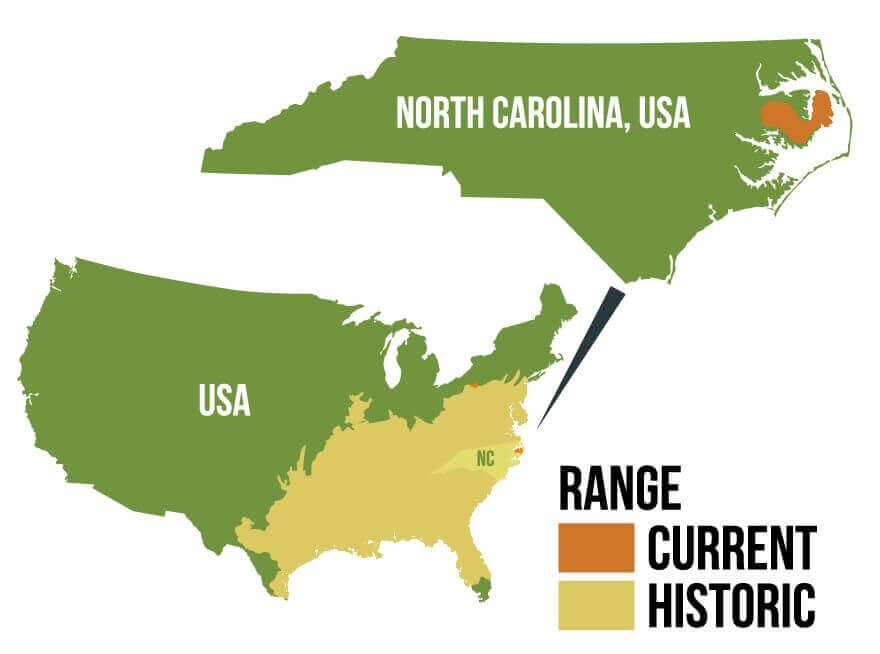
Though we are not sure of the historical population of the American Red Wolf, we do know that the Red Wolf has lost 99.7% of its original range. As of February 2025, there are only 16 known individuals left in the wild in North Carolina and only around 270 in Red Wolf SAFE facilities around the US. This makes the American Red Wolf the most endangered wild canine in the world.
Once common throughout the southeastern United States, Red Wolf populations were killed off due in part to the US government placing bounties to cull the population in 1768. By the 1930s, only two viable Red Wolf populations remained in the wild. By 1967, after Red Wolves were hunted to near extinction, they were listed as Endangered under the Endangered Species Preservation Act. In 1969, a Red Wolf captive breeding program was initiated. By 1973, the Endangered Species Act became federal law and the US Fish and Wildlife Service began to implement the Red Wolf Recovery Plan. Around 1980, the American Red Wolf was declared extinct in the wild.
The breeding and reintroduction program has had variable successes given the complexity of reintroducing the population and preventing human-caused deaths. Human development has pushed the American Red Wolf to areas with less resources. Due to the proximity to the ocean, the Red Wolf habitat is threatened by sea level rise due to climate change. However, the biggest threat to American Red Wolves in the recovery area of North Carolina is gunshot wounds from humans and vehicular deaths. Many hunters mistake American Red Wolves for coyotes and kill them.
Legal conservation efforts include particular conservation actions taken by organizations which make government policy to protect all species on earth. The International Union for Conservation of Nature (IUCN) Red List Status is a critical indicator of the health of the world’s biodiversity. American Red Wolves are listed as “Critically Endangered,” which means they face extremely high risk of extinction in the wild. The US Endangered Species Act of 1973 recognized American Red Wolves as in danger of extinction, and so the US Fish and Wildlife Service grants them a protected status.
What Can We Do To Help?
The Ross Park Zoo has participated in the Red Wolf Recovery Plan since 1989. American Red Wolves are important to Native American culture, to the history of the United States of America, and to the Ross Park Zoo. In supporting Ross Park Zoo, as well as other facilities that support Red Wolf recovery, you directly support the rarest canine on earth.
Check out other animals at the zoo!
-
African Penguin
Learn More -
African Spurred Tortoise
Learn More -
Alpine Goat
Learn More -
American Red Wolf
Learn More -
Amur Leopard
Learn More -
Arctic Fox
Learn More -
Bantam Chicken
Learn More -
Barred Owl
Learn More -
Binturong
Learn More -
Black Howler Monkey
Learn More -
Black Vulture
Learn More -
Black-and-white Ruffed Lemur
Learn More