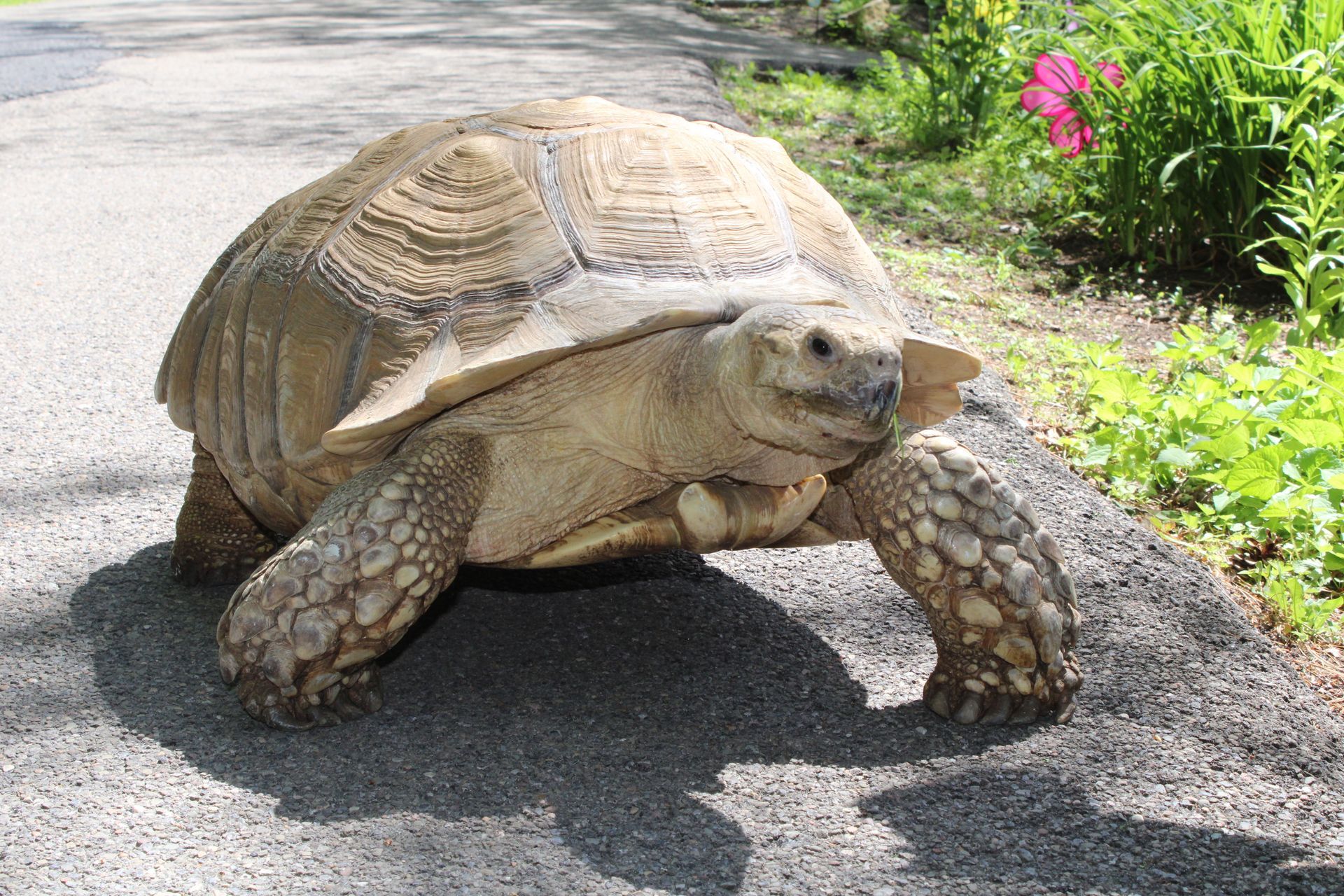
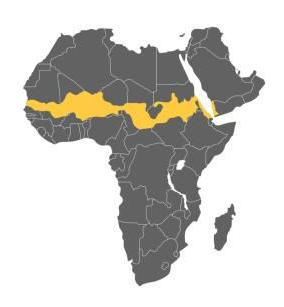
Once numbering in the hundreds of thousands, it is now estimated that African spurred tortoises can be found in only about 16% of their original range. The decline of the population is rapid and ongoing. Some major threats this tortoise faces are habitat modification and desertification. Desertification is a type of gradual land degradation of fertile land into arid desert due to a combination of natural earth processes and human activities. Climate change also has caused desertification by leading to drought and less plant foods available for the tortoises and other animals to eat. Other threats to the African spurred tortoises’ habitat include brushfires and overgrazing from livestock.
Another danger that the African spurred tortoise faces is being bought and sold for the purpose of becoming a pet. “Exotic pets” are often victims of wildlife trafficking. This means that these tortoises are removed from their wild habitat before they are able to breed and contribute to the growth of wild populations. Often, African spurred tortoises are stolen from their wild habitat and used to make more tortoises for the purpose of selling them as pets. Overall, habitat fragmentation and loss accounts for about 60% of the threat to the African spurred tortoise’s survival, climate change as a threat is about 25%, and the exploitation for wildlife trafficking is 15%. It is conservatively estimated that between 1990 and 2010, around 9,000 African spurred tortoises were stolen from the wild; this is likely an underestimation.
Legal conservation efforts include particular conservation actions taken by organizations which make government policy to protect all species on earth. The International Union for Conservation of Nature (IUCN) Red List Status is a critical indicator of the health of the world’s biodiversity. The African spurred tortoise is listed as “Endangered,” which means they are likely to become extinct in the near future. The Convention on International Trade in Endangered Species of Wild Fauna and Flora (CITES) lists the African spurred tortoise as Appendix II; this means they are not necessarily threatened with extinction, but may become so unless wildlife trafficking and other trades are not controlled.