Black Vulture
Coragyps atratus

Species Specific Information
Habitat
Terrestrial, wetlands, agriculture, urban, temperate, tropical, desert, dune, savanna, grassland, chaparral, scrub forest, swamp
Predators
Raccoons, coatis, foxes, eagles, humans
Diet
Carnivore
Wild- Carrion, small birds and mammals, eggs, ripe or rotten fruit or vegetables, young turtles
Professional Care- Raw meat, rodents
Life Expectancy
Wild- 14 years
Professional Care- 18 - 21 years
Physical Characteristics:
Weight: 4 - 6 lbs (2 - 3 kg)
Size: 20 - 25 in (50 - 65 cm)
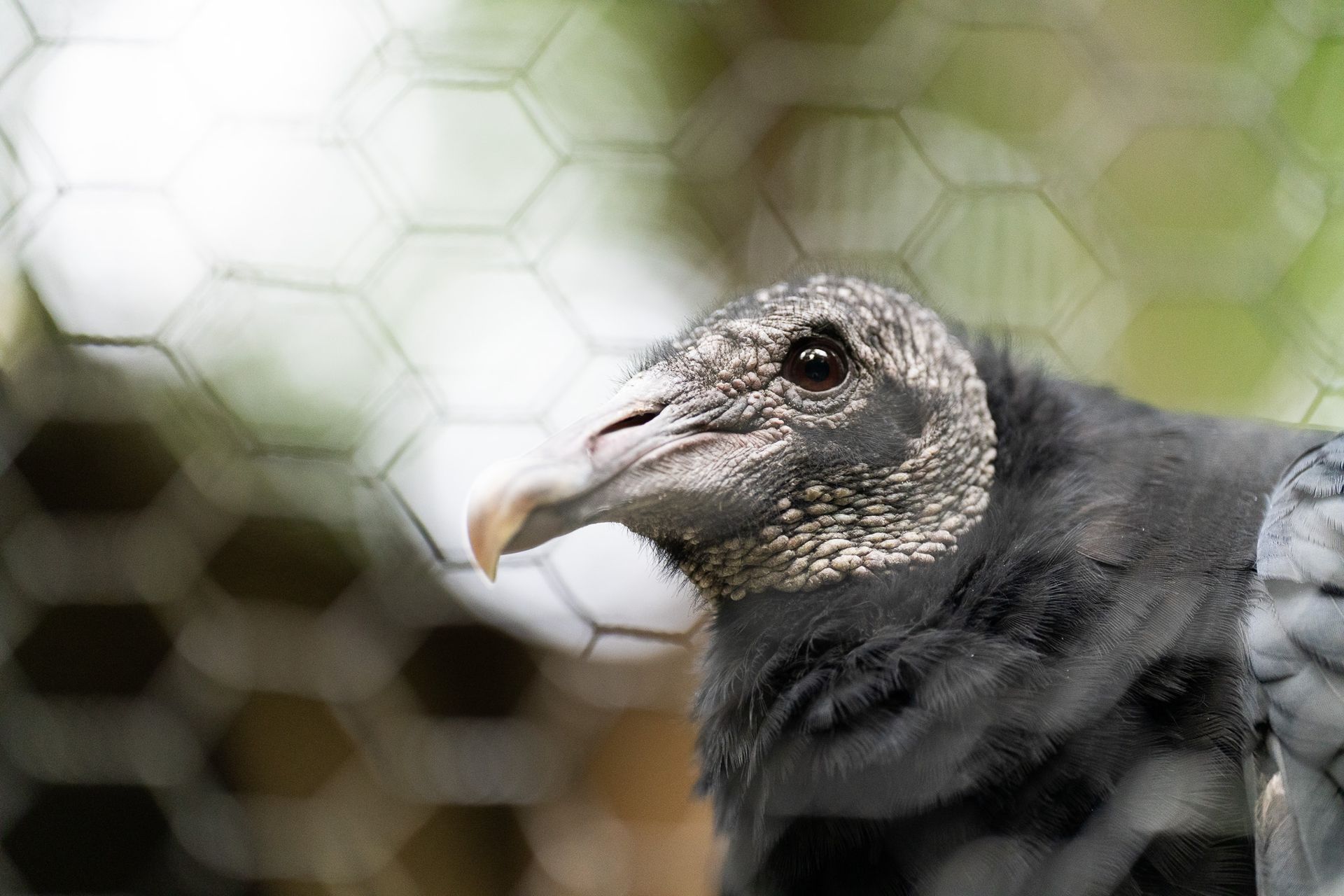
Distinguishing Characteristics: The Black vulture is a large, black bird with a wingspan of 50 - 60 inches (140 - 150 cm). Adults have black, wrinkled bare skin on the head and neck. Black vultures have weak feet, adapted more for running than for clutching, and relatively weak bills. In flight, a short, square tail and a large white patch on the undersurface of the wing distinguish this bird.
Adaptations & Fun Facts:
Unlike most other vultures, Black vultures have a poor sense of smell and instead rely on their keen eyesight or follow other vultures that have a better sense of smell to find carrion. The smaller but more aggressive Black vulture will often drive Turkey vultures from carcasses.
The lack of feathers on vultures’ heads helps them to thermoregulate, as well as keep them clean and free of disease; feathers would merely get carrion stuck to them, and could spread bacteria. Vultures of all kinds are protected from disease from the carrion they eat by sophisticated immune systems and the most acidic stomachs in the animal kingdom (between 0 - 1 pH). That's 100 times more potent than a human's and more corrosive than a car battery!
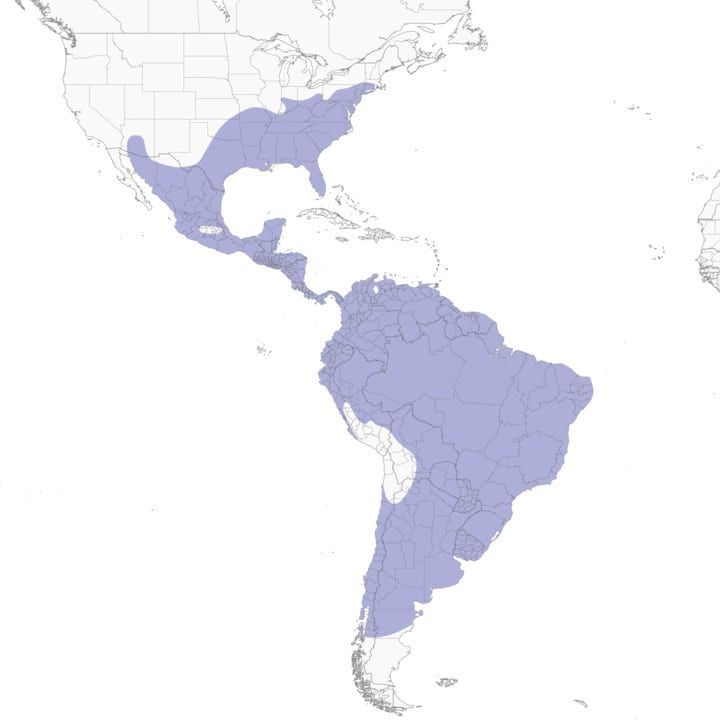
In the U.S., Black vultures are outnumbered by their relatives - Turkey vultures - but they have a huge range and are the most numerous vultures in the Western Hemisphere.
Black vultures lack voice boxes and do not communicate through calls, but will occasionally grunt or hiss if disturbed.
Like some other species of bird, Black vultures will urinate on their legs in order to cool off through evaporation and kill bacteria on their feet!

Conservation Story
There are over 50 million adult Black vultures in the Americas. In the 1800s, they were regarded as beneficial scavengers and tolerated around meat markets in the southeastern U.S. In the early 20th century, this attitude changed when people became concerned about vultures spreading disease - despite a lack of scientific evidence. Vultures were trapped, poisoned, and shot by the thousands until the 1970s.
Black vultures have faced other threats, including fewer available nest sites and collisions with cars. Along with other carrion-eaters, they are susceptible to poisoning from lead shot in carcasses. However, Black vultures have rebounded and expanded their range considerably to the north and east. This is probably due in part to increasing availability of roadkill and warmer temperatures that are associated with climate change. Vultures are ecologically essential as scavengers and help to reduce disease around humans. Though their range is expanding, spring heat waves can threaten young birds that are nesting.
Legal conservation efforts include particular conservation actions taken by organizations which make government policy to protect all species on earth. The International Union for Conservation of Nature (IUCN) Red List Status is a critical indicator of the health of the world’s biodiversity. Black vultures are listed as “Least Concern,” which means the species is widespread and abundant in the wild. These vultures also receive special legal protections under the Migratory Bird Treaty Act of 1918 in the United States, the Convention for the Protection of Migratory Birds in Canada, and by the Convention for the Protection of Migratory Birds and Game Mammals in Mexico.
What Can We Do To Help?
Become a community scientist by joining Ross Park Zoo’s project on iNaturalist. In the app and on the website, community scientists (that’s you!) are able to upload photos, videos, and sound recordings of all birds locally and around the world to track bird populations. Also, support Ross Park Zoo through volunteering, donation, and/or sponsorship to help educate more people about birds of prey like the Black vulture!
Check out other animals at the zoo!
-
African Penguin
Learn More -
African Spurred Tortoise
Learn More -
Alpine Goat
Learn More -
American Red Wolf
Learn More -
Amur Leopard
Learn More -
Arctic Fox
Learn More -
Bantam Chicken
Learn More -
Barred Owl
Learn More -
Binturong
Learn More -
Black Howler Monkey
Learn More -
Black Vulture
Learn More -
Black-and-white Ruffed Lemur
Learn More