Barred Owl

Strix varia

Species Specific Information

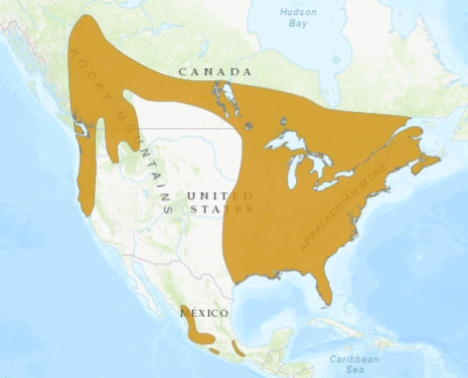
Range

Southwestern Canada, Washington, Oregon, northern California, and the eastern United States down to Florida and Texas.

Habitat

Terrestrial, temperate, wetlands, forest

Predators

Great horned owls, raccoons, humans

Diet

Carnivore


Wild- Birds, mammals, amphibians, reptiles, fish, insects

Professional Care- Raw meat, rodents

Life Expectancy

Wild- 7 years 

Professional Care- 20 years


Physical Characteristics:

Weight: 1 - 2 lbs (600 - 800 g)

Size: 15 - 20 in (45 - 50 cm)


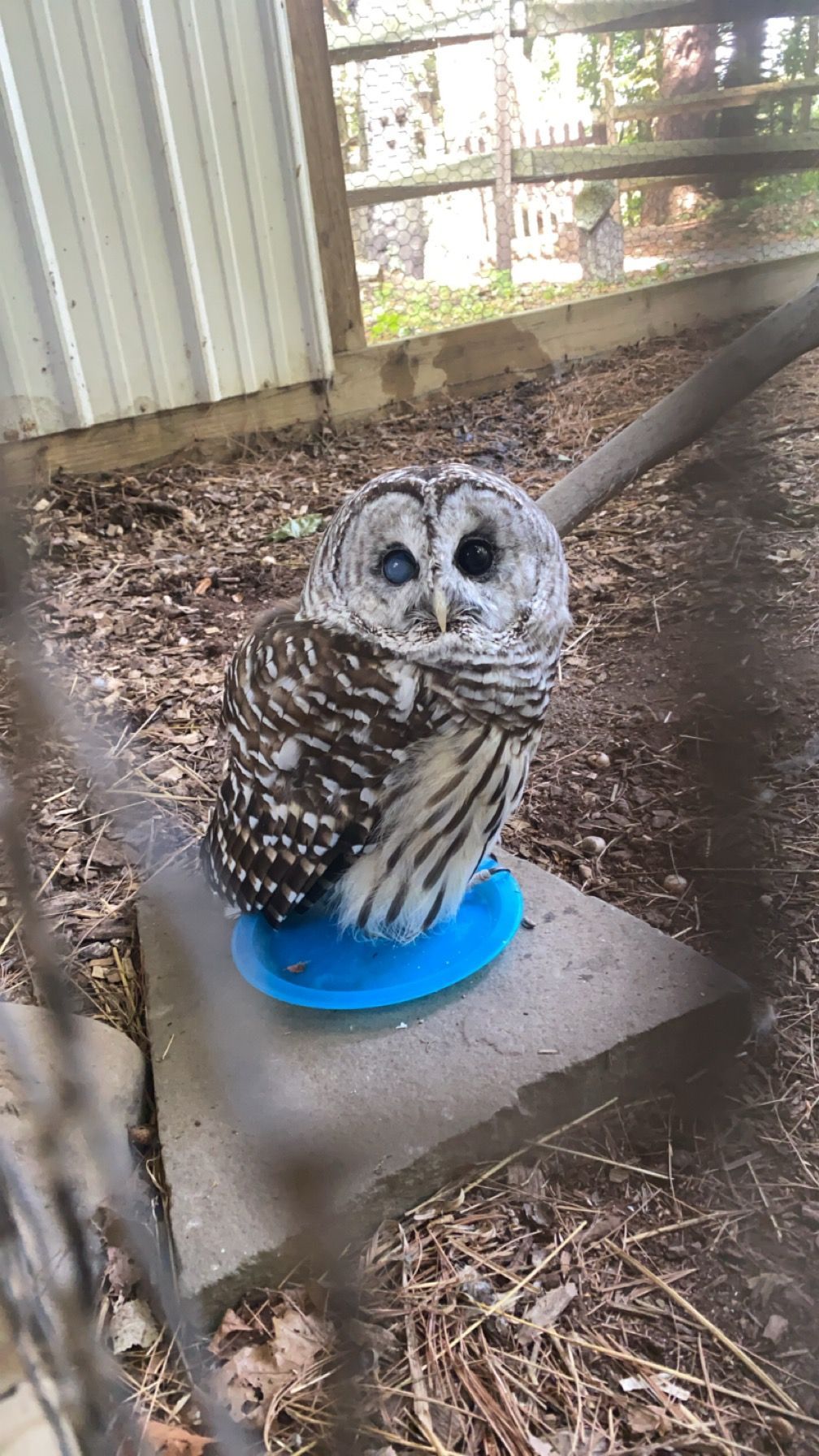
Distinguishing Characteristics:  The Barred owl is a large, round-headed woodland owl with a grey-white facial disc. Its plumage is grey-brown with buff-white edges and bars. Barred owls have brown eyes and lack ear tufts. The neck and upper breast have transverse (across) barring and the belly contains vertical brown streaks. The wingspan is, on average, 40 - 45 inches (105 - 110 cm).

Adaptations & Fun Facts:

Although mostly nocturnal, the Barred owl will also hunt on days which are cloudy or overcast. 


Like other owls, it has highly developed senses of hearing and vision.  


Of all the owls of North America, this is the most vocal bird with the widest range of calls. The most common call is a hooting pattern that can be recognized with the mnemonic "Who cooks for you? Who cooks for you all?" 


Like all owls, the Barred owl’s large eyes allow more light to reach the retina during the darker night time hours; however, this means that there’s no room for the muscles that move the eyes. To make up for this, owls are able to turn their heads 270 degrees. 


The barred owl often shares its habitat with the Red-shouldered hawk. Despite hunting the same prey, the two birds avoid competition by hunting at different times. The nocturnal Barred owl hunts at night, while the diurnal hawk hunts during the day. 

Conservation Story

The global population of the Barred owl has been estimated at over 3 million adult individuals. The Barred owl’s population in the US and Canada is estimated to have a slightly positive yearly trend, which is likely due to a fast increase in population size over three generations.


Until the 20th century, Barred owls were residents of old, undisturbed forests in eastern North America. They were probably restricted from moving into northwestern boreal forests because of frequent forest fires. But fire suppression, as well as tree planting in the Great Plains, allowed Barred owls to spread northward and westward during the past century. They eventually expanded south along the West Coast as far as California, where they began competing with Spotted owls. Barred owls have displaced these slightly smaller and less aggressive owls, further threatening the already compromised Spotted owl population. 


Barred owls are forest birds and tend to live in mature forests because they need large, dead trees for nest sites. These requirements make them sensitive to logging expansion. For this reason, the Barred owl is often used as an indicator species for managing old forests; an indicator species is an organism whose population size and range reflects the health of a particular ecosystem. These owls are also excellent at managing rodent populations in rural areas, making them an asset to agriculture. 


Legal conservation efforts include particular conservation actions taken by organizations which make government policy to protect all species on earth. The International Union for Conservation of Nature (IUCN) Red List Status is a critical indicator of the health of the world’s biodiversity. Barred owls are listed as “Least Concern,” which means the species is widespread and abundant in the wild.

What Can We Do To Help?

Become a community scientist by joining Ross Park Zoo’s project on iNaturalist. In the app and on the website, community scientists (that’s you!) are able to upload photos, videos, and sound recordings of all birds locally and around the world to track bird populations. Also, support Ross Park Zoo through volunteering, donation, and/or sponsorship to help educate more people about birds of prey like the Barred owl!

Check out other animals at the zoo!