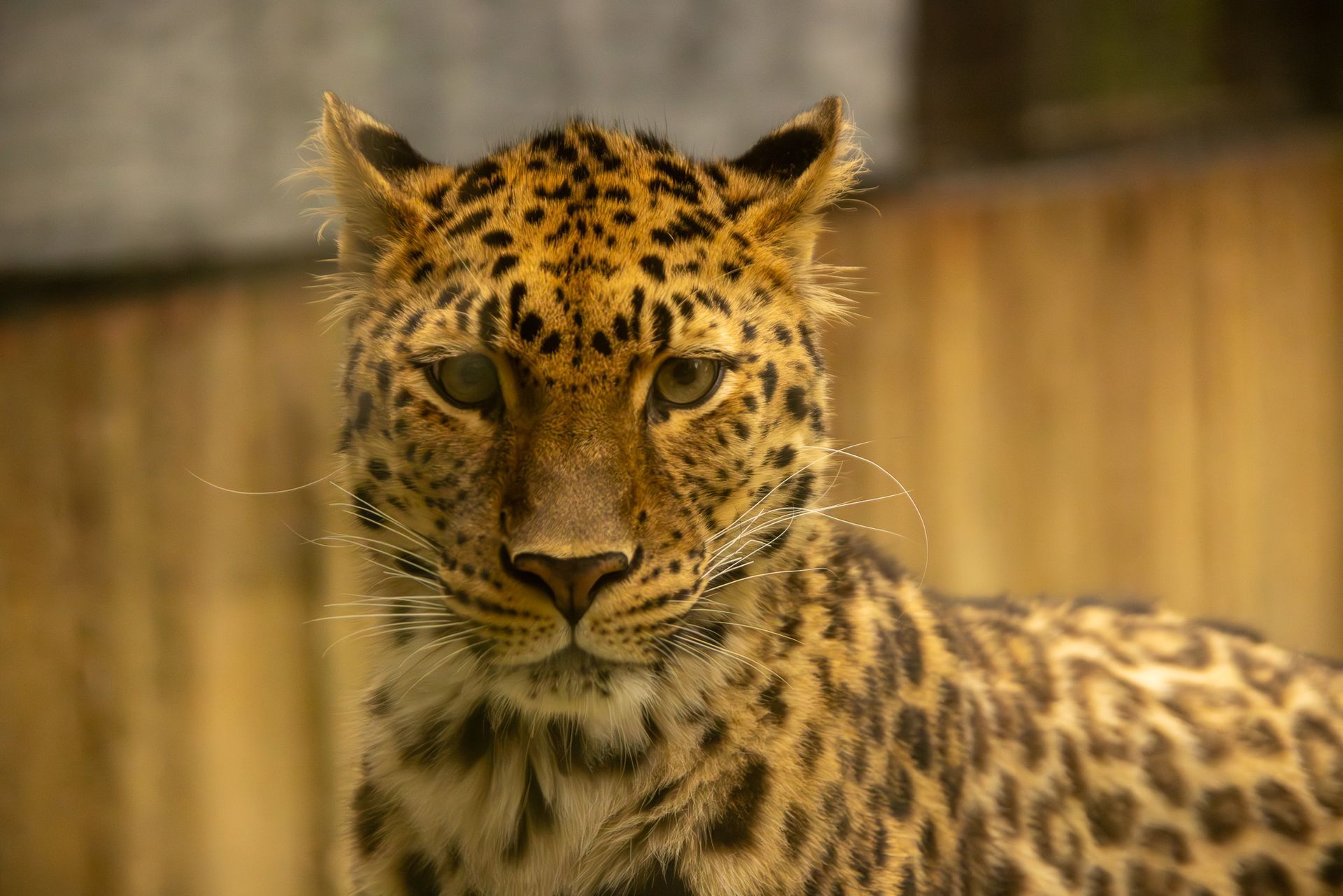
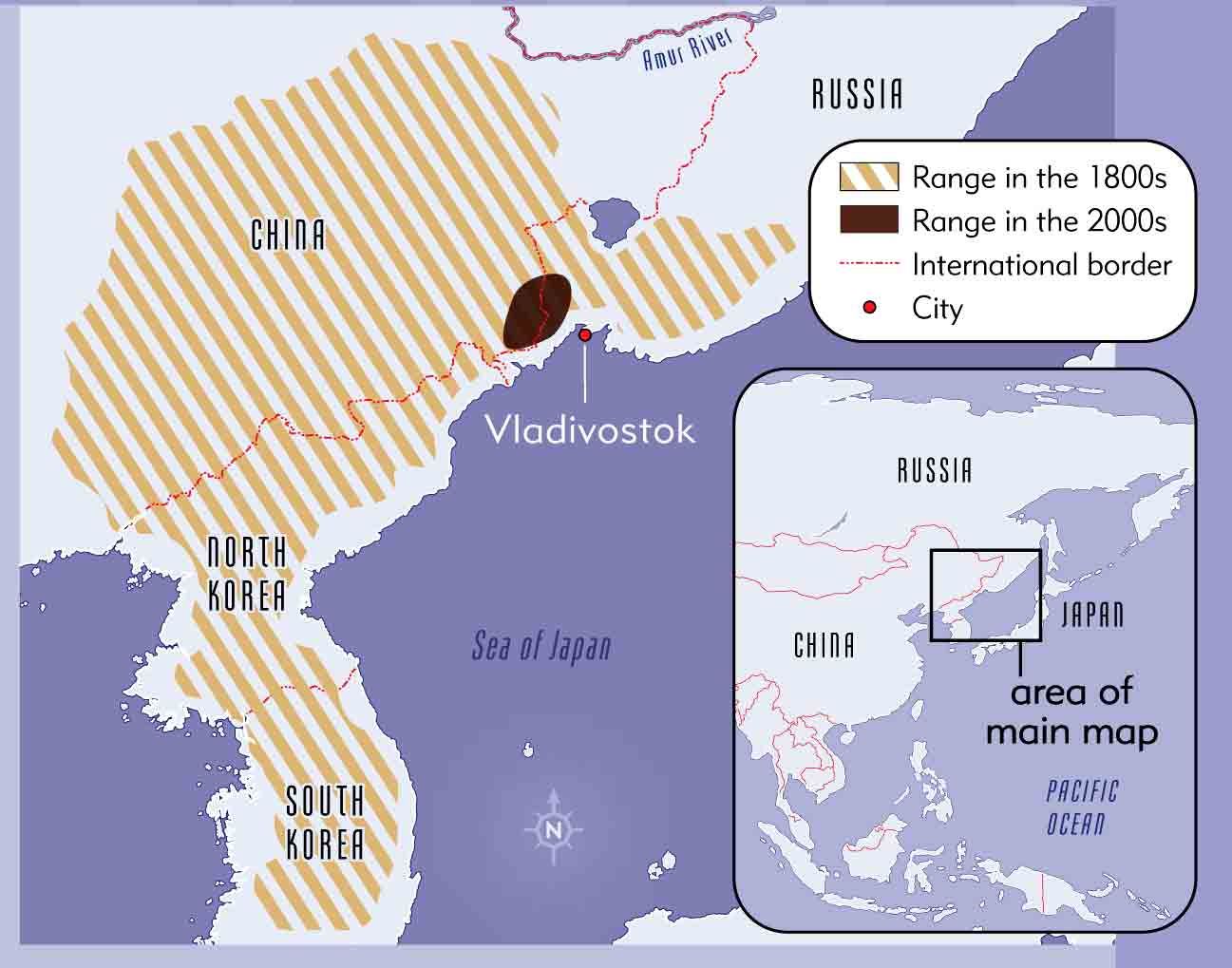
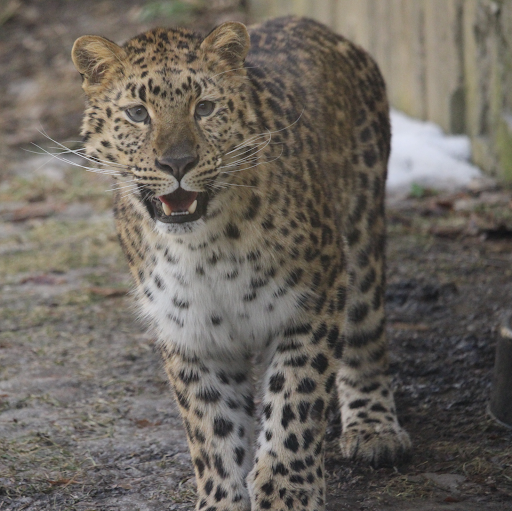
Though we are not sure of the historical population of the Amur leopard, we do know that as of 2023 there are only about 130 juvenile and adult Amur leopards in the wild. This leopard sub-species was hunted for their skins extensively, and around 600 were killed between 1910 and 1945. In the 1970s, the Amur leopard’s native range in Russia was reduced to about 20% of its original land, and it was declared extinct in South Korea.
The main threats to Amur leopards are prey scarcity from loss of habitat due to human developments and farming, as well as the illegal wildlife trade of Amur leopard furs. Current conservation efforts are focused on protecting their habitat, stopping poaching, and monitoring wild populations. Since 1996, there have been efforts toward reintroduction. As of December 2011, 173 Amur leopards were in zoos worldwide. Within the European Endangered Species Programme (EESP), 101 individual Amur leopards are managed in professional care. In US and Canadian zoos, another 72 Amur leopards are involved with the Population Management Program in professional care.
Currently there are a few different conservation actions being taken. The Amur Leopard and Tiger Alliance (ALTA) is an initiative by Russian and western conservation organizations whose aim is to secure a future for both species in the Russian far east and northeast China. ALTA works with local, regional, federal government, and non-government organizations to protect the region’s biological diversity through conservation, sustainable development, and local community involvement. The Phoenix Fund and the Wildlife Conservation Society provides a local framework for implementing ALTA projects, working closely with Russian and Chinese agencies. With regard to conservation of leopards, ALTA aims at retaining a leopard population of 35 adult females (100 total) and creating a second population of 20 adult females (60 adults total) in the former range of the leopard.
Legal conservation efforts include particular conservation actions taken by organizations which make government policy to protect all species on earth. The International Union for Conservation of Nature (IUCN) Red List Status is a critical indicator of the health of the world’s biodiversity. Amur leopards are listed as “Critically Endangered,” which means they face extremely high risk of extinction in the wild. The Convention on International Trade in Endangered Species of Wild Fauna and Flora (CITES) lists the Amur leopard as Appendix I; this means that they are the most endangered among CITES-listed animals and plants. Amur leopards are threatened with extinction, and CITES prohibits international trade. The US Endangered Species Act of 1973 recognizes Amur leopards as Endangered and allows for US funding for international conservation efforts.