Southern Three-banded Armadillo
Tolypeutes matacus

Species Specific Information
Habitat
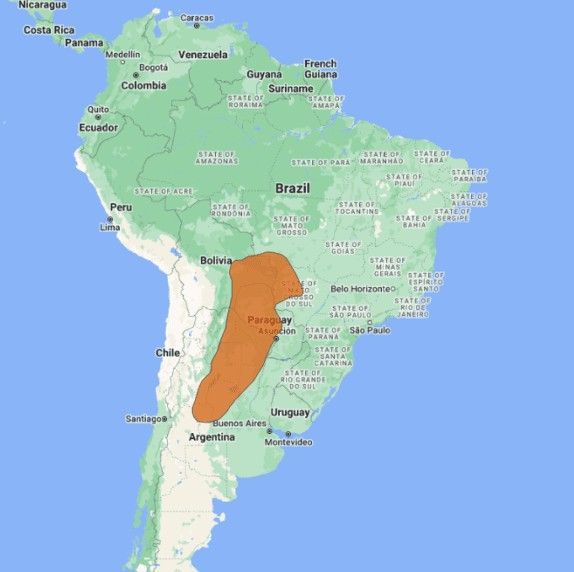
Terrestrial, savanna, grassland, scrub forest
Predators
Jaguars, maned wolves, humans
Diet
Omnivore (insectivore)
Wild- Ants, termites
Professional Care- Insectivore mix, mealworms, crickets
Life Expectancy
Wild- 4 - 12 years
Professional Care- 15 - 20 years
Physical Characteristics:
Weight: 3 - 3.5 lbs (1.5 kg)
Size: 8 - 10 in (20 - 25 cm)
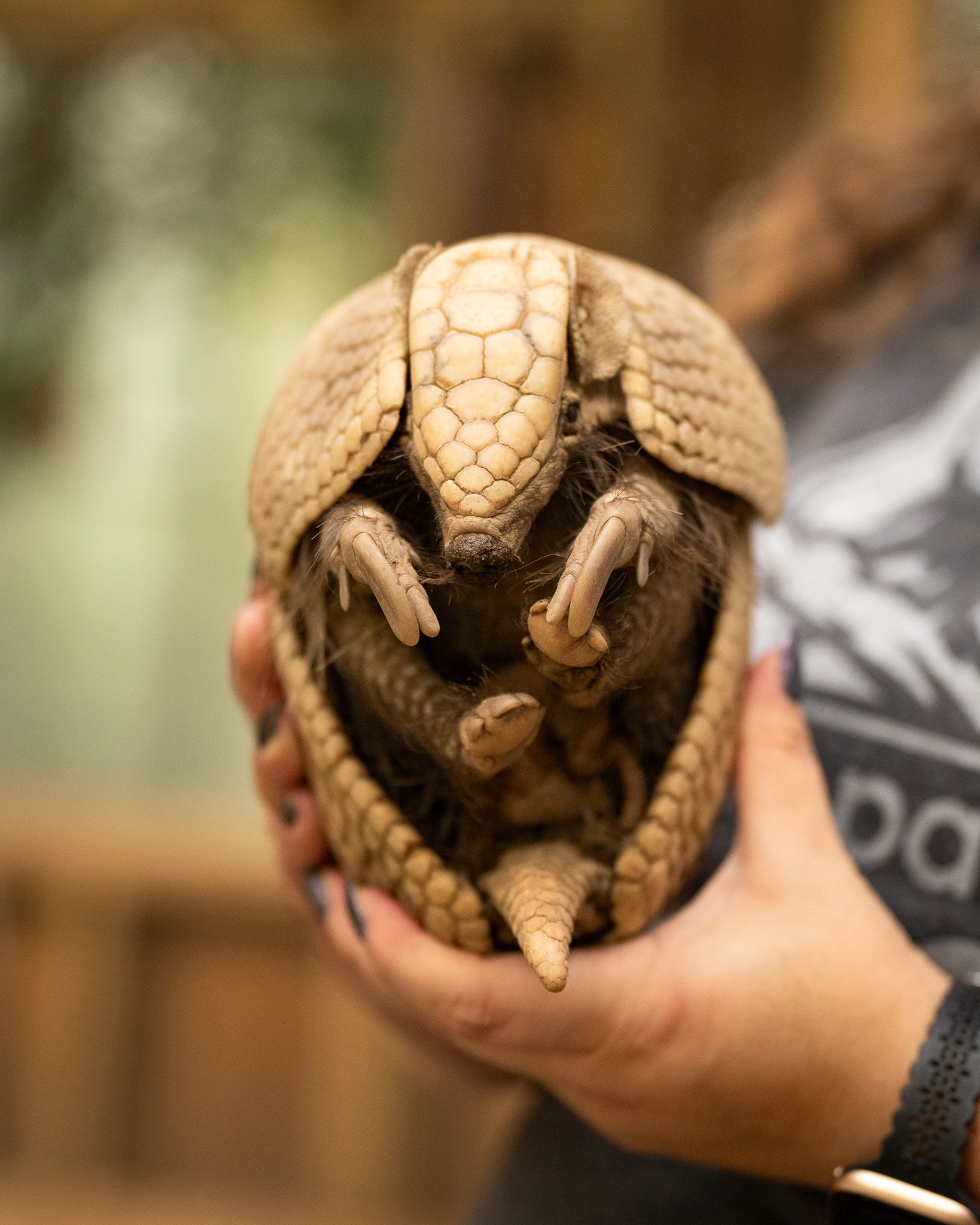
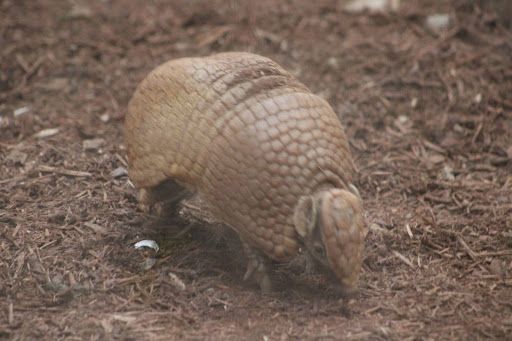
Distinguishing Characteristics: They are dark brown and heavily armored with a thick, leathery shell that is usually segmented into 3 bands. This armor covers the tail, head, feet, and back of the animal. The tail is very stout and immobile. The middle three toes on the back feet are grown together and have a thick claw. The forefeet toes are separated and have 4 claws.
Adaptations & Fun Facts:
Despite their armor and odd appearance, armadillos are mammals like you and me!
The shell covering its body is armored and the outer layer is made out of keratin, the same component that builds human fingernails. Armadillos can close their shell around their entire body, usually leaving a small space between a section of its armor which can forcefully close on the hand, finger, or paw of a would-be predator. This shell is also very efficient at trapping air, which is warmed by body heat, and thus conserves heat loss.
There are 20 species of armadillo, but the Three-banded is the only species capable of rolling itself all the way into a ball as a means of defense against predators.
Armadillos use two methods to get across a body of water. One, they sink to the bottom and walk across. Two, they can inflate their stomach and intestines with air and float to the other side. They must be careful with this second method - as it takes time to deflate - so they become vulnerable to predators.
The Three-banded armadillo has a long, pink, sticky tongue that allows it to gather up and eat many different species of insects, typically ants and termites.

Conservation Story
There is little information about the population size of the Southern Three-banded armadillo. It is known that there has been a population decrease over the years, mainly due to intense hunting and habitat loss. For many people local to the armadillo’s habitat, they hunt the Three-banded armadillo for food at varying levels. But the more pressing threat to the Southern Three-banded armadillo is habitat destruction; this occurs from habitat being turned into agricultural land. The Southern Three-banded armadillo is also trafficked for the exotic wildlife pet trade, and they often die during the journey. In 2010, Paraguay established quotas for harvesting this species for export abroad under the Proyecto de Conservación y Utilización de la Vida Silvestre (Wildlife Conservation and Utilization Project), and landowners received a payment for each individual captured on their land. Armadillos also die from being hit by cars. With a slow reproductive rate, it is difficult for this species to recover from their population decline.
This species of armadillo was last assessed in 2014 and found to be Near Threatened due to widespread habitat loss in its range. There is also a population decline due to their exploitation for food. Since this species is not fossorial - meaning it does not burrow - it makes them much easier to hunt and traffick.
Legal conservation efforts include particular conservation actions taken by organizations which make government policy to protect all species on earth. The International Union for Conservation of Nature (IUCN) Red List Status is a critical indicator of the health of the world’s biodiversity. Southern Three-banded armadillos are listed as “Near Threatened,” which means they are close to being endangered in the near future.
What Can We Do To Help?
Support conservation organizations - like the IUCN SSC Anteater, Sloth, and Armadillo Specialist Group (ASASG) and Ross Park Zoo - through volunteering, donation, and/or sponsorship! We can also help by learning about the dangers of wildlife trafficking and the exploitation of species in the exotic pet trade through the American Zoo Association’s (AZA) Not-a-Pet campaign. The desire to have these wild animals as a pet only contributes to the potential decline of the species.
Check out other animals at the zoo!
-
African Penguin
Learn More -
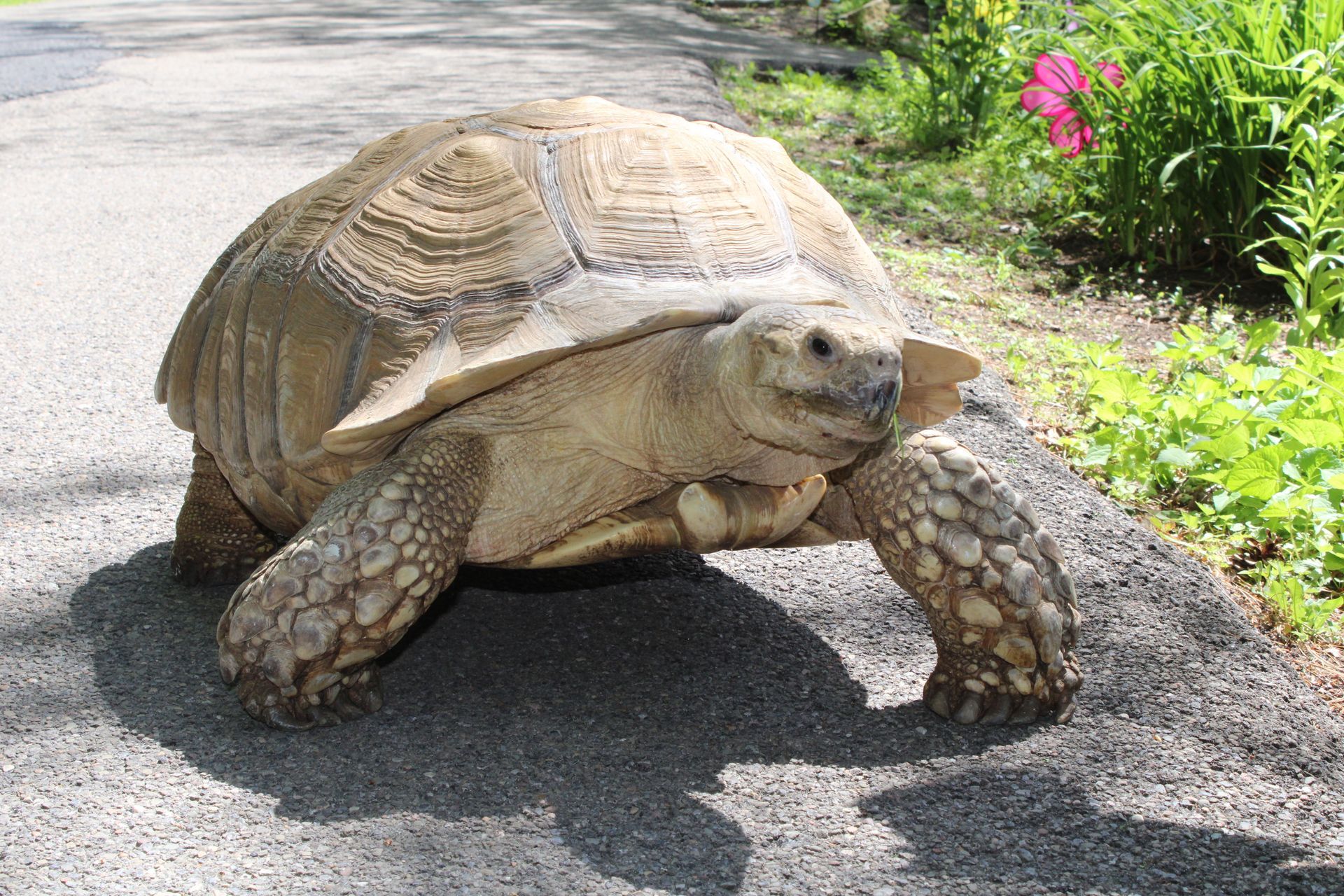
African Spurred Tortoise
Learn More -
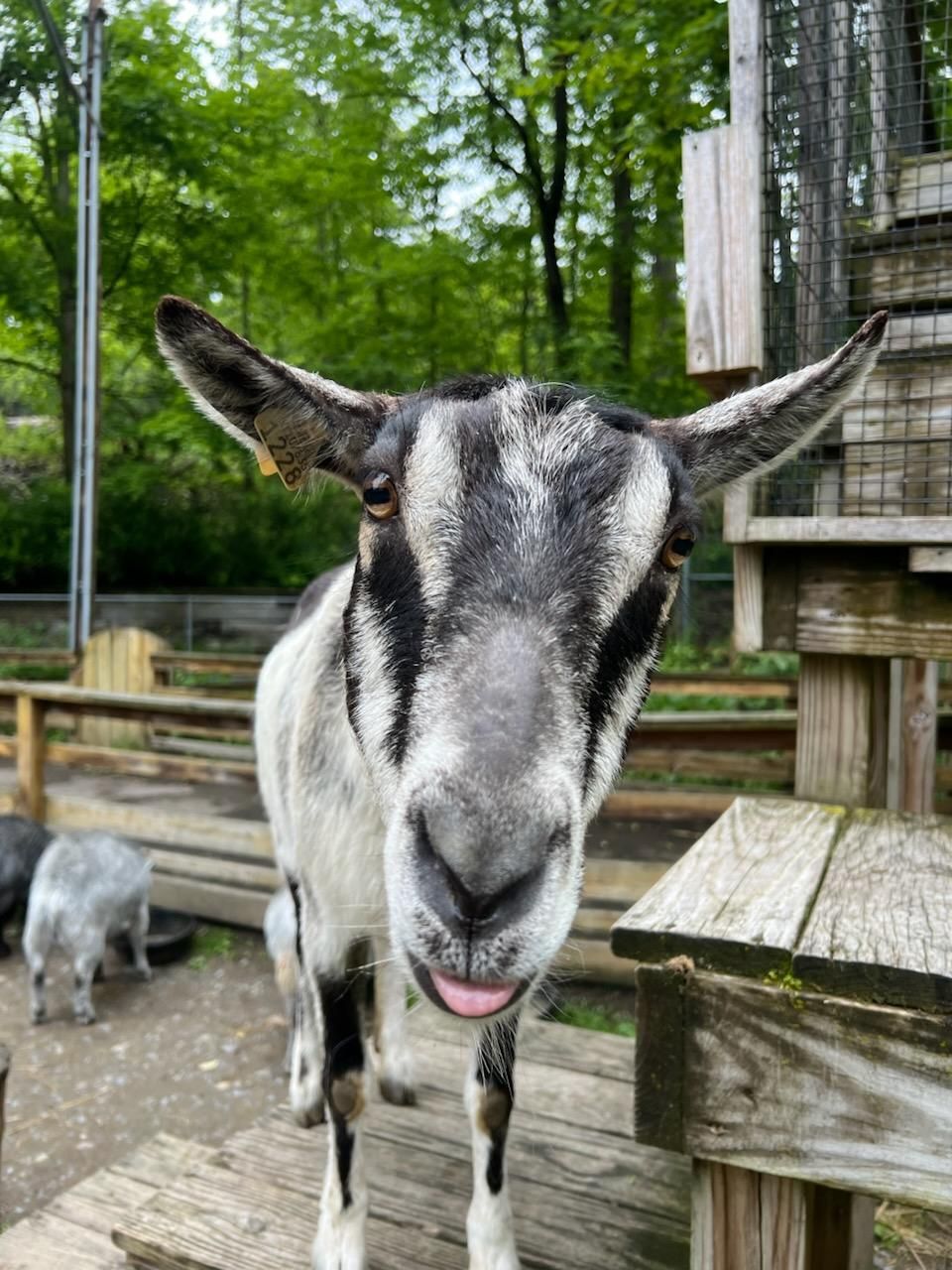
Alpine Goat
Learn More -
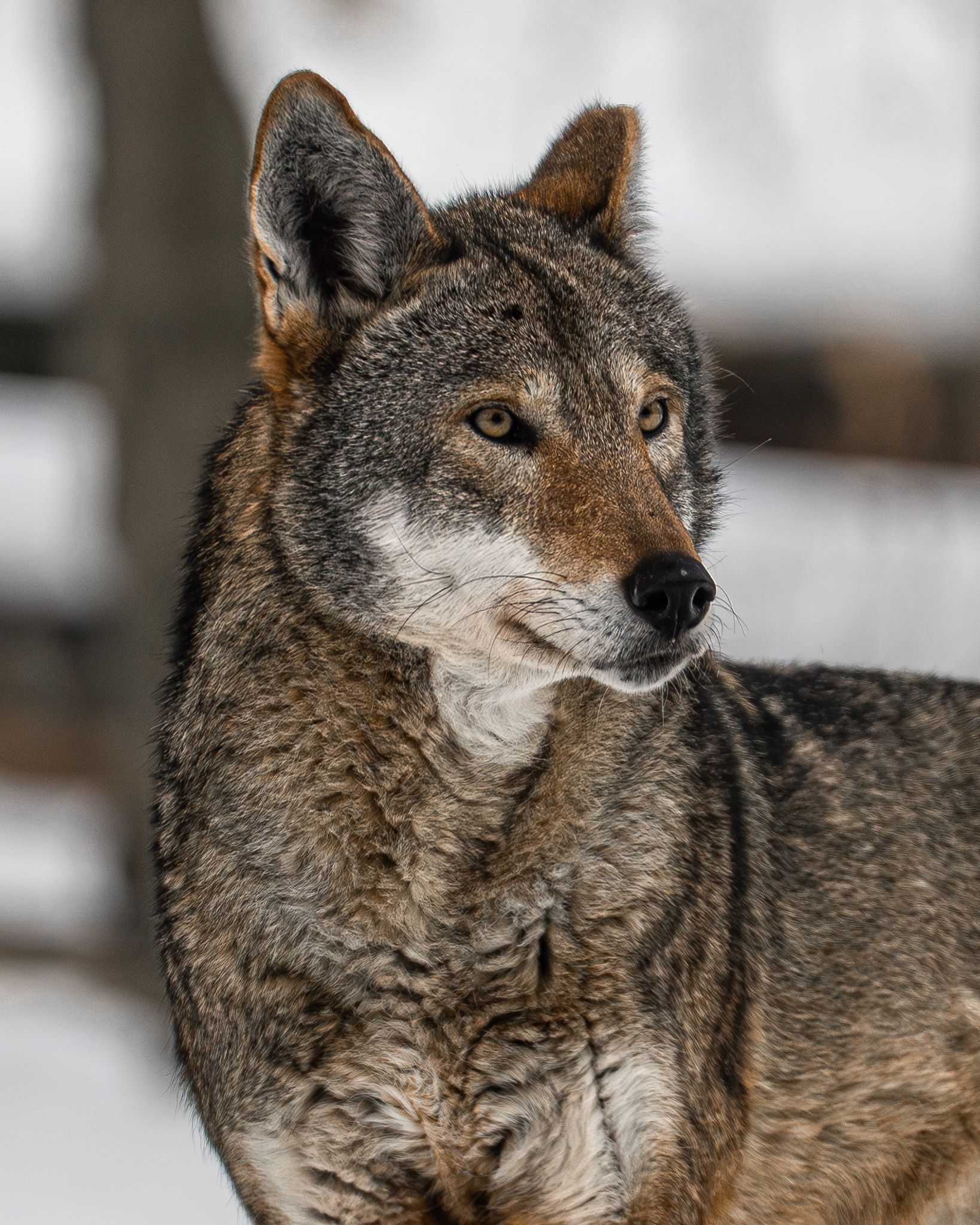
American Red Wolf
Learn More -
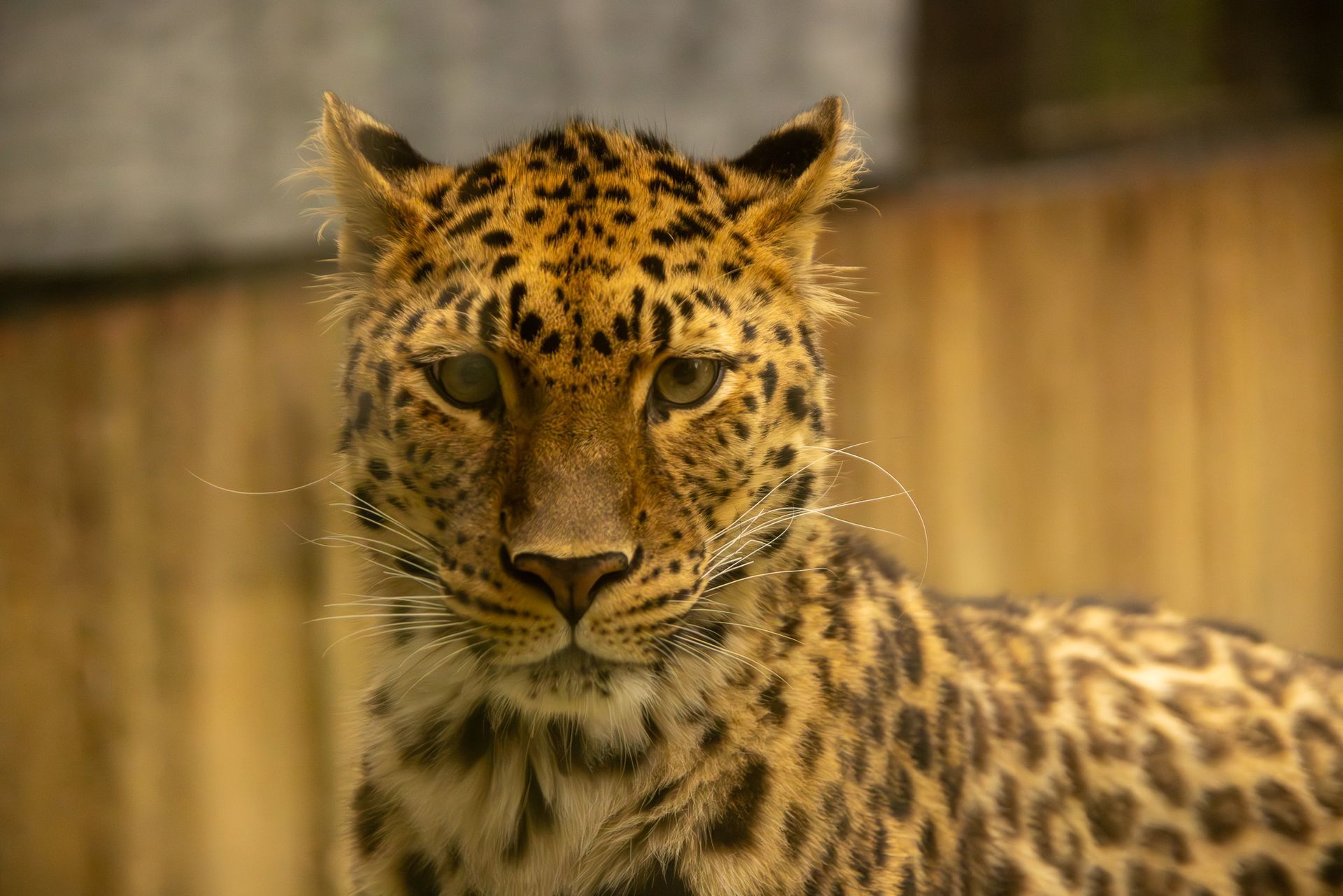
Amur Leopard
Learn More -
Arctic Fox
Learn More -
Bantam Chicken
Learn More -
Barred Owl
Learn More -
Binturong
Learn More -
Black Howler Monkey
Learn More -
Black Vulture
Learn More -
Black-and-white Ruffed Lemur
Learn More