Snowy Owl
Bubo scandiacus

Species Specific Information
Habitat
Terrestrial, wetland, agricultural, temperate, polar, tundra, desert, dune, savanna, grassland, marsh, urban
Predators
Sea birds, canines, humans
Diet
Carnivore
Wild- Birds, small mammals, fish
Professional Care- Raw meat, rodents
Life Expectancy
Wild- 5 - 9 years
Professional Care- 25 - 30 years
Physical Characteristics:
Weight: 3 - 4 lbs (1 -2 kg)
Size: 25 - 30 in (60 - 70 cm)
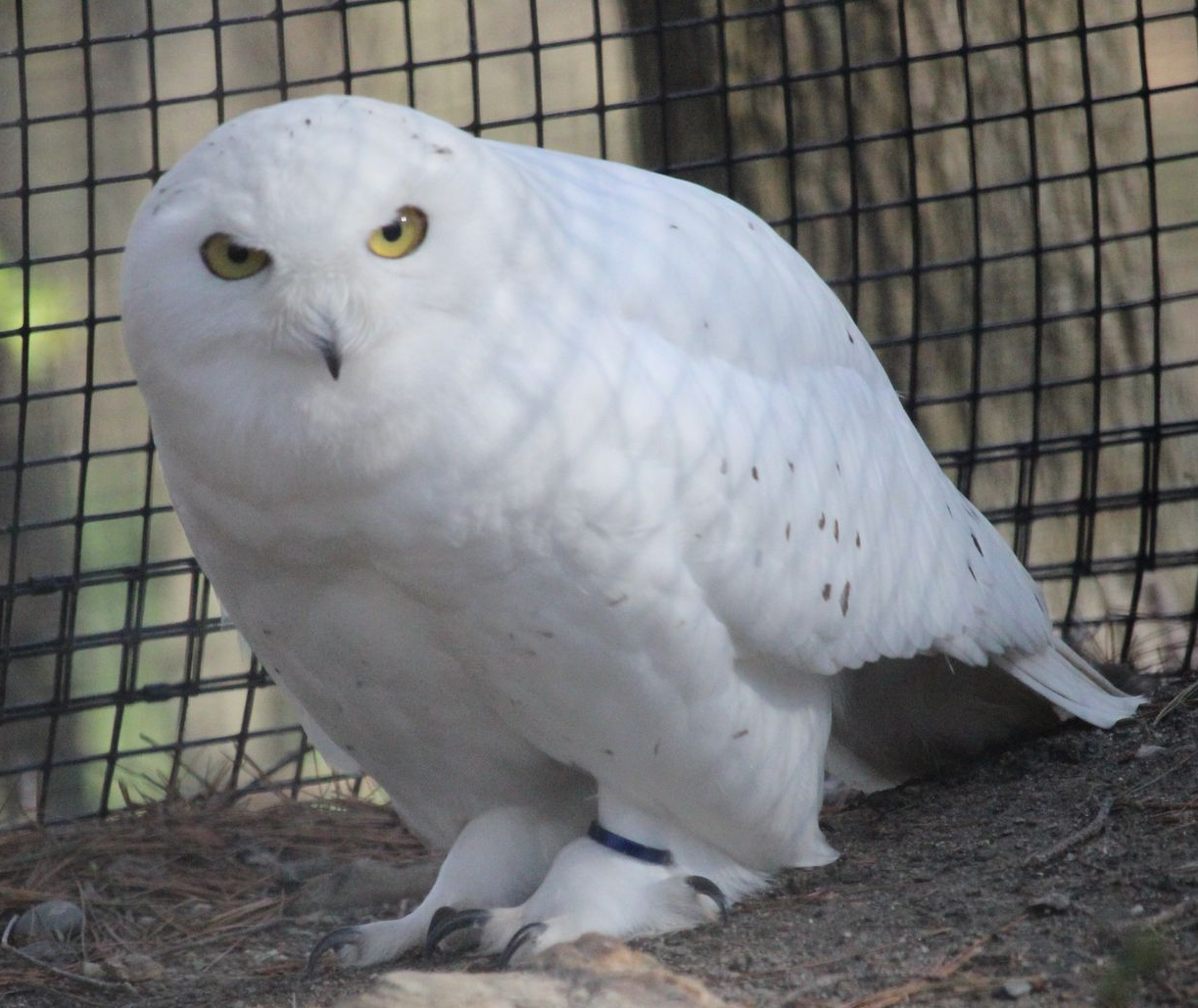
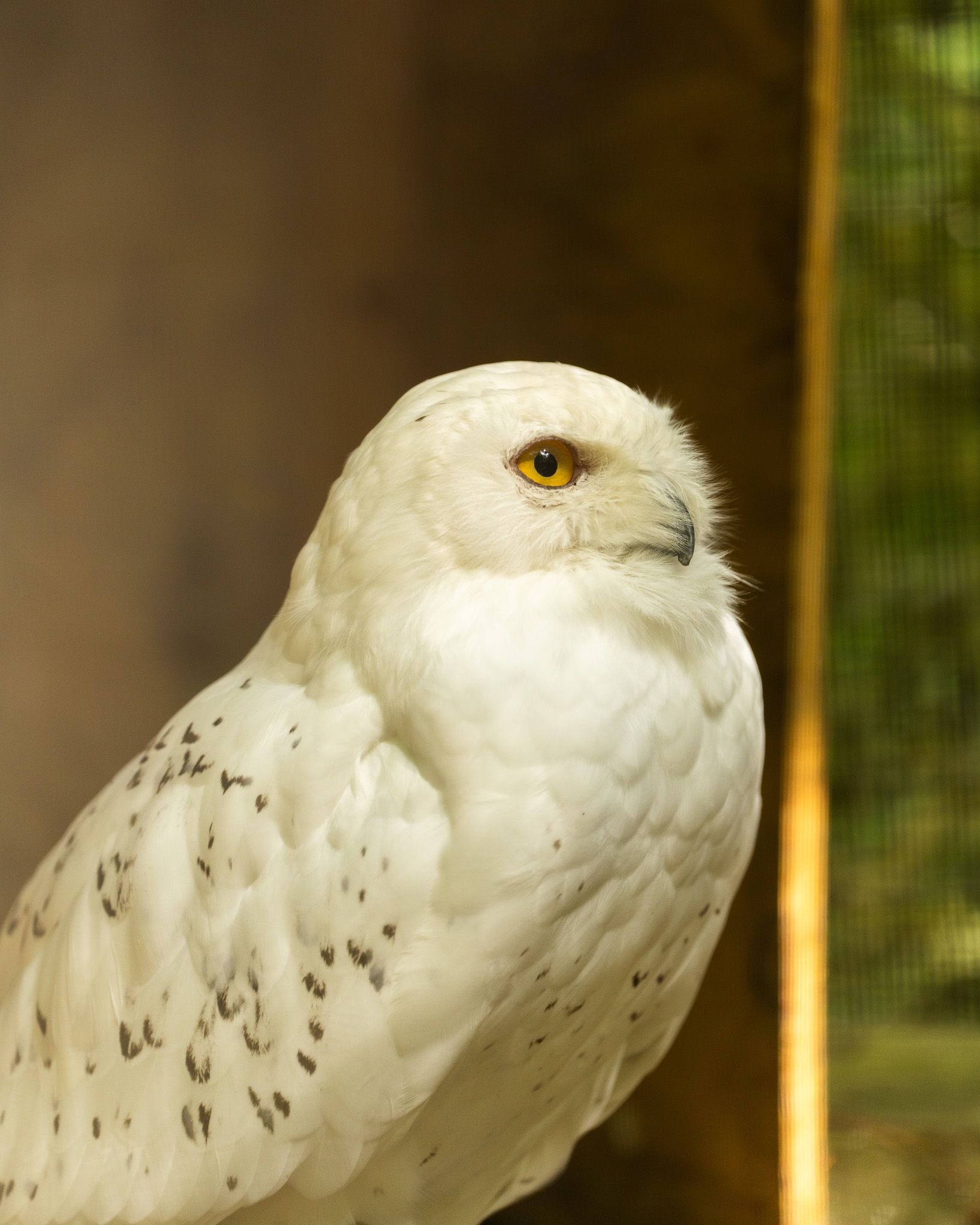
Distinguishing Characteristics: Snowy owls are the largest bird species in the arctic, with an average wingspan of 65 inches (170 cm). Females are larger and heavier than the males. Snowy owls are predominantly white, with dusky brown spots and bars. Females tend to have more markings than males - which may become nearly completely white as they age. Snowy owls have yellow eyes, and their legs and feet are covered in white feathers that protect them from the cold weather.
Adaptations & Fun Facts:
The Snowy owl is a patient hunter that perches and waits to identify its prey before soaring off in pursuit. Snowy owls have keen eyesight and great hearing, which can help them find prey that is invisible under thick vegetation or snow cover.
Normally, Snowy owls lay between 5 and 8 eggs per clutch. But in good years - when prey such as lemmings are abundant - they lay as many as 14 eggs per clutch. Female Snowy owls lay their eggs at 2-day intervals so that the young emerge from their eggs at different times. The hatchlings in the same nest are therefore of differing ages, with some having hatched as many as 2 weeks apart.
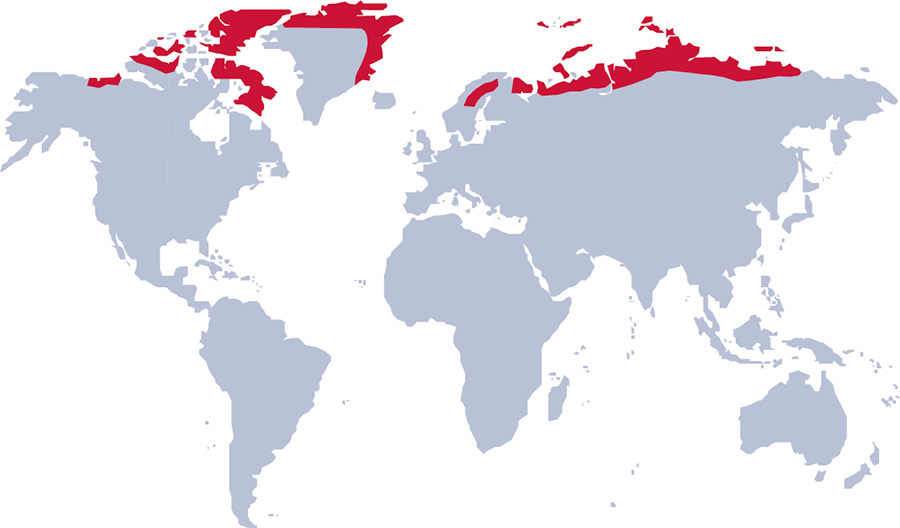
The Snowy owl is a nomadic species and shows a similar "irruptive" migration pattern to some seed-eating birds. Instead of seed crops, however, the Snowy owl's populations and movements depend on the populations of a small rodent - the lemming - whose abundance varies each year in well-documented boom-and-bust cycles.
Conservation Story
There are an estimated 14,000 - 28,000 adult Snowy owls in the wild. High rates of population decline have been reported in at least the American and Canadian part of its range, with an estimation of a 64% decline in the U.S.A. and Canada between 1970 and 2014. This would equate to a population decline of about 44% over 3 generations (or about 24 years) in these countries.
Historically, this species was one of the most hunted owls in North America. Thousands of owls were shot for taxidermy, and adults and eggs were hunted for food. In some areas, nesting habitat may be degraded as a result of urban development. Climate change is likely to have a significant impact on the species, as changes in the onset of spring and snowmelt in the breeding areas are likely to affect prey populations.
Legal conservation efforts include particular conservation actions taken by organizations which make government policy to protect all species on earth. The International Union for Conservation of Nature (IUCN) Red List Status is a critical indicator of the health of the world’s biodiversity. Snowy owls are listed as “Vulnerable,” which means they are considered to be at high risk of unnatural (human-caused) extinction without further human intervention. The Convention on International Trade in Endangered Species of Wild Fauna and Flora (CITES) lists the Snowy owl as Appendix II; this means that they are not necessarily now threatened with extinction, but may become so unless trade is closely controlled.

What Can We Do To Help?
Support the Ross Park Zoo through volunteering, donation, and/or sponsorship to help educate more people about birds of prey like the Snowy Owl!
Check out other animals at the zoo!
-
African Penguin
Learn More -
African Spurred Tortoise
Learn More -
Alpine Goat
Learn More -
American Red Wolf
Learn More -
Amur Leopard
Learn More -
Arctic Fox
Learn More -
Bantam Chicken
Learn More -
Barred Owl
Learn More -
Binturong
Learn More -
Black Howler Monkey
Learn More -
Black Vulture
Learn More -
Black-and-white Ruffed Lemur
Learn More