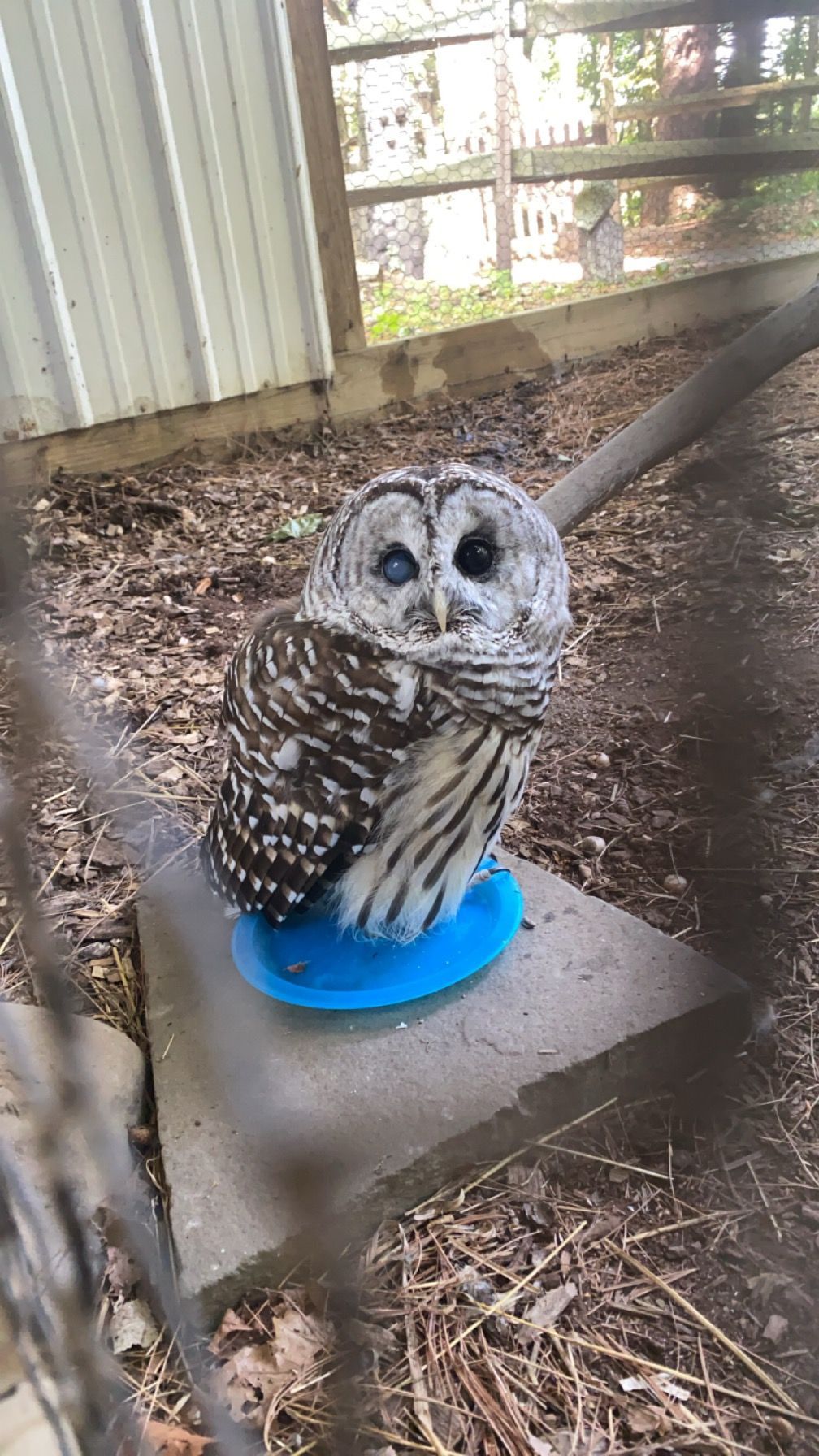
Screech Owl
Megascops asio

Species Specific Information
Habitat
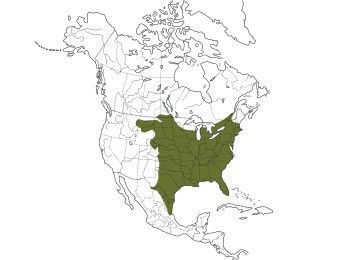
Terrestrial, temperate, urban, desert, dune, savanna, grassland, forest, scrub forest
Predators
Larger owls, hawks, snakes, Virginia opossums, raccoons, ringtails, humans
Diet
Carnivore
Wild- Birds, mammals, amphibians, reptiles, insects, worms
Professional Care- Raw meat, rodents
Life Expectancy
Wild- 7 - 10 years
Professional Care- 14 - 20 years
Physical Characteristics:
Weight: 4 - 8 oz (120 - 250 g)
Size: 6 - 10 in (15 - 25 cm)
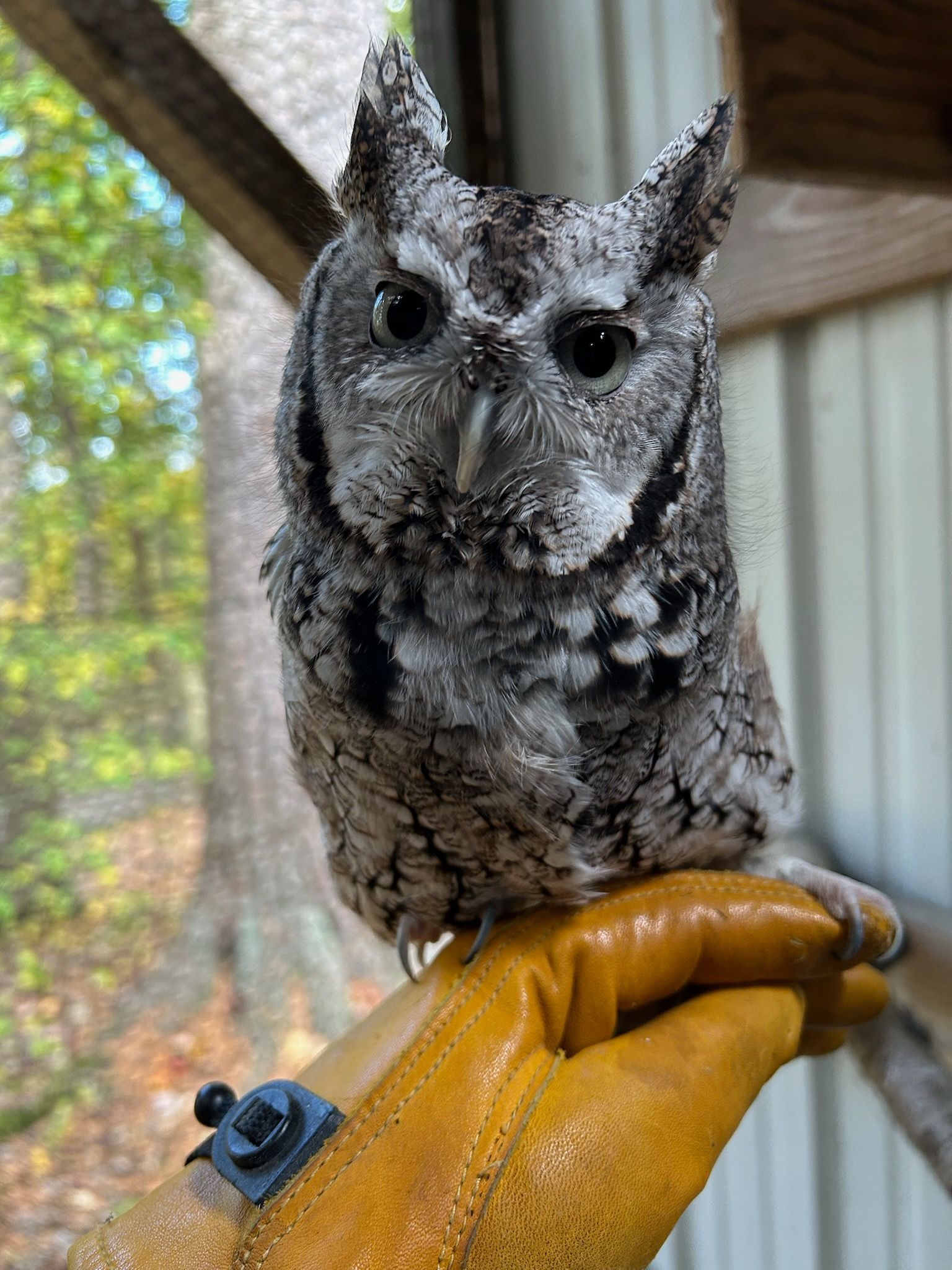
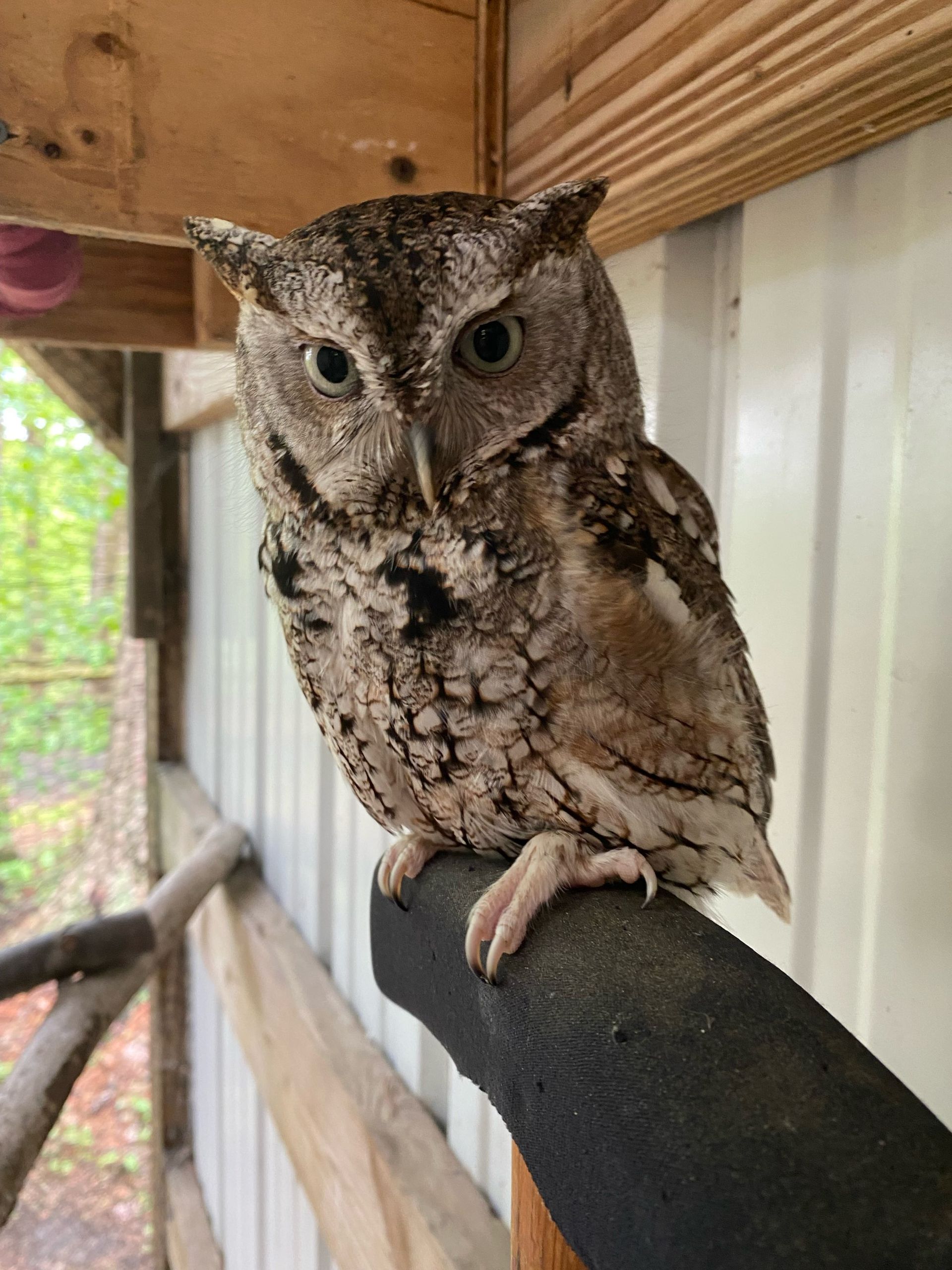
Distinguishing Characteristics: The Eastern screech owl - as well as its western counterpart - are actually some of the heaviest screech owls. The wingspan can range from 18 to 24 inches (46 to 61 cm). They have either rusty or dark gray plumage with streaking on the underparts. They have a large, round head with prominent ear tufts, yellow eyes, and a yellowish beak. The feet are relatively large and powerful compared to Southern screech owls and are typically feathered down to the toes, although the southernmost populations only have remnant bristles, rather than full feathering, on the legs and feet.
Adaptations & Fun Facts:
Eastern screech owls are active at night and are far more often heard than seen—most bird watchers know this species from its trilling or whinnying song. Eastern screech owls communicate through vocalizations. They may sing during the breeding season or make alarm calls if threatened. Both males and females vocalize, but males tend to be noisier.
This owl is agile enough to occasionally prey on bats, and can rarely be cannibalistic. When prey is plentiful, Eastern screech owls cache extra food in tree holes for as long as four days.
To attract a mate, a male will call to a female while swiveling his head and body. He may also wink his eyes slowly. If he’s successful, the birds will touch bills and clean each other's feathers. Eastern screech owls mate for life and often reuse the same nest sites year after year.

Conservation Story
There are an estimated 560,000 adult screech owls in the wild. However, this species has been declining over the last 50 years in North America (47% decline between 1966 and 2015 based on the North American Breeding Bird Survey). Data from the Audubon Christmas Bird Count reports a decline in the U.S.A., where the majority of the population occurs, while the much smaller population in Canada was found to be increasing. A remote-sensing study found that forest loss within its range over the last three generations was potentially 12%.
Legal conservation efforts include particular conservation actions taken by organizations which make government policy to protect all species on earth. The International Union for Conservation of Nature (IUCN) Red List Status is a critical indicator of the health of the world’s biodiversity. Eastern screech owls are listed as “Least Concern,” which means they are widespread and abundant in the wild. The Convention on International Trade in Endangered Species of Wild Fauna and Flora (CITES) lists the screech owl as Appendix II; this means they are not necessarily threatened with extinction but may become so unless wildlife trafficking and other trades are not controlled.
What Can We Do To Help?
Become a community scientist by joining Ross Park Zoo’s project on iNaturalist. In the app and on the website, community scientists (that’s you!) are able to upload photos, videos, and sound recordings of all birds locally and around the world to track bird populations. Also, support Ross Park Zoo through volunteering, donation, and/or sponsorship to help educate more people about birds of prey like the Eastern screech owl!
Check out other animals at the zoo!
-
African Penguin
Learn More -
African Spurred Tortoise
Learn More -
Alpine Goat
Learn More -
American Red Wolf
Learn More -
Amur Leopard
Learn More -
Arctic Fox
Learn More -
Bantam Chicken
Learn More -
Barred Owl
Learn More -
Binturong
Learn More -
Black Howler Monkey
Learn More -
Black Vulture
Learn More -
Black-and-white Ruffed Lemur
Learn More