Sand Cat
Felis margarita

Species Specific Information
Habitat
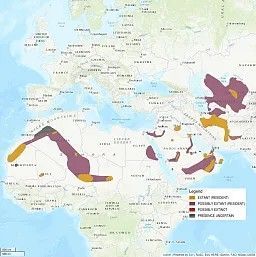
Terrestrial, temperate, desert, dune
Predators
Snakes, jackals, owls, humans
Diet
Carnivore
Wild- Birds, mammals, amphibians, reptiles, insects
Professional Care- Raw meat, rodents
Life Expectancy
Wild- 4 years
Professional Care- 13 years
Physical Characteristics:
Weight: 3 - 8 lbs (1.5 - 3.5 kg)
Size: 15 - 20 inches (45 - 55 cm)
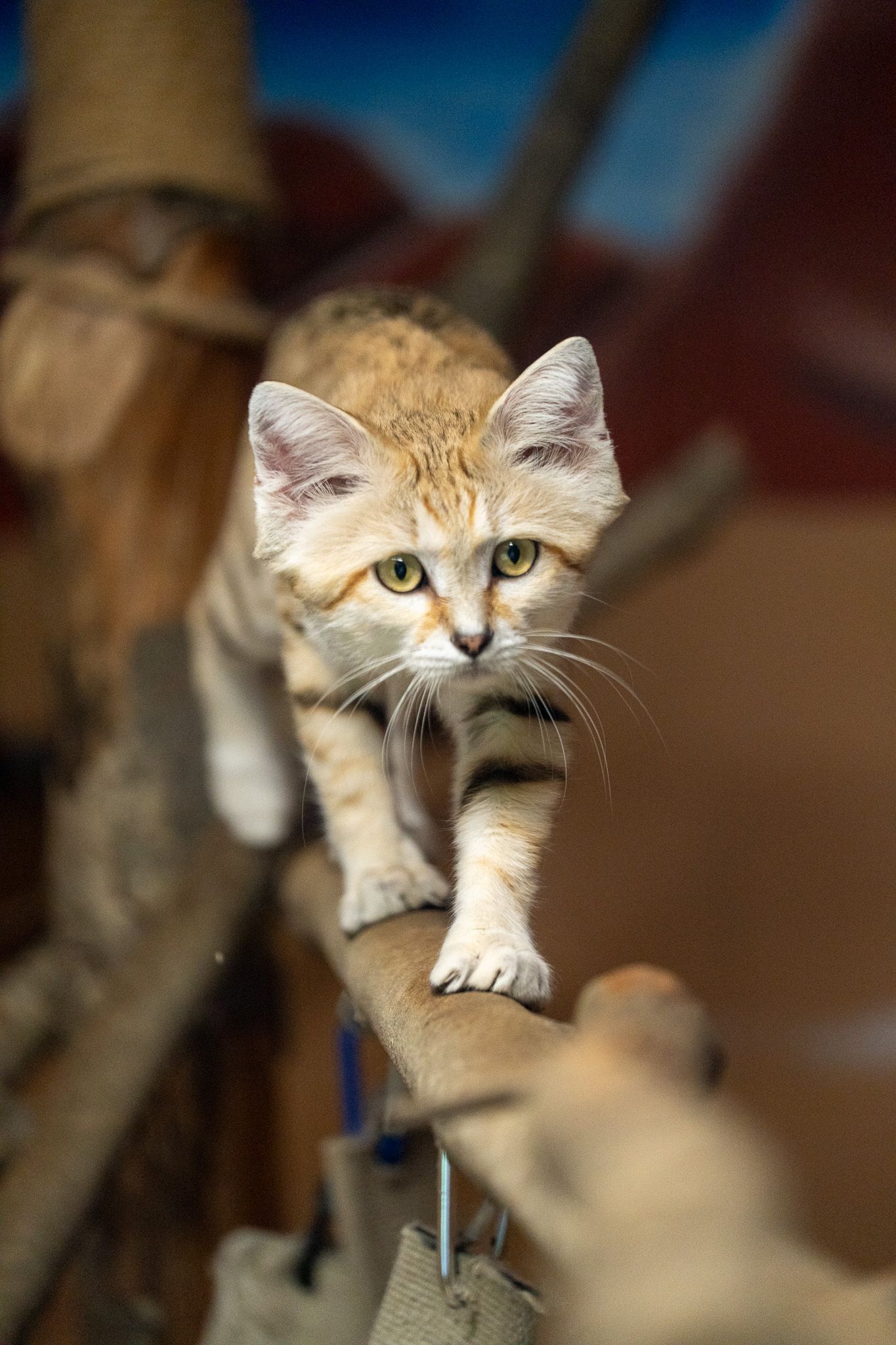
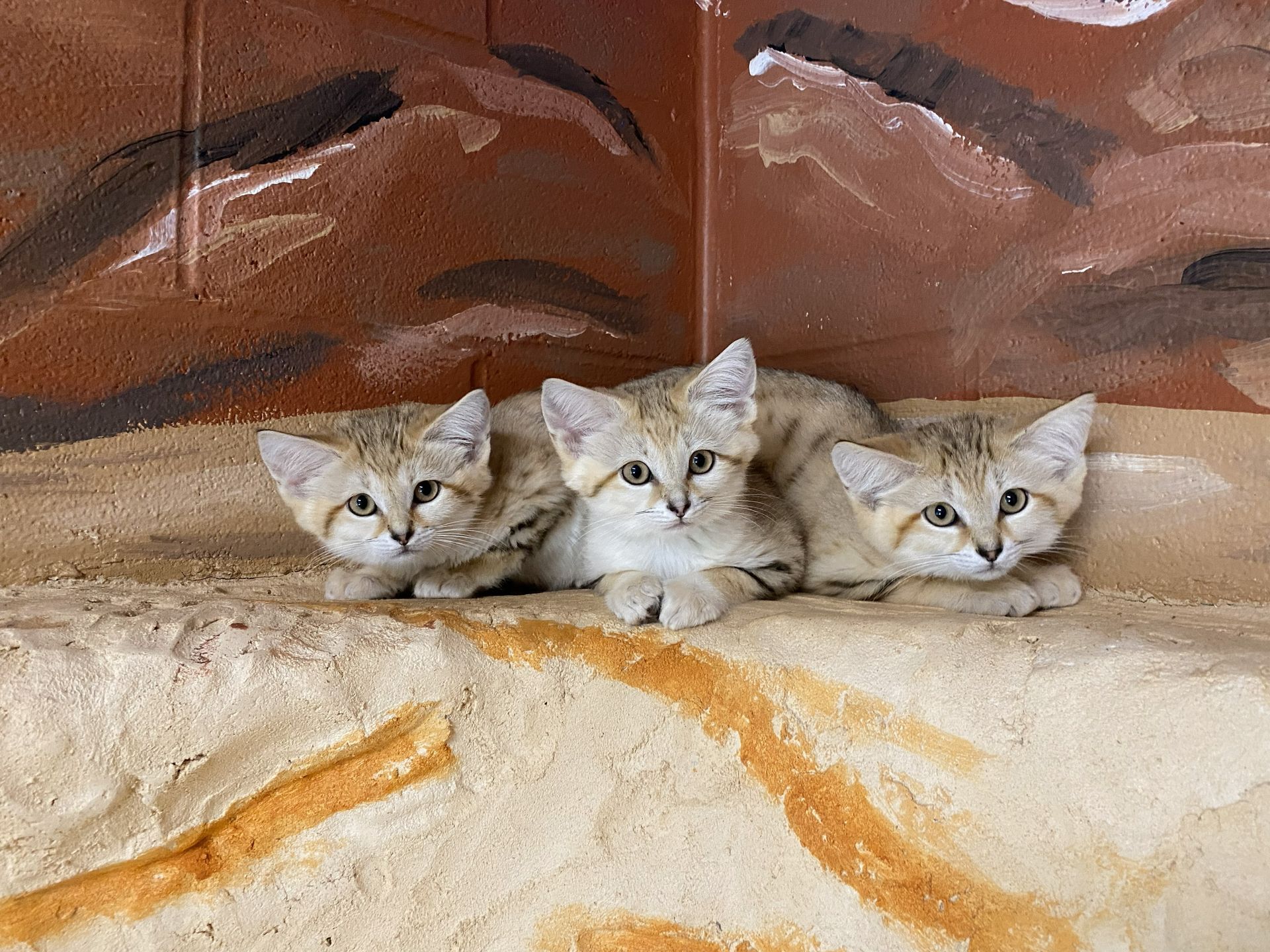
Distinguishing Characteristics: Their most distinctive characteristic is their large ears, which protect the sensitive interior from blowing sand. The most highly developed senses of this species are hearing and smelling. Thick fur covers the body and protects it from the harsh nighttime temperatures. Coat colors range from pale yellow to grey. They have dark brown to black stripes covering the tail and limbs, and the eyes are accented with reddish-orange stripes. The chest and chin are always white. Another distinguishing characteristic of the species is the wiry, black fur that covers the pads of their feet, protecting them from the desert's hot surfaces.
Adaptations & Fun Facts:
Sand cats are the smallest of the wild cats. Their small body size is an excellent adaptation to help prevent overheating in their desert environment.
They have an excellent sense of hearing - even compared to other felids. This is due to the oversized structures in their ears, used for hunting prey buried beneath the sand.
Sand cats can go weeks at a time without drinking, instead getting all the water they need from the food they eat.
They aren't great climbers, but they are excellent at digging, which they utilize to create burrows to escape the extreme heat/cold of their environment - or to dig up prey.
To protect their paws from the hot desert sand, the bottoms of their feet have thick coarse fur which also aids them in walking through shifting sand - much like snow shoes. If they get too hot, they will dig shallow burrows and lay on their backs - which exposes their white fur on their abdomen to reflect the sun's rays.

Conservation Story
The total population is conservatively estimated at around 27,000 adult individuals. Habitat degradation and loss are considered to be the major threats to the Sand cat. Many areas are also more heavily frequented by humans and their domestic animals. Vulnerable ecosystems are being converted by infrastructural development and human settlement. These environments are especially degraded through livestock grazing. Destruction of desert ecosystems continues to be widely acknowledged as an urgent conservation problem and could result in a decline of Sand cat populations. The Sand cat's small mammal prey base depends on having adequate vegetation, and may experience changes year to year due to drought or declines due to desertification and loss of natural vegetation.
Legal conservation efforts include particular conservation actions taken by organizations which make government policy to protect all species on earth. The International Union for Conservation of Nature (IUCN) Red List Status is a critical indicator of the health of the world’s biodiversity. Sand cats are listed as “Least Concern,” which means they are widespread and abundant in the wild. The Convention on International Trade in Endangered Species of Wild Fauna and Flora (CITES) lists the Sand cat as Appendix II; this means they are not necessarily threatened with extinction but may become so unless wildlife trafficking and other trades are not controlled. The US Endangered Species Act of 1973 recognizes Pakistan Sand cats as Endangered and allows for US funding for international conservation efforts.
What Can We Do To Help?
Support conservation organizations - like the Filidae Conservation Fund and Ross Park Zoo - through volunteering, donation, and/or sponsorship.
Check out other animals at the zoo!
-
African Penguin
Learn More -
African Spurred Tortoise
Learn More -
Alpine Goat
Learn More -
American Red Wolf
Learn More -
Amur Leopard
Learn More -
Arctic Fox
Learn More -
Bantam Chicken
Learn More -
Barred Owl
Learn More -
Binturong
Learn More -
Black Howler Monkey
Learn More -
Black Vulture
Learn More -
Black-and-white Ruffed Lemur
Learn More