Red Panda 

Ailurus fulgens

Species Specific Information

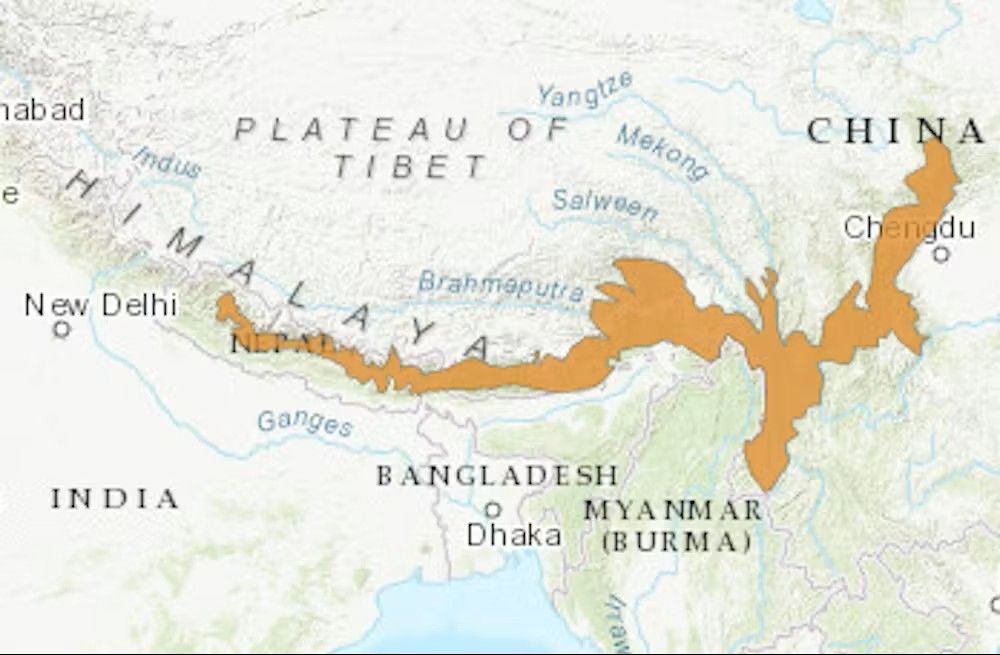
Range

Himalayan Mountains

Habitat

Terrestrial, temperate, forest, shrubland, mountains

Predators

Snow leopards, humans

Diet

Carnivore (folivore)


Wild- Bamboo leaves & shoots, seeds, grains, nuts, flowers, eggs, small rodents

Professional Care- Bamboo, produce

Life Expectancy

Wild- 8 - 10 years 

Professional Care- 10 - 14 years


Physical Characteristics:

Weight: 8 - 14 lbs (4 - 6 kg)

Size: 22 - 25 in (55 - 60 cm)


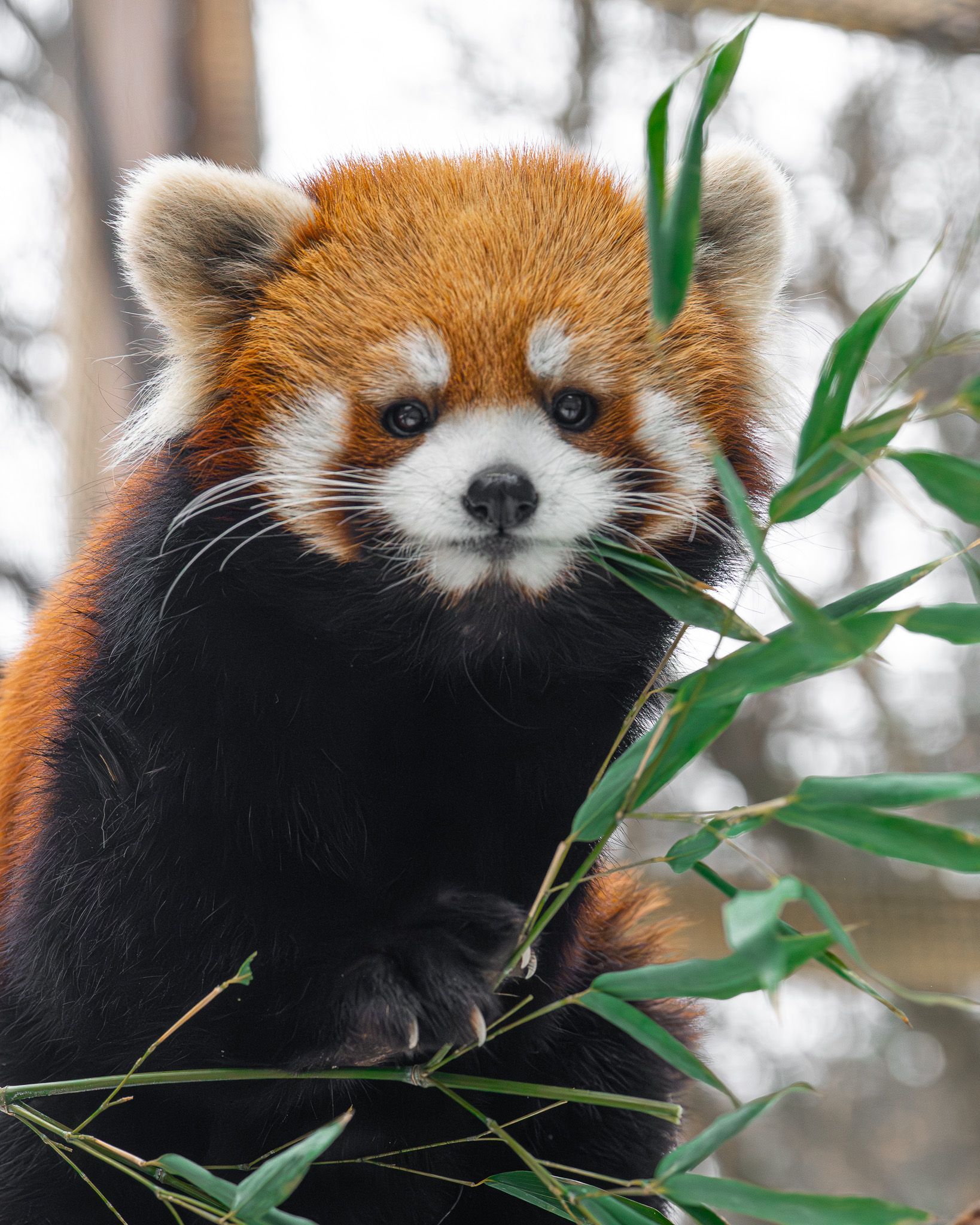
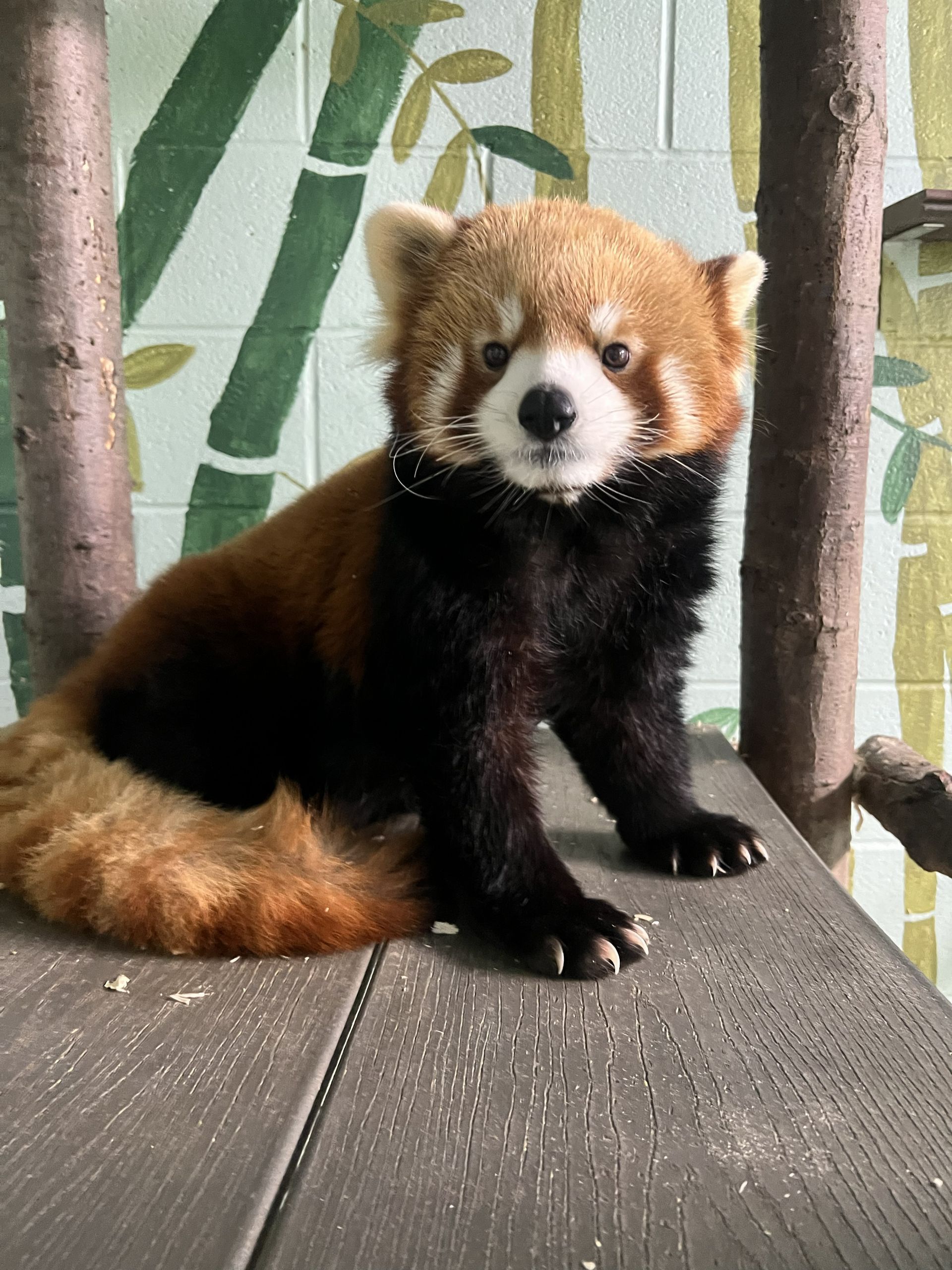
Distinguishing Characteristics:  The tails are marked with about 12 alternating red and buff rings. Long, coarse guard hairs cover the body, and the undercoat is soft, dense, and woolly. The face is predominantly white, with reddish-brown "tear" marks under the eyes. The fur on the upper side of its body is reddish-brown, while underneath it is glossy black. The legs are black and the soles of its feet are covered with dense, white hair. Front legs are angled inward, leading to its waddling walk. 

Adaptations & Fun Facts:

Red pandas are the original panda! Giant pandas received the name over 40 years after the description of the Red panda was published in 1825.


The Red panda is also called the Firefox, Lesser Panda, and Red Cat-bear. Despite all of these names, the Red panda is not actually related to foxes, pandas, felines, or bears! Instead, it is more closely related to raccoons; this confusion is the result of numerous common names given to the animal by various cultures and continuing debates over its classification within the scientific community.


Despite being classified as a carnivore, Red pandas are one of the few animals whose diet is composed almost entirely of bamboo; they grasp stems with their forepaws and shear the leaves off with sharp teeth. Bamboo is poor in nutrients (or at least it is difficult to extract the nutrients from the fiber); to compensate, Red pandas are only active for part of the day (most of it spent foraging & eating bamboo) and have an extremely slow metabolism (almost as slow as sloths).


Like the unrelated Giant panda, the Red panda's wrist bone extends further than normal, creating a "false thumb." In both species, this extra "digit" makes it easier for the animals to grasp bamboo stalks.


Red pandas communicate using scent-marks and various squeaks and chattering sounds.

Conservation Story

There are an estimated 2,500 Red pandas in the wild. Between 40 and 50% of the global population has declined in just the past 20 years, and continues on a downward trend.


Several problems occur throughout the species's range, with some variation in assessed impact. The major threats are habitat loss and fragmentation, habitat degradation, and physical threats. These are all made worse by the region's increasing human population: climate change, natural disasters, inadequate enforcement of laws and regulations, and Red panda trade (skins and other body parts) all contribute to the decline of this species. Because of increases in human populations, herders' domestic animals are protected by dogs that attack pandas and, if not vaccinated, potentially carry canine distemper, which is fatal to Red pandas. Reports of Red panda poaching and smuggling seem to be increasing, as well as the live Red panda trade.


Legal conservation efforts include particular conservation actions taken by organizations which make government policy to protect all species on earth. The International Union for Conservation of Nature (IUCN) Red List Status is a critical indicator of the health of the world’s biodiversity. Red pandas are listed as “Endangered,” which means they have a high risk of extinction in the wild. The Convention on International Trade in Endangered Species of Wild Fauna and Flora (CITES) lists Red pandas as Appendix I; this means they are the most endangered among CITES-listed animals and plants. 

What Can We Do To Help?

Support conservation organizations - like the Red Panda Network and Ross Park Zoo - through volunteering, donation, and/or sponsorship.

Check out other animals at the zoo!