Red-footed Tortoise 

Chelonoidis carbonaria

Species Specific Information

Range

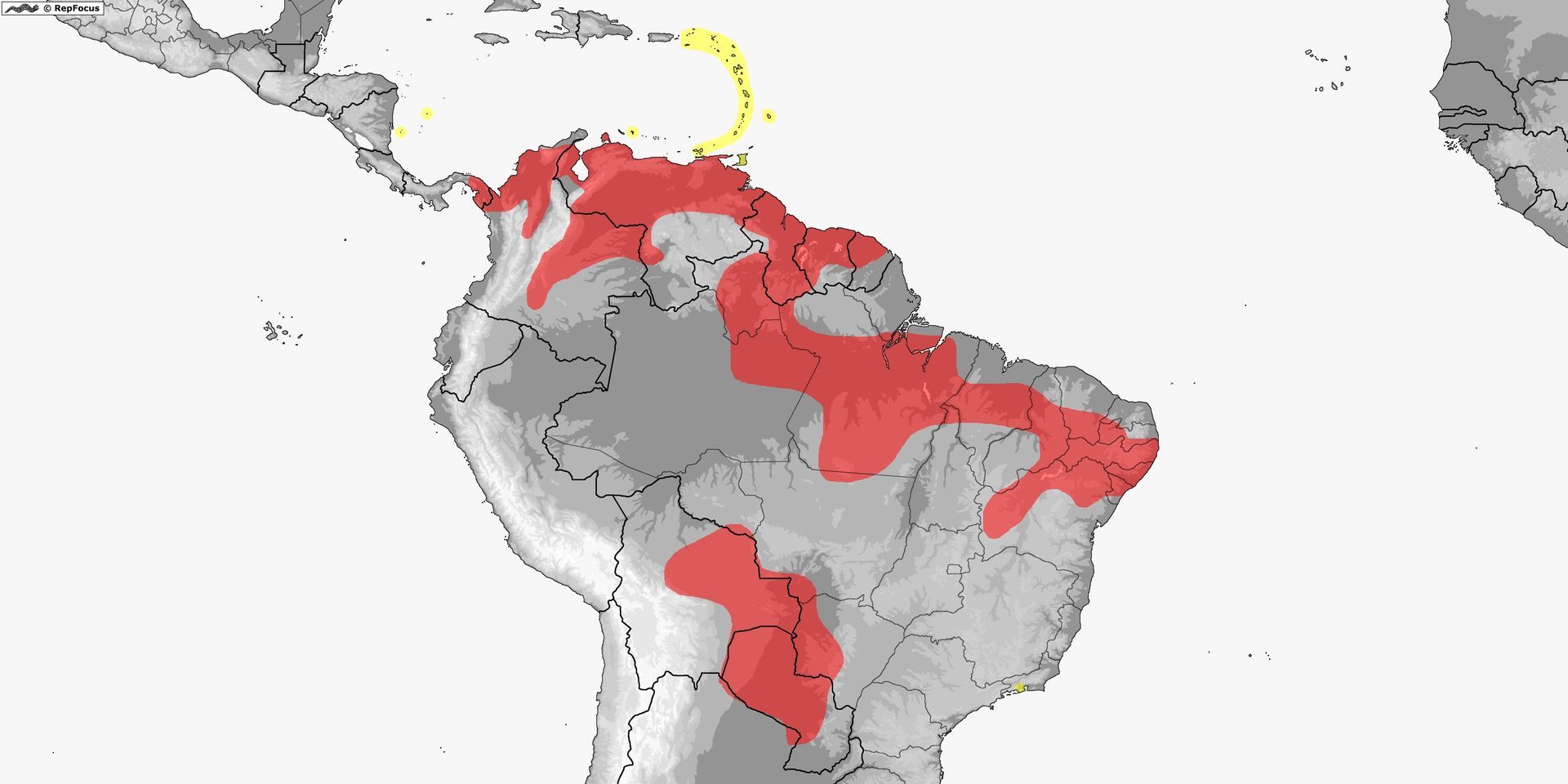
Southeastern Panama, northern and central South America, Caribbean Islands

Habitat

Terrestrial, tropical, savanna, grassland, forest, rainforest, wetlands, marsh, swamp

Predators

Tegu lizards, ring-tailed coatis, snakes, crocodiles, larger turtles, birds of prey, felines, opossums, foxes, peccaries, feral dogs, humans

Diet

Omnivore


Wild- Leaves, wood, bark, stems, fruit, flowers, fungus, carrion

Professional Care- Greens, fruits, vegetables, eggs, small rodents


Life Expectancy

Wild- Unknown

Professional Care- 30 - 50 years

Physical Characteristics:

Weight: 20 - 60 lbs (10 - 30 kg)

Size: 12 - 14 in (30 - 35 cm)


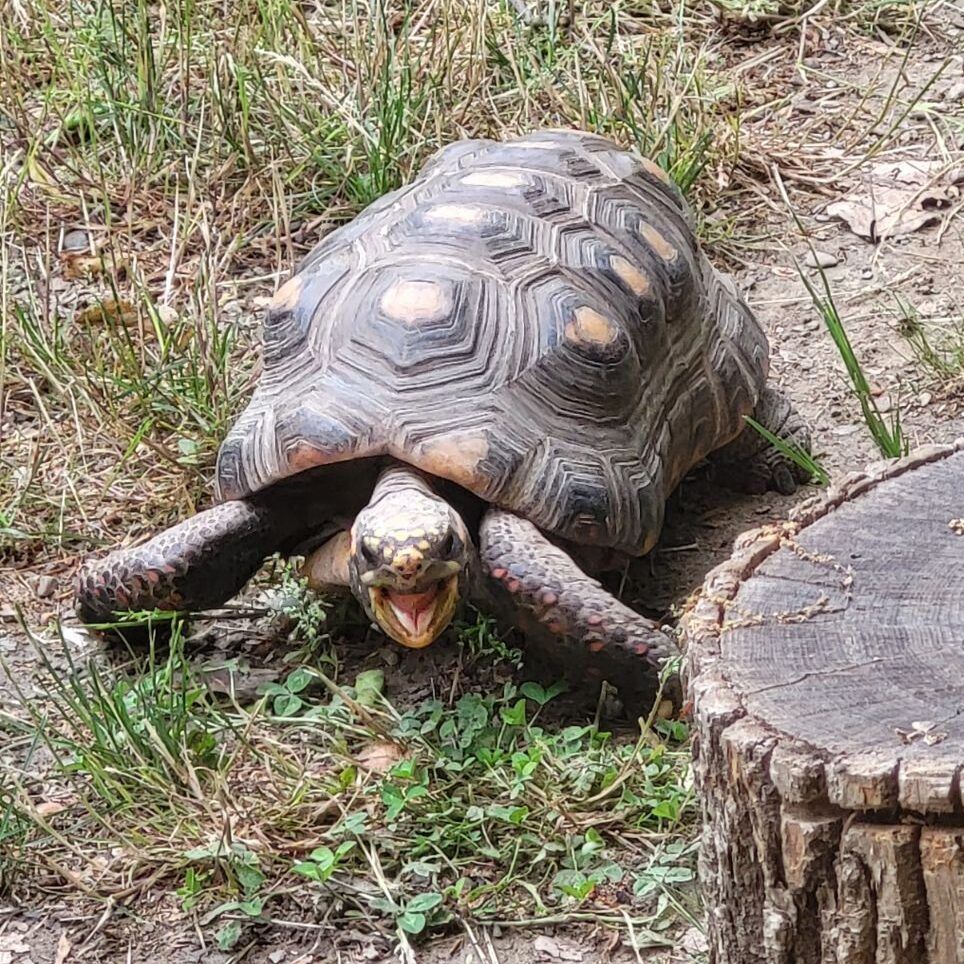
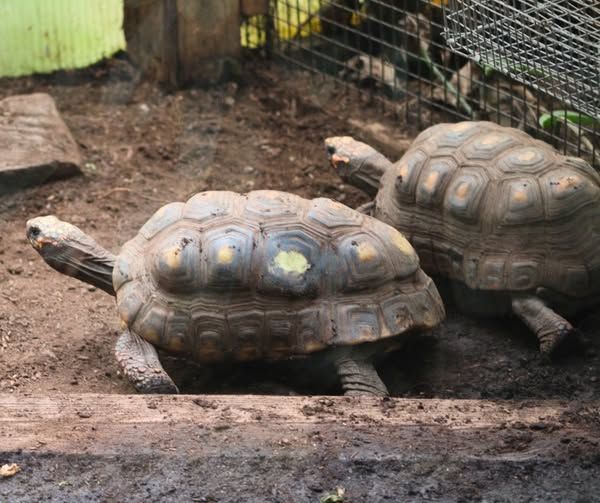
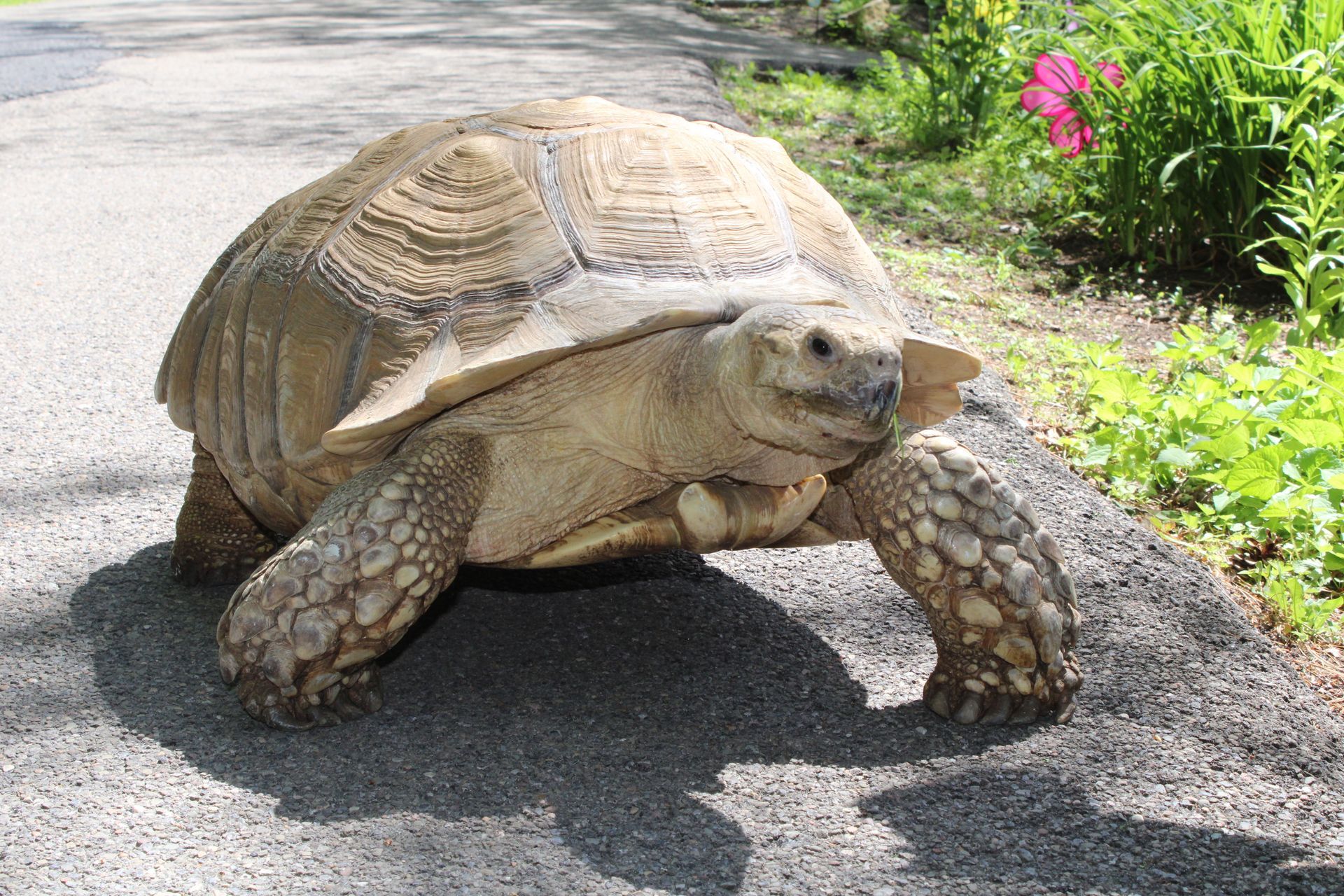
Distinguishing Characteristics:  The carapace (shell) of Red-footed tortoises ranges from dark-brown to blackish brown. Outer regions of each scute are golden-brown, and the edges tend to be dark-brown. The plastron (bottom shell) can range from pale to a dark yellow, and the scales on the limbs and tail are enlarged and can range from yellow to dark reddish-orange.

Adaptations & Fun Facts:

Gender can be distinguished by the shape of the plastron, which is curved in males and flat in females. Mature adults have distinctive incurving of sides, giving them an hourglass figure when observed from above.


Males and females use head movements as signals to identify each other. Males of this species will fight over a female during mating season; they attempt to turn one another over onto their back. When mating, males make a sound that is similar to a chicken clucking. 


Tortoises depend on their sense of smell to locate food. They do not have teeth, but the outside edge of their mouth has a hard sharpened edge that they use to bite and chew. 


The Red-footed tortoise can survive for long periods without drinking; instead, the tortoise is able to pull the necessary water out of the plants it eats. This allows the tortoise to survive during the dry season. 

Conservation Story

The wild population of the Red-footed tortoise is unknown; however, it is estimated that around 35,000 individuals were exported for the exotic pet trade between 2000 and 2005. The recorded exports do not include smuggling or other losses, which some estimate to be well over twice that number. They are considered especially at risk in Argentina and Colombia, and are considered more at risk than both the Yellow-footed tortoise and Chaco tortoise. Habitat destruction is another significant threat to the Red-footed tortoise.


Legal conservation efforts include particular conservation actions taken by organizations which make government policy to protect all species on earth. The Convention on International Trade in Endangered Species of Wild Fauna and Flora (CITES) lists the Red-footed tortoise as Appendix II; this means that they are not necessarily threatened with extinction, but that may become so unless trade is closely controlled.

What Can We Do To Help?

Support conservation organizations - like The Turtle Conservancy and Ross Park Zoo - through volunteering, donation, and/or sponsorship. We can also help by learning about the dangers of wildlife trafficking and the exploitation of species in the exotic pet trade through the American Zoo Association’s (AZA) Not-a-Pet campaign. While it may be legal to own Red-footed tortoises in the United States, the desire to have these wild animals as a pet only contributes to the potential decline of the species. 

Check out other animals at the zoo!