Prehensile-tailed Porcupine
Coendou prehensilis
Species Specific Information
Habitat
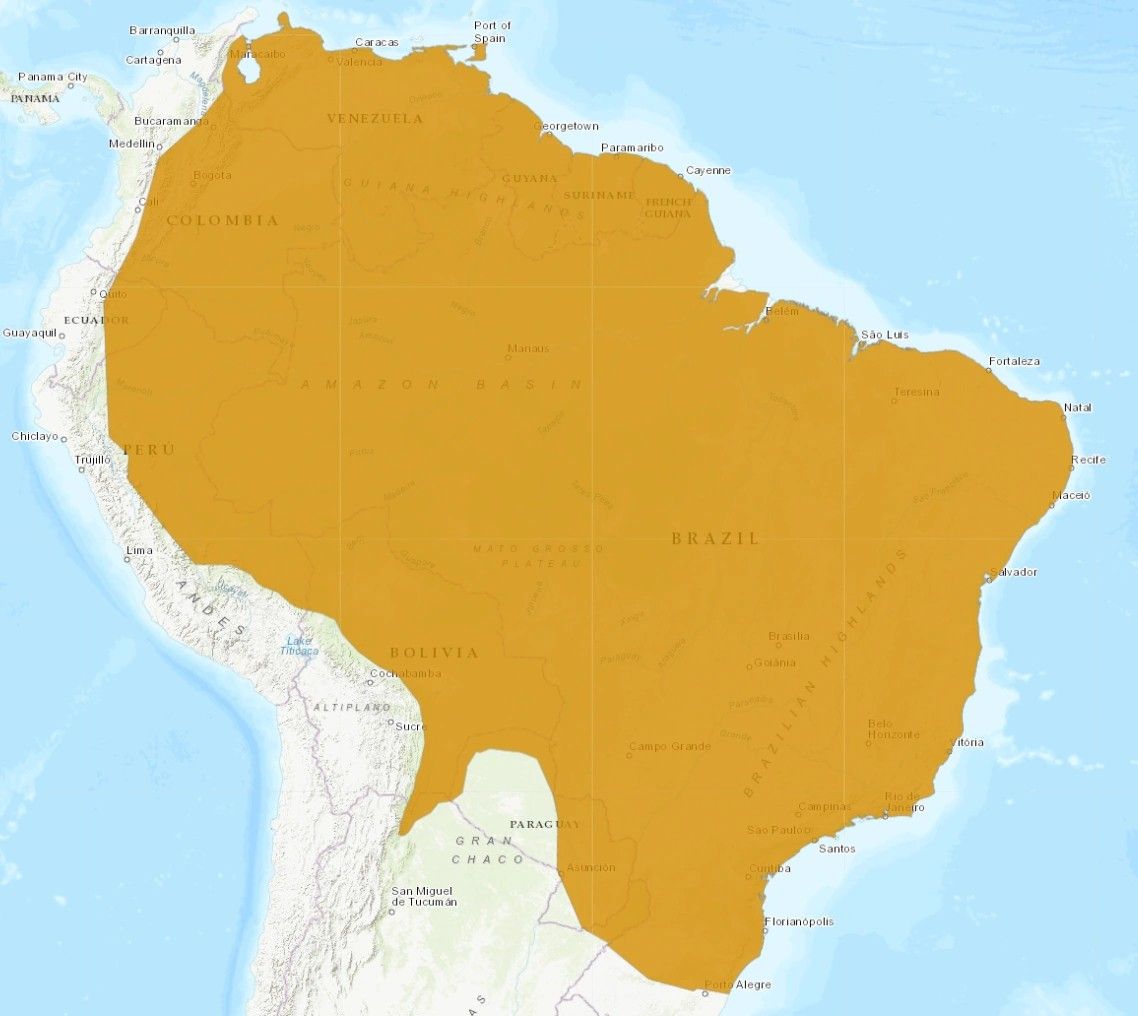
Terrestrial, tropical, agricultural, savanna, grassland, forest, rainforest
Predators
Domestic dogs, kissing bugs, humans
Diet
Herbivore (frugivore)
Wild- Leaves, roots, tubers, wood, bark, stems, seeds, grains, nuts, fruit, flowers
Professional Care- Browse, vegetables
Life Expectancy
Wild- 10 - 17 years
Professional Care- 15 - 27 years
Physical Characteristics:
Weight: 4 - 11 lbs (2 - 5 kg)
Size: 12 - 23 in (30 - 60 cm)
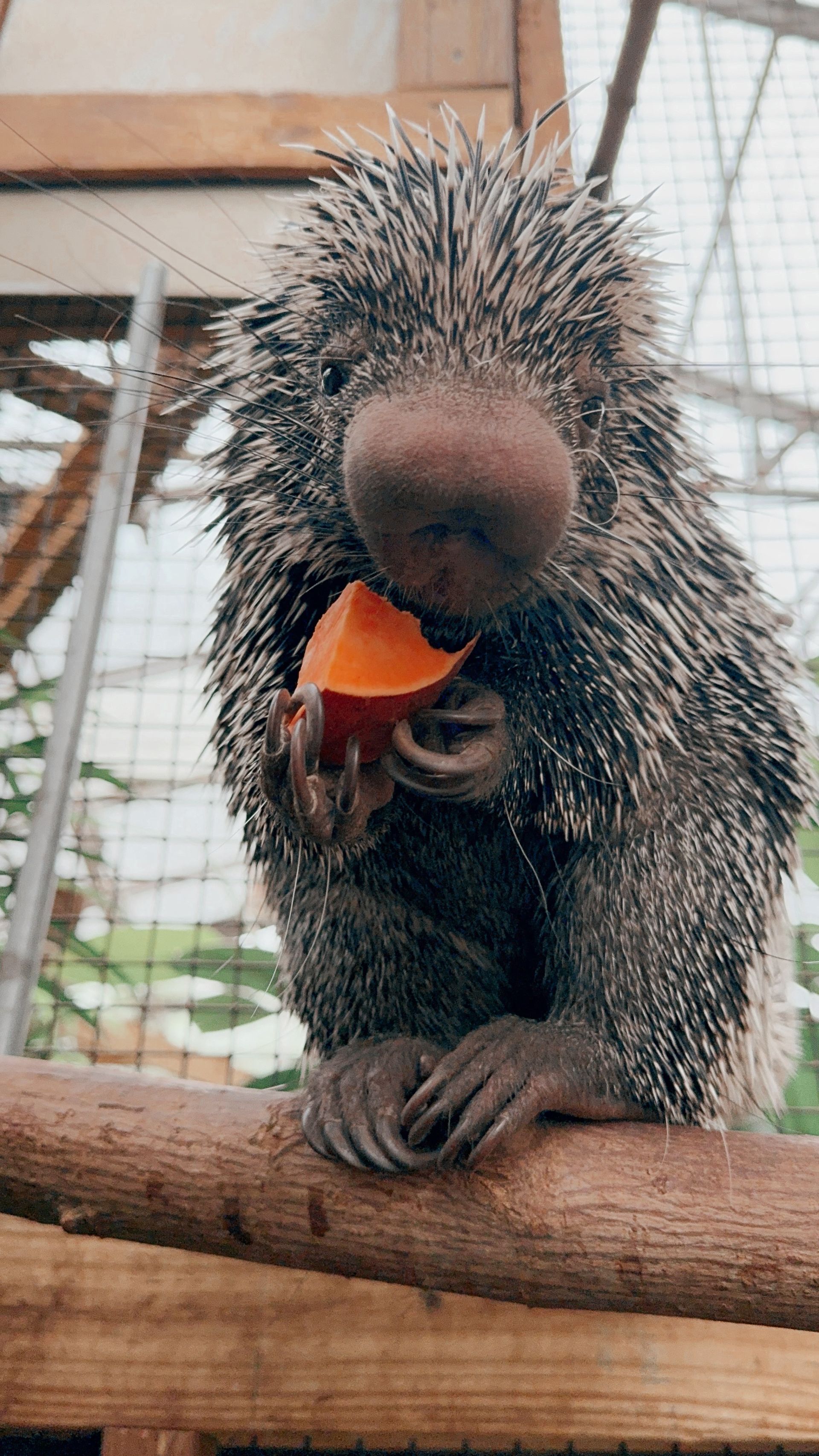
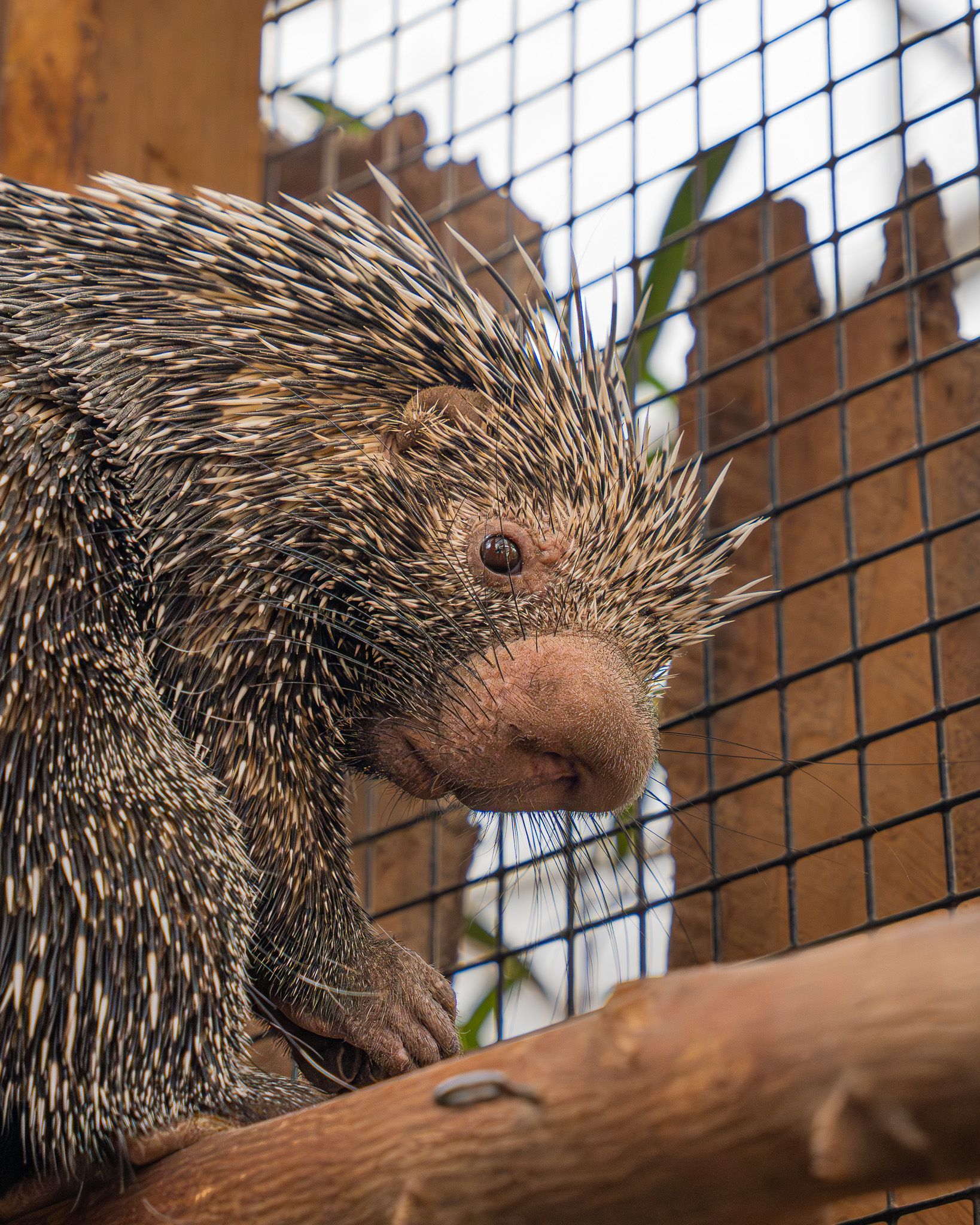
Distinguishing Characteristics: These porcupines are considered large, with a long, muscular, prehensile tail; they are well adapted to live and move in trees. These porcupines have skin varying in hue from yellow-orange to brownish-black, and are covered with long quills. The yellow-orange hue is due to a pungent waxy substance exuded from the glands of both males and females. The semi-hollow quills are tricolored, with white tips terminating in a barbed end. The prehensile tails are unspined and used for stabilization and grasping while climbing, as well as a means of hanging.
Adaptations & Fun Facts:
This species is also known as the Brazilian porcupine. The Latin translation of porcupine is "thorn pig."
All New World porcupines have long, curved claws that are excellent for climbing. Prehensile-tailed porcupines are nocturnal and arboreal.
Vocalizations consist of growls and cries. If caught, these porcupines roll into a ball.
Despite urban legend, porcupines cannot shoot their quills! Quills are modified hairs made out of keratin, the same substance found in our own hair and fingernails. Porcupines have muscles at the base of each quill that allow them to stand up when the animal is excited or alarmed. Quills easily detach and can embed in potential predators. Quills are shed, and when the porcupines shake, loose quills can fly off (but without deadly force). Puncture wounds inflicted by porcupines are very serious: the quills are barbed - meaning they cannot be removed easily - cause intense pain, and can lead to infection.
Porcupine babies, called porcupettes, are not born with sharp or barbed quills. Instead, the porcupette's quills are soft and bendable, gradually hardening in the first few days after birth.

Conservation Story
The exact population of the Prehensile-tailed porcupine is unknown, but while the species is rare in some areas, it is generally the most common and dominant mammal in others. In terms of threats, this porcupine is occasionally hunted for its meat. There are no known conservation measures specific to this species; however, there are several protected areas within its range.
Legal conservation efforts include particular conservation actions taken by organizations which make government policy to protect all species on earth. The International Union for Conservation of Nature (IUCN) Red List Status is a critical indicator of the health of the world’s biodiversity. Prehensile-tailed porcupines are listed as “Least Concern,” which means they are widespread and abundant in the wild.
What Can We Do To Help?
Support conservation organizations - like the Ross Park Zoo - through volunteering, donation, and/or sponsorship.
Check out other animals at the zoo!
-
African Penguin
Learn More -
African Spurred Tortoise
Learn More -
Alpine Goat
Learn More -
American Red Wolf
Learn More -
Amur Leopard
Learn More -
Arctic Fox
Learn More -
Bantam Chicken
Learn More -
Barred Owl
Learn More -
Binturong
Learn More -
Black Howler Monkey
Learn More -
Black Vulture
Learn More -
Black-and-white Ruffed Lemur
Learn More