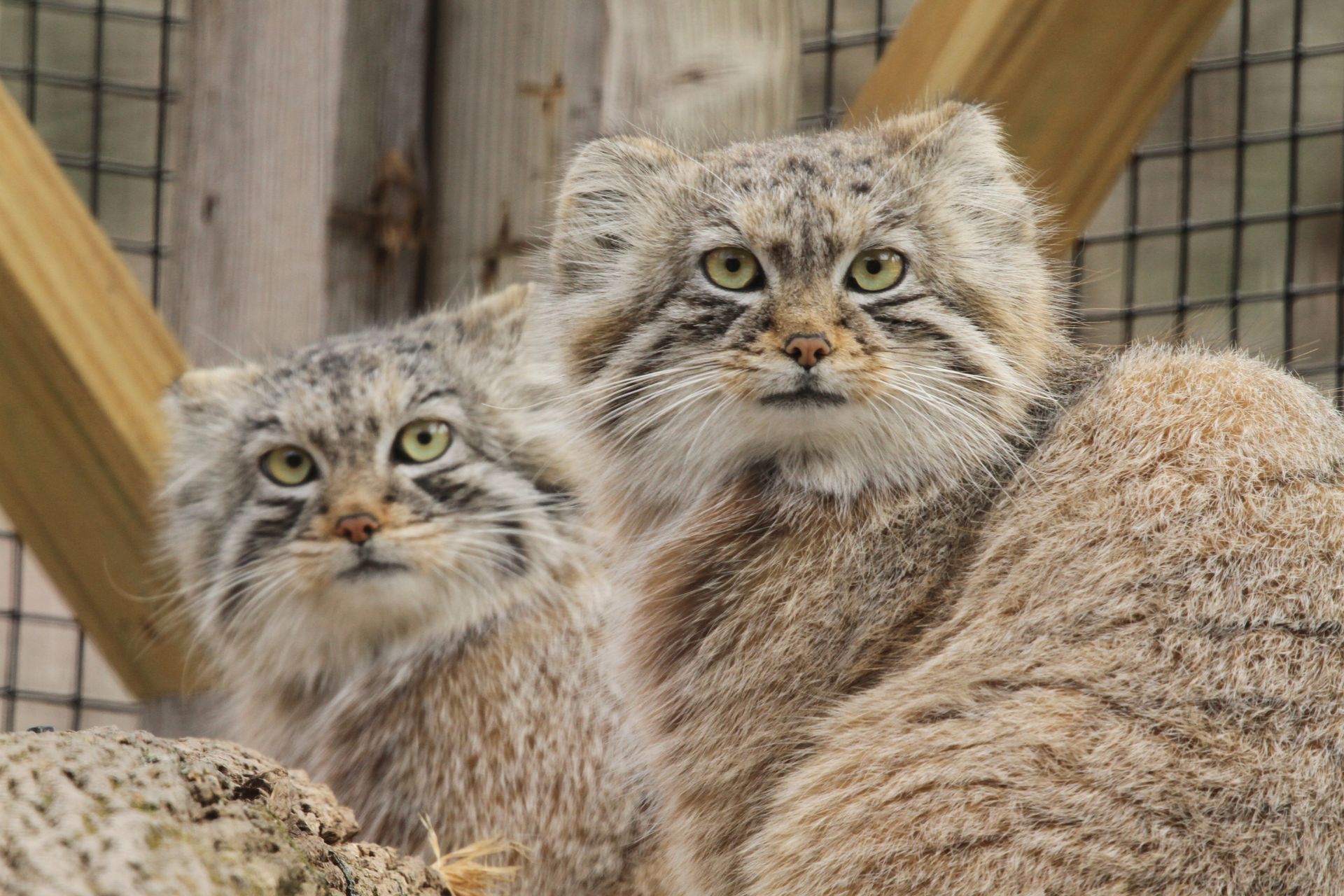
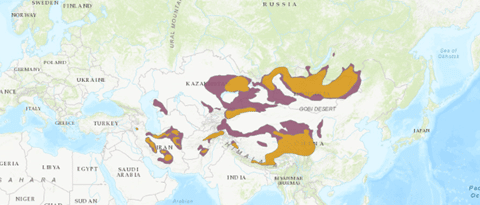
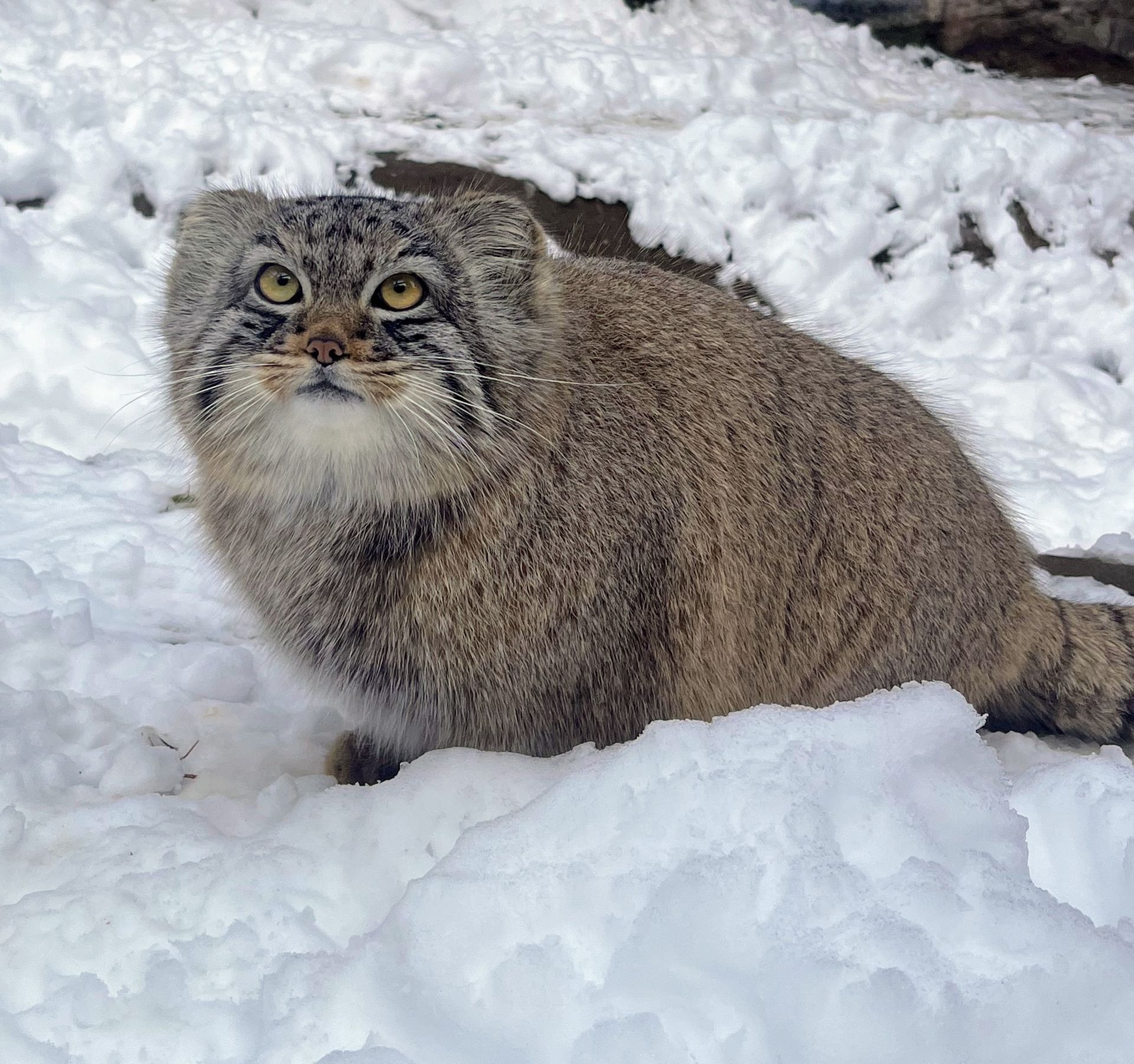
There are an estimated 58,000 adult Pallas’s cats in the wild. However, it is suspected that the population size is decreasing. It is assumed that Pallas’s cat populations are highly fragmented, which makes population estimation difficult. Pallas’s cats are threatened by decreasing marmot populations, which is one of their main food sources.
The most serious threat to the Pallas’s cat across its range is habitat degradation and fragmentation, which are largely consequences of increasing livestock numbers, change of steppe grasslands into agricultural land, infrastructure development, and resource extraction. Mineral exploitation and infrastructural developments have also increased substantially across the range, with increased fragmentation as a result; isolated populations are very likely disappearing without our knowledge.
Other threats include: predation by herding and feral dogs, accidental capture when trapping or snaring other animals, and hunting (both legal and illegal). Climate change is predicted to have large impacts on the grasslands and mountain ecosystems of Central Asia and the Himalayas. Pallas’s cats are a strict seasonal breeder, regulated by day length and peak during the late winter breeding season. Considering that the breeding season is dictated by day length as opposed to climate, Pallas's cats may be unable to adapt to seasonal changes. These cats build up energy reserves during the summer - when prey is abundant - and invest these reserves into reproduction during the late winter when prey availability is low. As climate change alters seasonal patterns, and with it prey availability, this is likely to affect Pallas's cats’ ability to balance energy reserves.
The extent of illegal hunting and illegal trade of Pallas’s cats or their body parts is unknown. It has been reported that international trade in Pallas’s cat pelts ceased in the late 1980s. It is difficult to estimate levels of illegal hunting, though it is likely much higher than the legal level of hunting; it is known to happen across all range countries.
In 2019, a conservation action plan was written to move towards promoting the survival of Pallas’s cats across their historic range. The action plan has a number of conservation actions, including: increasing conservation research, increasing education and awareness, decreasing human caused mortality, and coordinating conservation efforts. These actions will be implemented over the next few years, and conservation action is expected to increase in the near future.
Legal conservation efforts include particular conservation actions taken by organizations which make government policy to protect all species on earth. The International Union for Conservation of Nature (IUCN) Red List Status is a critical indicator of the health of the world’s biodiversity. Pallas’s cats are listed as “Least Concern,” which means they are widespread and abundant in the wild. The Convention on International Trade in Endangered Species of Wild Fauna and Flora (CITES) lists Pallas’ cats as Appendix II; this means they are not necessarily threatened with extinction, but may become so unless wildlife trafficking and other trades are not controlled.