Green Tree Python

Morelia viridis

Species Specific Information

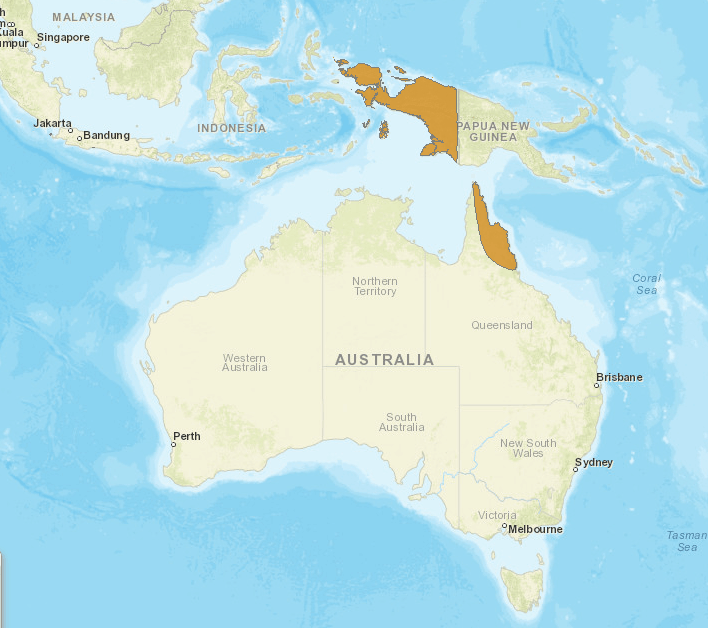
Range

New Guinea, Indonesia, northern Queensland

Habitat

Terrestrial, tropical, rainforest

Predators

Birds of prey, dingoes, monitor lizards, New Guinea quolls, humans

Diet

Carnivore


Wild-  Birds, mammals, reptiles, insects

Professional Care-  Rodents

Life Expectancy

Wild-  3 - 12 years

Professional Care-  15 - 20 years

Physical Characteristics:

Weight:  2 - 4 lbs (1 - 2 kg)

Size:  60 - 80 in (150 - 200 cm)


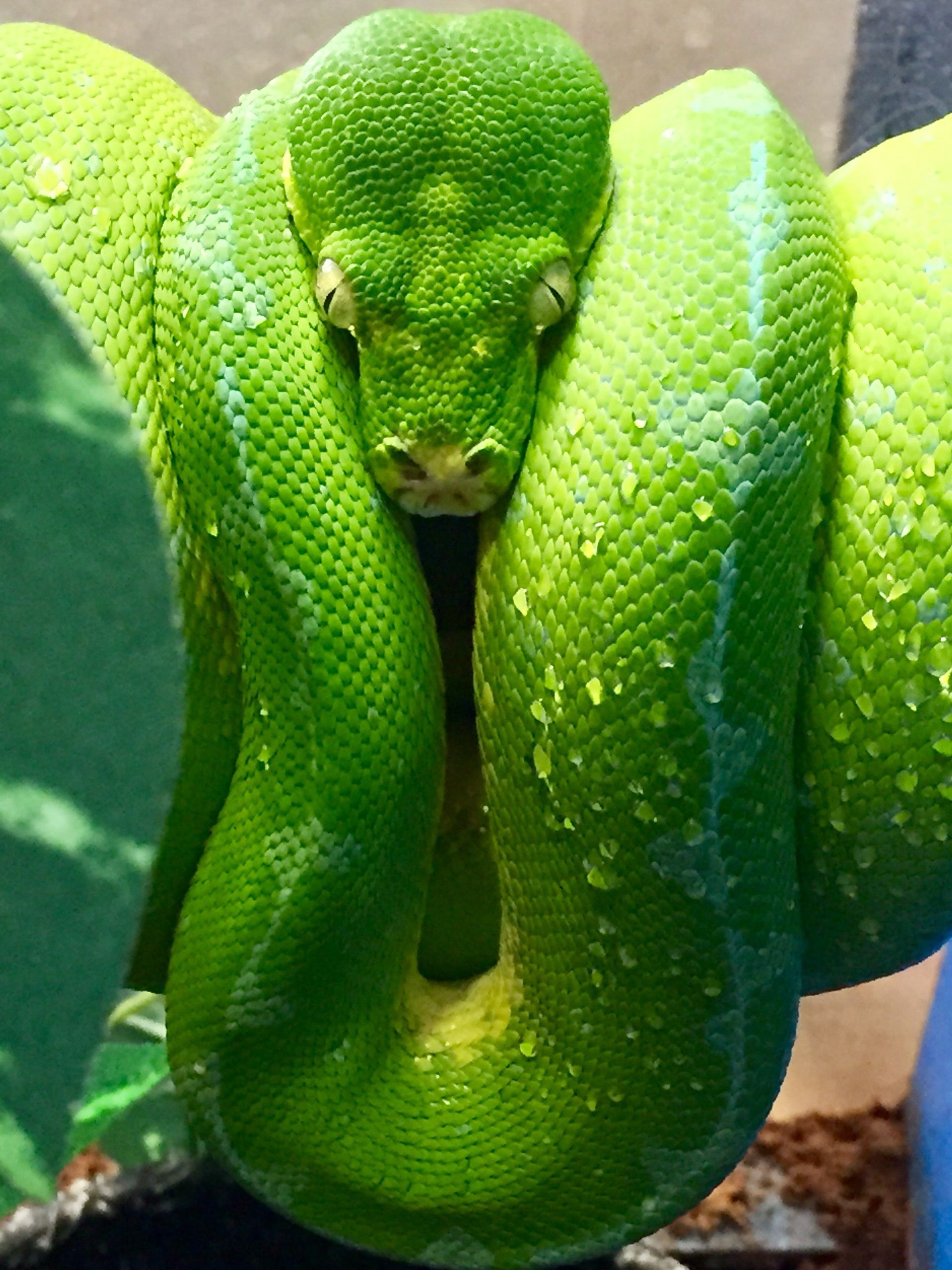
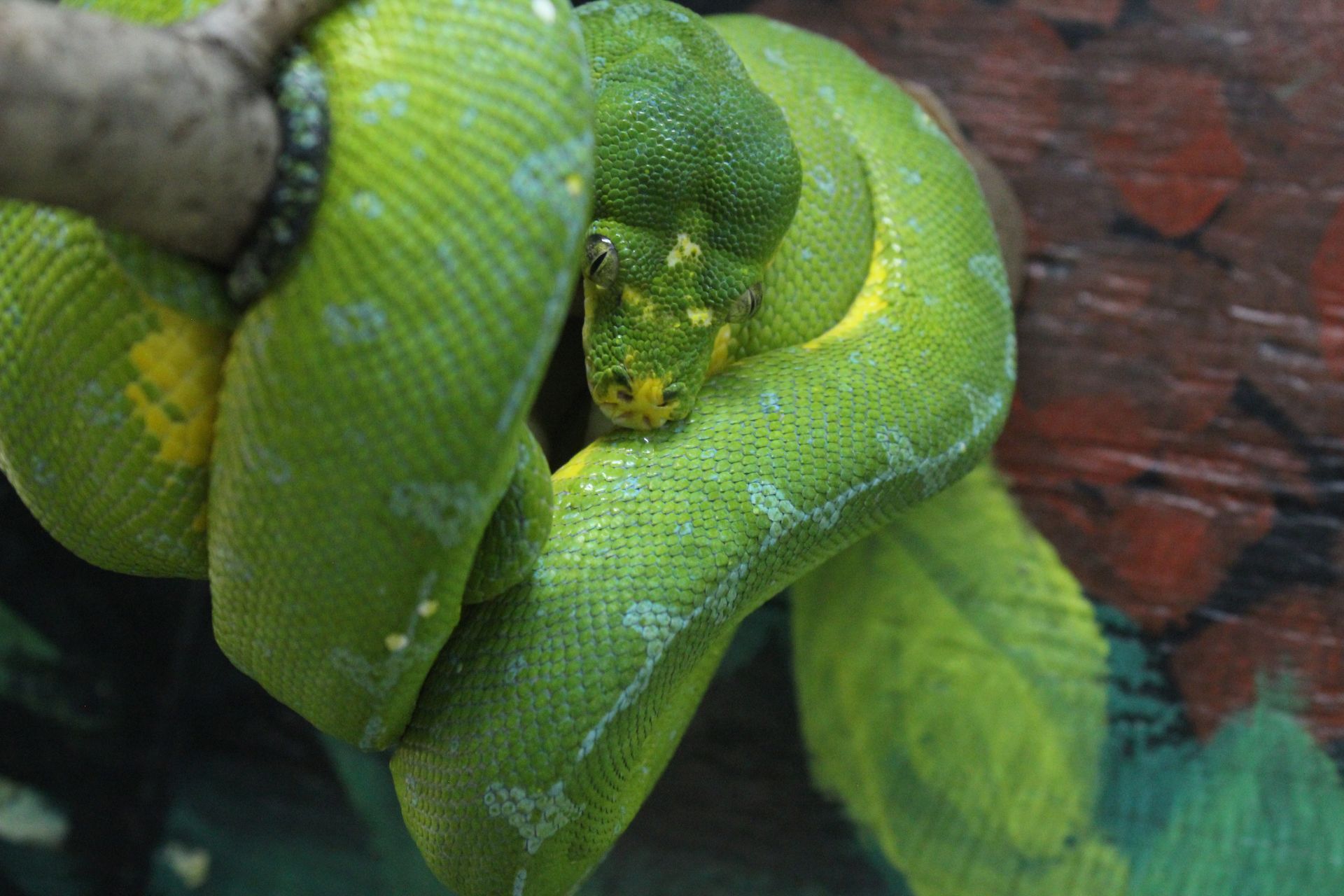
Distinguishing Characteristics:  Their tail is prehensile, helping them to climb. As adults, Green tree pythons display a brilliant green over most of their bodies. On their backs, there is a distinct ridge of scales that is usually white to yellow in coloration and forms a broken or continuous line down the length of the body. Underneath, the scales are generally yellow. Juvenile green tree pythons may be either bright yellow or brick-red. 

Adaptations & Fun Facts:

Newborn Green tree pythons are bright yellow, orange, or brick red, and do not develop green coloring for 6-8 months.


These pythons lure their food by sitting very still on a branch and wiggling or dangling their tail; curious prey gets close enough for a strike. Using their prehensile tail to hold onto the branch, the Green tree python lashes out with the rest of its body and constricts its prey.


Green tree pythons spend much of their time coiled around branches, situated so that their head lies right in the middle of their coils, similar to a saddle laying over a branch.


The Green tree python provides an excellent example of parallel evolution: it looks and behaves in a very similar manner to the Emerald tree boa, which is found in South America rather than Asia; however, there are significant differences. For example, the Emerald tree boa gives birth to live young, whereas the python lays eggs.


Green tree pythons possess thermoreceptive (heat-sensing) pits in the scales lining their upper lip (called supralabial scales). These organs allow them to "see" heat signatures in low light situations.

Conservation Story

The global population size has not been calculated for the Green tree python. However, there are a variety of threats to the species; the Green tree python is popular in the exotic pet trade, for example. Despite being illegal, the collection of Green tree pythons still occurs. In 2011, an estimated 80% of Green tree pythons exported for trade were caught in the wild; this is around 5,500 individuals.


Green tree pythons are also threatened by habitat loss due to logging in rainforests, especially in western New Guinea. Because Green tree pythons are primarily restricted to closed forest habitats, protection of these habitats is the most important challenge for conserving this species. The expansion of oil palm plantations in West Papua and Papua, and subsequent habitat loss through increasing development in the region, is the most significant threat to the conservation of this species.


Legal conservation efforts include particular conservation actions taken by organizations which make government policy to protect all species on earth. The International Union for Conservation of Nature (IUCN) Red List Status is a critical indicator of the health of the world’s biodiversity. Green tree pythons are listed as “Least Concern,” which means they are widespread and abundant in the wild. The Convention on International Trade in Endangered Species of Wild Fauna and Flora (CITES) lists Green tree pythons as Appendix II; this means they are not necessarily threatened with extinction, but may become so unless wildlife trafficking and other trades are not controlled. This species also has protected status in Australia, Papua New Guinea, and Indonesia, and occurs in numerous protected areas.

What Can We Do To Help?

Support conservation organizations - like Ross Park Zoo - through volunteering, donation, and/or sponsorship. We can also help by learning about the dangers of wildlife trafficking and the exploitation of species in the exotic pet trade through the American Zoo Association’s (AZA) Not-a-Pet campaign. While it may be legal to own a python in the United States, the desire to have these wild animals as a pet only contributes to the decline of the species. 

Check out other animals at the zoo!