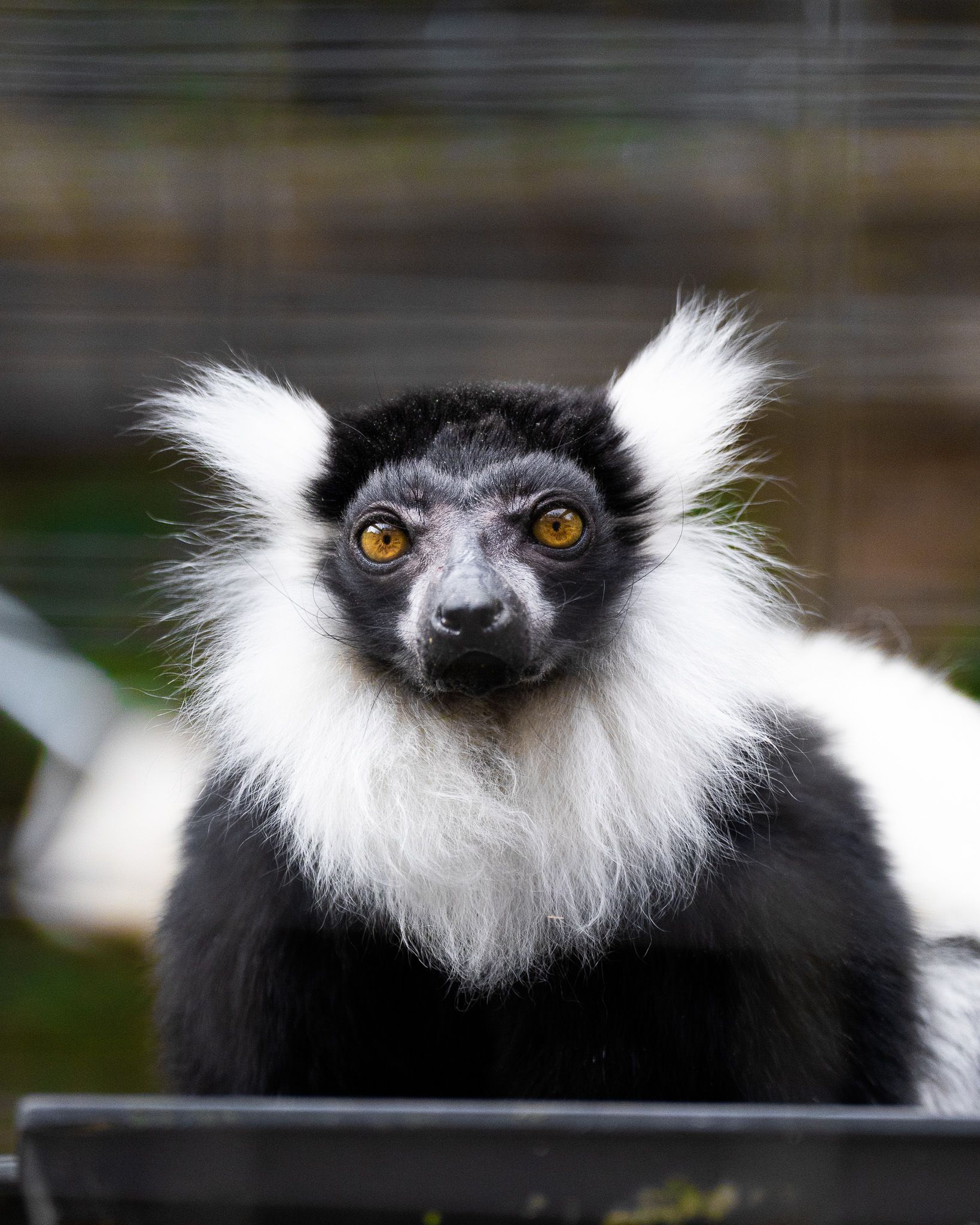
Geoffroy's Marmoset
Callithrix geoffroyi

Species Specific Information
Habitat
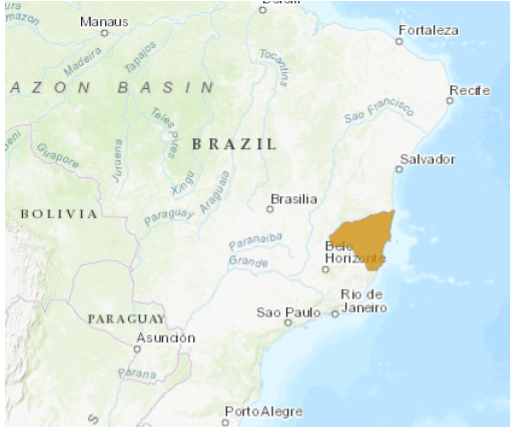
Terrestrial, savanna, tropical, rainforest
Predators
Birds of prey, snakes, felines, humans
Diet
Omnivore
Wild- Amphibians, reptiles, insects, mollusks, fruit, nectar, flowers, sap
Professional Care- Fruit, vegetables, insects, acacia gum
Life Expectancy
Physical Characteristics:
Weight: 6 - 12 oz (190 - 350 g)
Size: 7 - 8 in (17 - 20 cm)
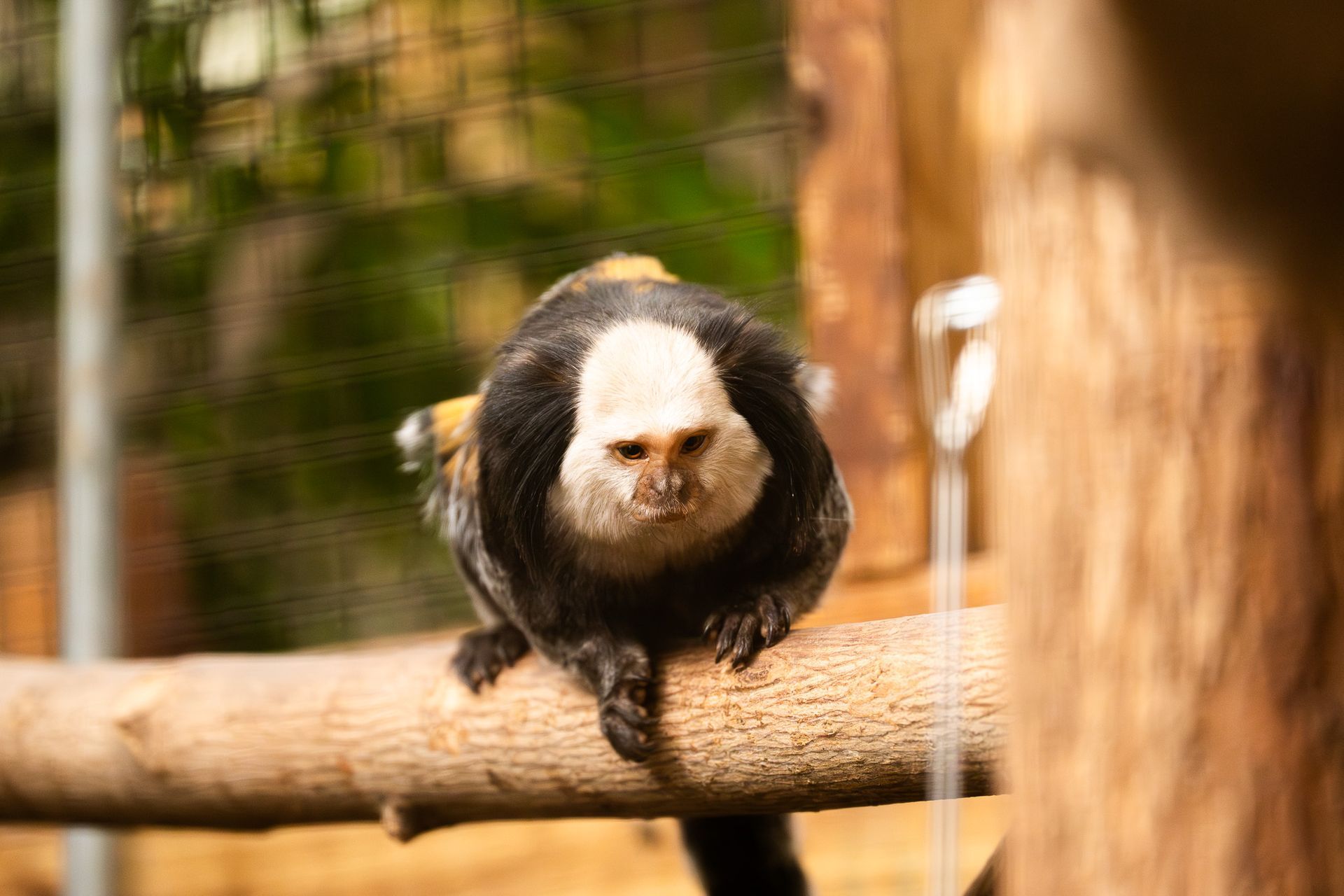
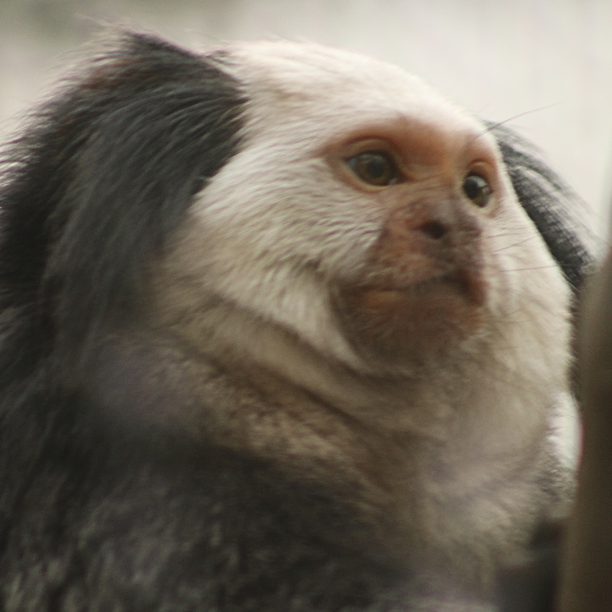
Distinguishing Characteristics: Geoffroy's marmosets are small primates, with a tail of about 10 inches (30 cm) in length. The body is predominantly dark or blackish brown. The tail is ringed with gray and black bands. Adults have white foreheads, cheeks, temples and throats. Adults also have tufts of black fur in front of their ears. Juveniles lack both the ear tufts and white markings around the face. Juveniles begin to grow their ear tufts at an age of about 2 weeks, and have full adult markings by the age of 5 months.
Adaptations & Fun Facts:
Also known as the Geoffroy's Tufted-ear Marmoset and White-faced Marmoset.
They have incisor teeth that are specially adapted to carving out small holes in the trunks of trees, through which they drink the sap and gum that oozes out.
They are gregarious, social animals and live in family groups of 4 - 15 individuals. Mating is restricted to the dominant, monogamous pair, while the others in the group assist with caring for the young.
Dominance is enforced by scent-marking, scolding, cuffing, and eye command.
The males carry the completely-dependent young for two weeks, then the rest of the family takes turns until they are weaned and become independent around 5 to 6 months of age.
Geoffroy's marmosets have the highest degree of predation of any primate, and usually have one individual at a time acting as a look-out for predators.

Conservation Story
The total population size is not known, but it is suggested that the number of mature individuals is only around 10,000. The major threats identified are: rural settlements, agriculture, livestock, deforestation, isolation, habitat reduction, and expansion of forestry. Although considered an adaptable species, Geoffroy's marmoset populations are declining because of widespread habitat destruction.
Legal conservation efforts include particular conservation actions taken by organizations which make government policy to protect all species on earth. The International Union for Conservation of Nature (IUCN) Red List Status is a critical indicator of the health of the world’s biodiversity. Geoffroy’s marmosets are listed as “Least Concern,” which means they are widespread and abundant in the wild. The Convention on International Trade in Endangered Species of Wild Fauna and Flora (CITES) lists Geoffroy’s marmoset as Appendix II; this means they are not necessarily threatened with extinction, but may become so unless wildlife trafficking and other trades are not controlled.
What Can We Do To Help?
Support conservation organizations - like the New England Primate Conservatory and Ross Park Zoo - through volunteering, donation, and/or sponsorship. We can also help by learning about the dangers of wildlife trafficking and the exploitation of species in the exotic pet trade through the American Zoo Association’s (AZA) Not-a-Pet campaign. While it may be legal to own a marmoset in the United States, the desire to have these wild animals as a pet only contributes to the decline of the species.
Check out other animals at the zoo!
-
African Penguin
Learn More -
African Spurred Tortoise
Learn More -
Alpine Goat
Learn More -
American Red Wolf
Learn More -
Amur Leopard
Learn More -
Arctic Fox
Learn More -
Bantam Chicken
Learn More -
Barred Owl
Learn More -
Binturong
Learn More -
Black Howler Monkey
Learn More -
Black Vulture
Learn More -
Black-and-white Ruffed Lemur
Learn More