Fennec Fox

Vulpes zerda

Species Specific Information

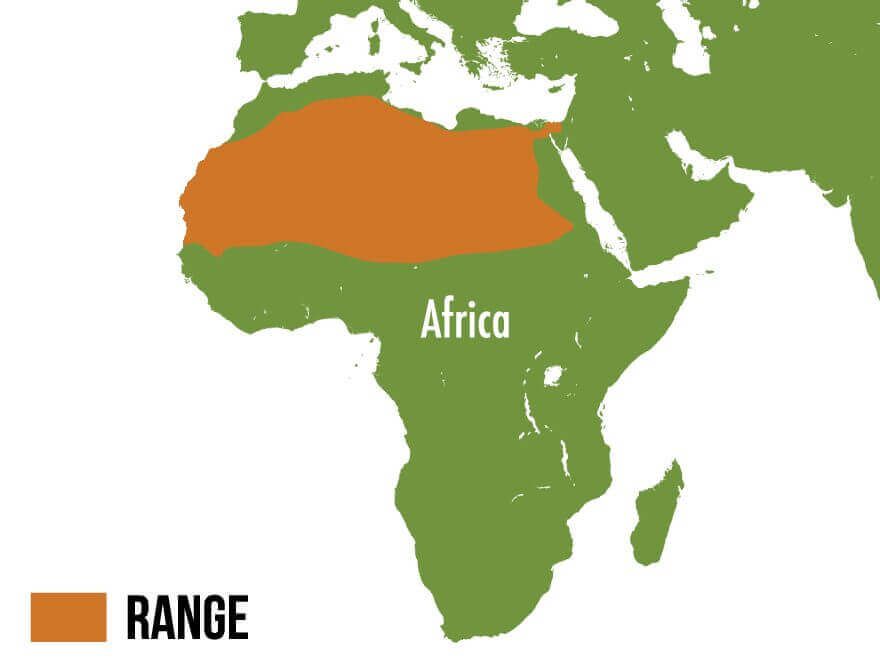
Range

Central Sahara, northern Morocco, eastern Kuwait, northern Nigeria and Chad

Habitat

Terrestrial, temperate, tropical, desert, dune

Predators

Birds of prey, jackals, striped hyenas, humans

Diet

Omnivore


Wild- Birds, mammals, reptiles, eggs, carrion, insects, leaves, roots, tubers, fruit

Professional Care- Raw meat, fruit, vegetables

Life Expectancy

Wild- 10 years 

Professional Care- 12 years

Physical Characteristics:

Weight: 1 - 3 lbs (8 - 15 kg)

Size: 10 - 15 in (30 - 40 cm)


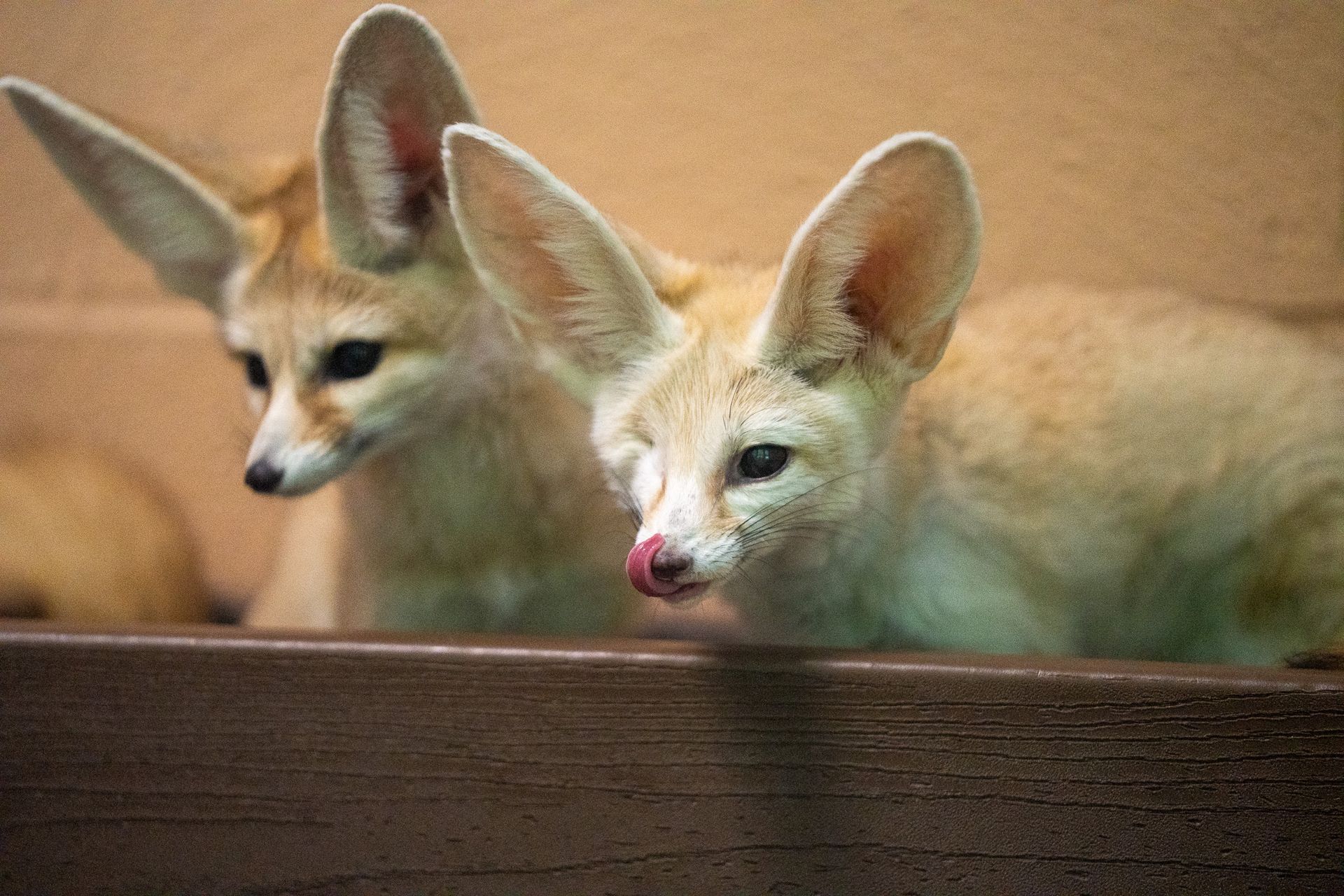
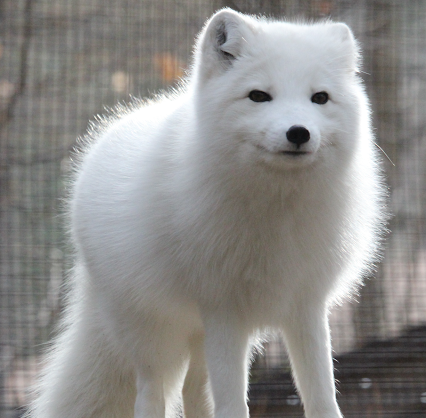
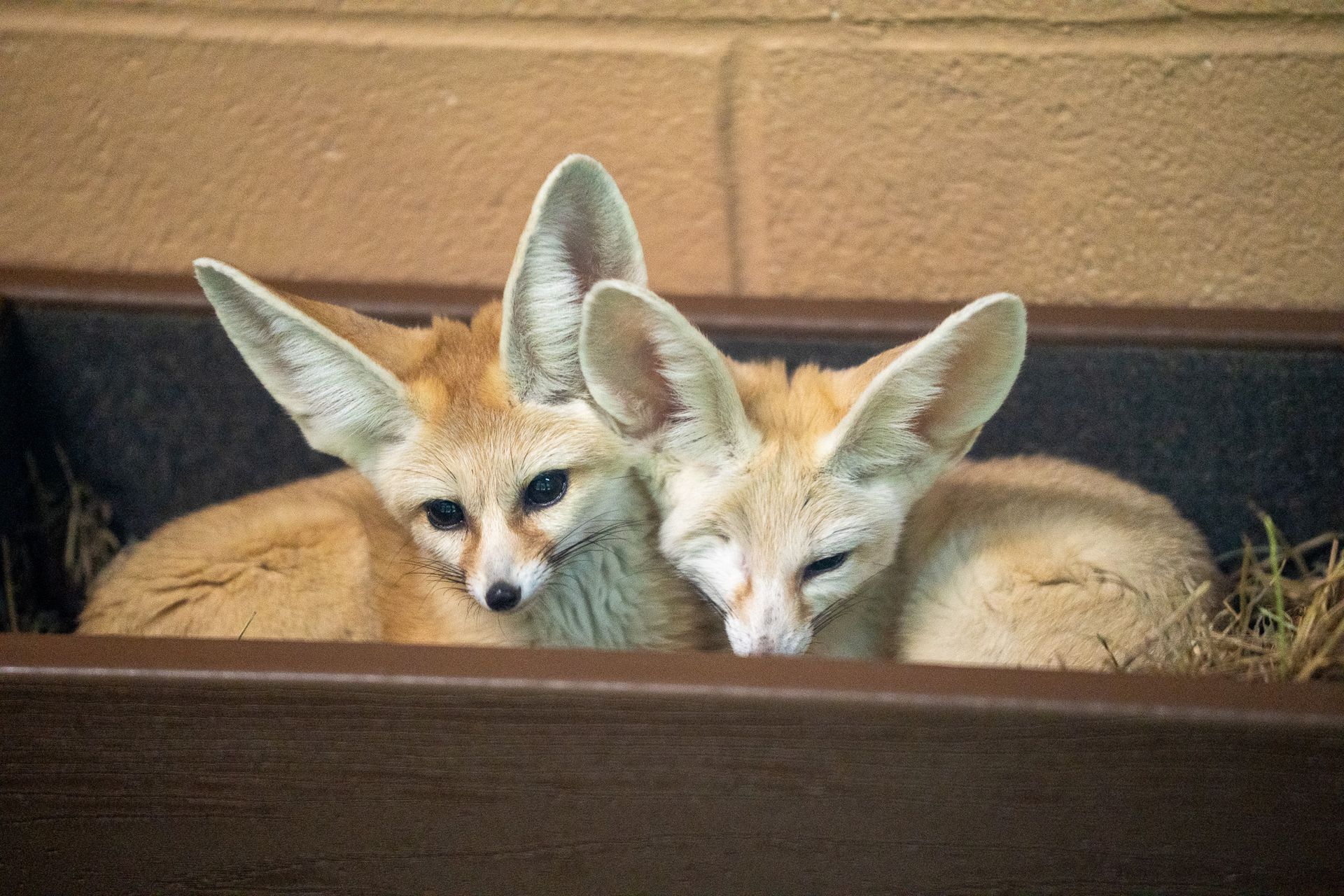
Distinguishing Characteristics:  Fennecs are the smallest of the canids. Their tail length is between 7 - 11 inches (20 - 30 cm), and accounts for nearly 60%  of the animal's body length. The ears of Fennec foxes are perhaps their most distinctive feature: massive in proportion to the skull, the large, 6-inch (15 cm) ears are used both to release heat and to locate prey moving under the sand. Fur in adults is thick and silky, buff-colored on the surface and white along the animal’s legs, face, ear-linings and underside. In contrast, juveniles are downy and almost exclusively white.

Adaptations & Fun Facts:

Fennecs are so well adapted to a desert climate that they do not need to drink, as they get the water their body needs from their diet. 


Fennecs are monogamous and mate for life. Fennecs foxes are highly social animals, living together in family groups which may contain up to 12 individuals. 


Fennec foxes have fur on the bottom of their feet to protect them from the hot sand.  


Fennecs are primarily nocturnal, but are also known to be crepuscular (active at dawn and dusk). To keep warm during the cold night hours, they wrap their tail around themselves like a blanket. 


The Fennec fox is very active and agile! They can jump 2 feet (60 cm) straight up from a standing position and leap 4 feet (120 cm) horizontally. 

Conservation Story

Although the population for Fennec foxes is currently unknown, it is assumed to be stable based on a variety of observations: How commonly this wild species is trapped and sold for wildlife trafficking (the exotic pet trade), and camera traps (which take photos of animals that cross in front of where a camera is placed to watch wildlife activity).


Currently, there are no major range-wide threats to the species. However, human activity is rising rapidly in many parts of the Sahara. Construction of new roads and new human settlements increase the disturbance of habitats and risk to some populations. The impact of major oil field development on local populations has not been assessed. Locally and globally, the main threat is wildlife trafficking; Fennec foxes are trapped for exhibition or exotic pet sales to tourists. Some adults are captured for the fur trade as well.


Legal conservation efforts include particular conservation actions taken by organizations which make government policy to protect all species on earth. The International Union for Conservation of Nature (IUCN) Red List Status is a critical indicator of the health of the world’s biodiversity. Fennec foxes are listed as “Least Concern,” which means they are widespread and abundant in the wild.. The Convention on International Trade in Endangered Species of Wild Fauna and Flora (CITES) lists the Fennec fox as Appendix II; this means they are not necessarily threatened with extinction, but may become so unless wildlife trafficking and other trades are not controlled.

What Can We Do To Help?

Support conservation organizations - like Ross Park Zoo - through volunteering, donation, and/or sponsorship. We can also help by learning about the dangers of wildlife trafficking and the exploitation of species in the exotic pet trade through the American Zoo Association’s (AZA) Not-a-Pet campaign. While it may be legal to own a Fennec fox in the United States, the desire to have these wild animals as a pet only contributes to the decline of the species.

Check out other animals at the zoo!