Chinchilla

Chinchilla lanigera

Species Specific Information

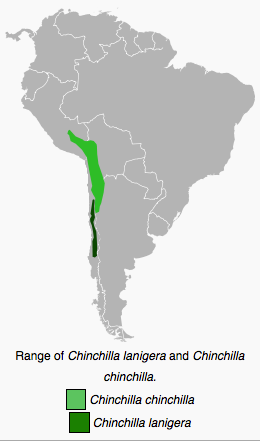
Range

Northern Chile

Habitat

Terrestrial, shrubland, rocky areas, mountains

Predators

Birds of prey, foxes, humans

Diet

Herbivore (folivore)


Wild- Leaves, seeds, grains, nuts, eggs, insects

Professional Care- Timothy hay


Life Expectancy

Wild- 10 years 

Professional Care- 15 - 20 years

Physical Characteristics:

Weight: 1 - 2 lbs (500 - 800 g)

Size: 8 - 14 in (20 - 35 cm)


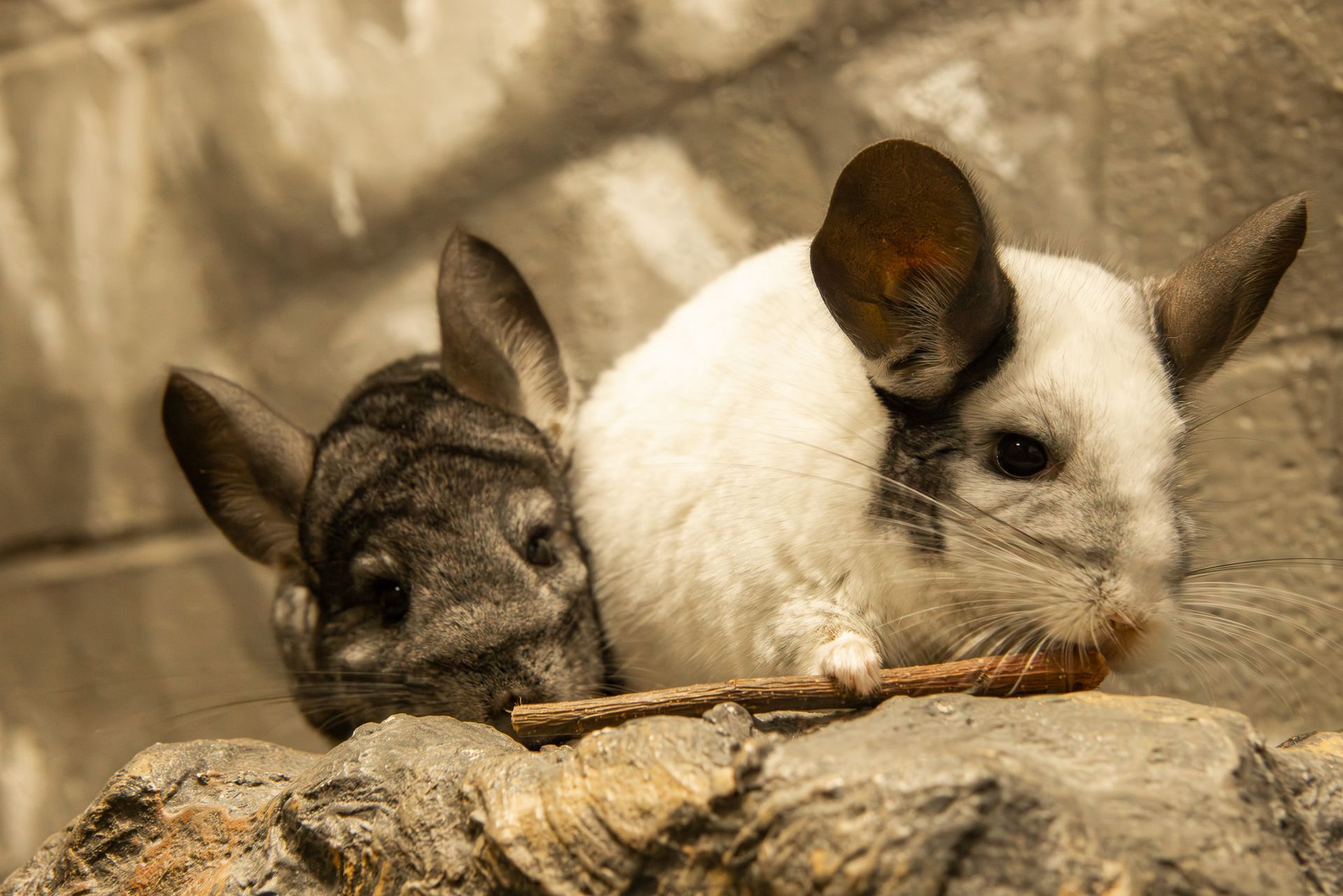
Distinguishing Characteristics:  The fur of chinchillas is extremely dense and soft. Each hair usually has a black tip, and as many as 60 hairs grow out of one follicle. Its tail is furry, with coarse hairs on the surface. The head is broad and the ears are large. Chinchillas have large, black eyes with a vertical split pupil, vestigial cheek pouches, and incisors with colored enamel. Both the forefoot and hindfoot have four digits, with stiff bristles surrounding the weak claws.

Adaptations & Fun Facts:

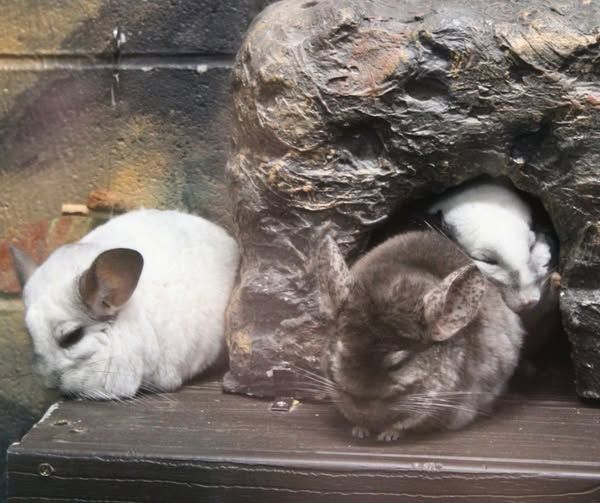
Chinchillas live communally, and up to 100 chinchillas can be found living together. They are primarily nocturnal, but will bask in the evening and morning sun. 


Female chinchillas are the dominant sex and are very aggressive toward one another and toward males. Despite this aggressiveness, serious fighting in the wild is rare. Chinchillas express threats through growling, chattering their teeth, and urinating. 


A mother chinchilla must lick her babies dry soon after birth so they do not get frostbite. Chinchillas take dust baths to clean themselves. 

Conservation Story

There are an estimated 5,500 chinchillas remaining in the wild. The population has remained relatively stable, but are still endangered. Long-tailed chinchillas have been threatened by the colonization of Chile. The threats to chinchillas include: poaching, the pet trade, hunting, agriculture, and mining. Despite current protection measures, populations continue to decline slowly. 


Historically, the Long-tailed chinchilla was intensely hunted for its fur during the late 19th and early 20th centuries. This resulted in a dramatic reduction in population size and a significant reduction in range. While commercial hunting has stopped because of legal protection, illegal trade likely still occurs. 


Legal conservation efforts include particular conservation actions taken by organizations which make government policy to protect all species on earth. The International Union for Conservation of Nature (IUCN) Red List Status is a critical indicator of the health of the world’s biodiversity. Chinchillas are listed as “Endangered,” which means they face a high risk of extinction in the wild. 

What Can We Do To Help?

Support conservation organizations - like Ross Park Zoo - through volunteering, donation, and/or sponsorship. We can also help by learning about the dangers of wildlife trafficking and the exploitation of species in the exotic pet trade through the American Zoo Association’s (AZA) Not-a-Pet campaign. While it may be legal to own a chinchilla in the United States, the desire to have these wild animals as a pet only contributes to the decline of the species.

Check out other animals at the zoo!